This content has been automatically translated from Ukrainian.
Ukrainian mythology and folklore are rich in magical images intertwined with pagan beliefs and later Christian worldview. Among them, special places are occupied by the witch, healer, and molfar – three figures that can be found in folk tales, legends, and even in modern culture. Who are they, how do they differ, and what is their place in the history of Ukrainian magic?
Witch – the mysterious mistress of the otherworldly forces
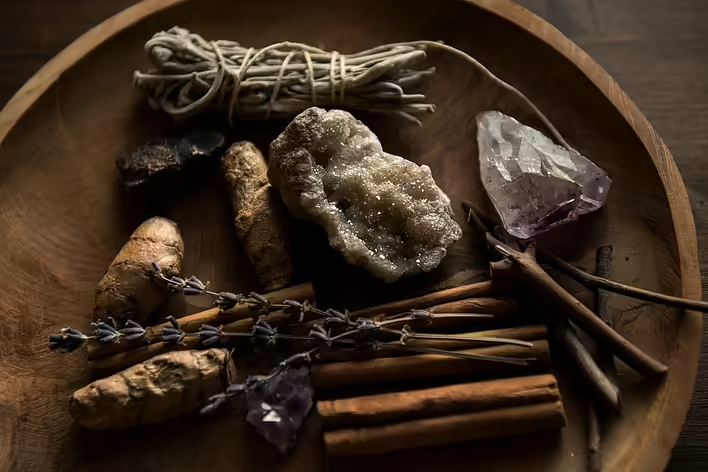
The word "witch" comes from the Old Slavic "vidati" – to know, to prophesy, to have special knowledge. In Ukrainian tradition, a witch is a woman who possesses supernatural abilities, capable of causing harm or providing help, depending on her intentions. It was believed that witches could fly (on a broom or with the help of magical ointments), steal the moon and stars, "spill" milk to neighbors, send diseases, or help in difficult situations.
The Church persecuted witches for centuries, equating them with servants of the devil. However, in popular imagination, they were not only evil – there existed "white" witches who healed, assisted in childbirth, and removed curses. In Ukraine, the belief in witches persisted even in the 20th century, and in folklore and literature, this image remains an integral part of the mystical tradition.
Healer – the guardian of folk wisdom
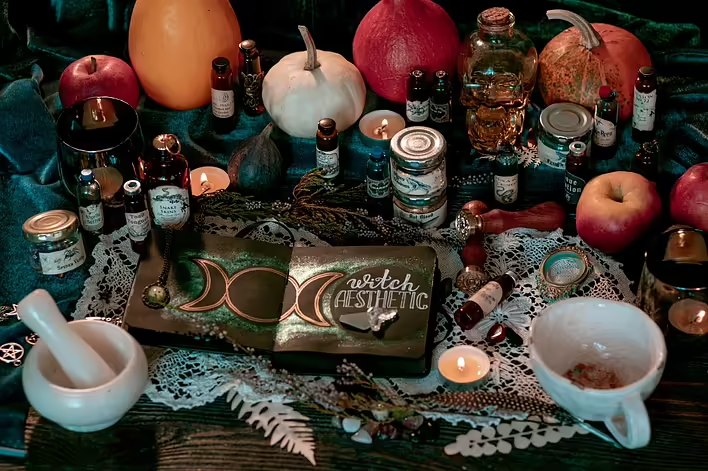
Unlike a witch, a healer is primarily a folk practitioner. Her main weapon is not witchcraft, but knowledge of herbs, spells, and natural forces. She possesses the art of healing diseases, can help a person in difficult times, and advise how to protect oneself from evil forces.
Healing is closely related to pre-Christian beliefs and was respected by the people. Many Ukrainians turned to healers even during the dominance of official medicine, as their help was accessible and aligned with traditional notions of health and harmony with nature.
Molfar – Carpathian magician and prophet
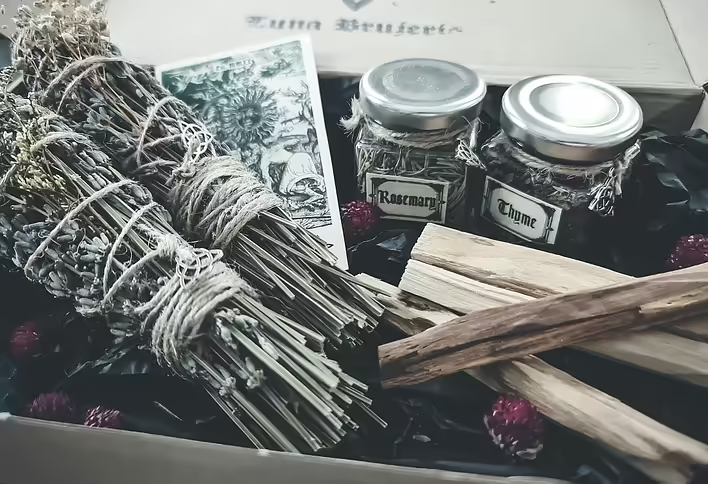
Molfars are a unique phenomenon of Ukrainian magical culture, characteristic of the Carpathian region. They combine the traits of healers and witches, possessing special magical knowledge passed down from generation to generation. The word "molfar" comes from the Hutsul dialect "molf," which means "charm," "spell."
Molfars could predict the future, control the weather, heal people, and create protective charms. The most famous modern molfar was Mykhailo Nechai, who lived in the village of Verkhniy Yasenyv on Ivano-Frankivsk region and welcomed people until his last days, sharing his wisdom.
Magic in modern Ukraine
Despite scientific progress, belief in magic and supernatural forces has persisted in Ukraine to this day. Many people still turn to healers, psychics, and "grandmothers," while images of witches and molfars are actively used in books, films, and series.
The Ukrainian magical tradition is a unique blend of pagan rituals, folk wisdom, and folklore creativity. It reminds us that the world is full of mysteries, and the knowledge of our ancestors can be just as valuable as modern technologies.
Like it?React
🧵
This post doesn't have any additions from the author yet.