This content has been automatically translated from Ukrainian.
I am sure you have come across words that sound special, adding color to our language. Some of them may seem unusual, although they are quite natural for certain regions of Ukraine. For example, "fajno" instead of "garno", "hazda" instead of "hospodar" or "patelnia" instead of "skovoroda". These words are not just variations, but echoes of dialectal richness that shape the living Ukrainian language.
What are dialects and why are they important?
The Ukrainian language has several dialectal groups that have historically developed under the influence of geographical location, neighboring languages, and historical events. They are conditionally divided into three main groups: northern, southwestern (or Galician-Bukovinian), and southeastern. It is precisely because of these regional peculiarities that our language is not homogeneous, but rather colorful and flexible.
The significance of dialects cannot be underestimated. They not only enrich the language but also carry historical memory, ways of thinking, and a unique worldview of the inhabitants of different corners of Ukraine.
Fajno: how a Galician word became widely known?
The word "fajno" comes from the western Ukrainian dialects, more precisely from the vocabulary formed under the influence of Polish and German languages. It shares roots with the German fein (refined, beautiful) and the Polish fajny (great, cool).
Despite the fact that this word is more associated with Galicia, today it is used in other regions as well, especially in youth and informal speech. It has become a marker of a certain style of communication, as well as a kind of linguistic business card of western Ukraine.
Hazda – more than just a host
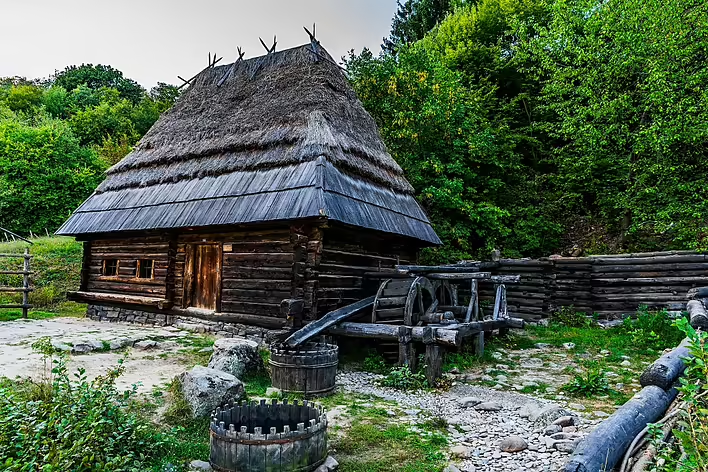
The word "hazda" has ancient Carpathian roots and comes from the Hungarian gazda, which means "host", "landowner". However, the meaning of this word is deeper – it carries not only the idea of ownership but also status, responsibility, and economic ingenuity. To be a "hazda" means to be not just an owner, but a person who knows how to manage well, care for the household and family.
In modern Ukrainian, the word "hazda" continues to be associated with the traditional way of life of Hutsuls and Transcarpathians. However, from time to time it appears in the general Ukrainian space, especially when it comes to caring hosts.
Patelnia or skovoroda? A battle of words in the kitchen

If the word "fajno" is now perceived as conversational, then "patelnia" has almost replaced the traditional "skovoroda" in many regions. This word also came to us from the Polish language (patelnia – frying pan) and has established itself in western Ukrainian dialects.
Interestingly, "patelnia" sounds more natural to residents of western Ukraine, while in central and eastern regions "skovoroda" is still more commonly used. In everyday vocabulary, both words coexist, but "patelnia" is increasingly appearing even in advertising and menus of food establishments.
Can dialects change the Ukrainian literary language?
Dialects not only add color to our language but also actively influence its development. The modern Ukrainian language is increasingly borrowing words from regional dialects, especially when they are shorter, more expressive, or more natural for speech.
Moreover, media, social networks, and popular culture contribute to the spread of regionalisms. What was once considered purely Galician or Transcarpathian words can now be heard on television channels, in blogs, and even in films.
Like it?React
🧵
This post doesn't have any additions from the author yet.