This content has been automatically translated from Ukrainian.
If you are interested in Ukrainian traditions, you have probably heard about vechornytsi and posydenky. Both of these words are related to ancient rituals and customs of our people, but do they mean the same thing? In fact – no. They have similar features, but differ in content, purpose, and nature of the gathering.
What are vechornytsi?
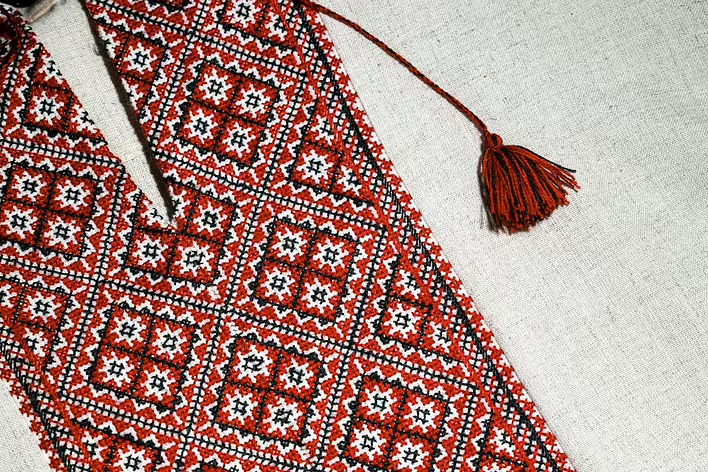
Vechornytsi are youth gatherings that took place in the autumn-winter period when fieldwork was finished, and long evenings favored communal entertainment. The main feature of vechornytsi was their entertainment function.
🔸 Where were they held? Most often – in the house of a lonely woman, usually a widow, who allowed the youth to gather for a small reward (usually food or a part of their earnings).
🔸 Who attended? First and foremost – the youth! Girls would arrive earlier, engaging in handicrafts (embroidery, spinning, knitting), and later boys would join them.
🔸 What did they do?
- Sang folk songs
- Danced
- Joked
- Played games
- Often staged humorous performances and skits
- And, of course, got to know each other – as vechornytsi often became a place for forming relationships and finding partners
Thus, vechornytsi also served a courtship function, providing an opportunity for young men to attract the attention of girls, and for girls to showcase their talents, industriousness, and wit.
By the way, vechornytsi had certain control – the hostess of the house kept an eye on order, not allowing excessive antics or unacceptable behavior. Although, of course, there were also pranksters who came to joke or even cause "mischief" (for example, removing the gate near the house of a girl they liked – a kind of ancient "flash mob").
What are posydenky?
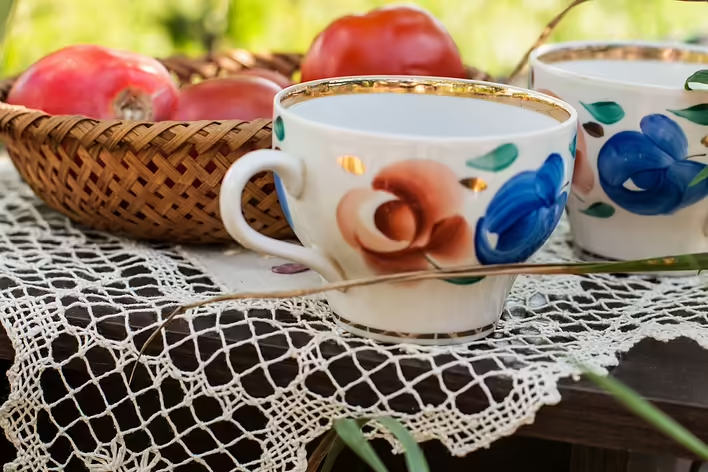
Posydenky are more calm and intimate gatherings that could be attended not only by youth but also by adults. Their main purpose was spending time together through work and communication.
🔸 Where were they held? In any house where hostesses or young girls gathered for joint work.
🔸 Who attended? Usually, these were women and girls, less often – older men. Youth could also participate, but the main goal was indeed work, not entertainment.
🔸 What did they do?
- Spun threads
- Embroidered
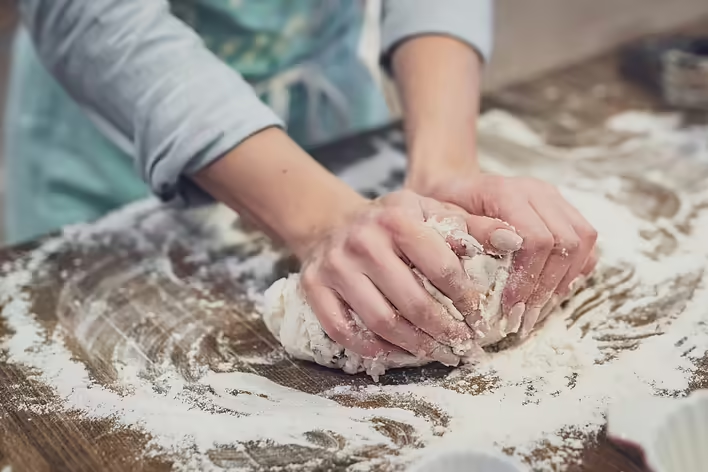
- Dumplings or bread
- Knit or repaired clothing
- Shared news, discussed the community
- Sang traditional songs
Posydenky had a more mundane and practical nature. They were a sort of analogue of modern "hen parties," but with the addition of household work.
Sometimes posydenky could also turn into light vechornytsi if boys joined the girls, but the format remained less noisy and did not have such a vibrant courtship atmosphere as at vechornytsi.
Do vechornytsi and posydenky exist today?
Modern life has changed traditional forms of leisure, but vechornytsi and posydenky have not disappeared.
🔹 Vechornytsi today – are thematic ethno-festivals, folklore evenings, or festive events dedicated to Ukrainian traditions. For example, pre-Christmas Andriyivski vechornytsi – one of the most beloved events, where youth divines, sings, jokes, and plays games.
🔹 Posydenky in the modern world – are when friends gather together to drink tea, knit or sew, and simply chat. These can even be book clubs or handmade workshops.
Thus, traditions, although changing, do not disappear – they simply take on new forms!
In short: vechornytsi are parties for youth, while posydenky are joint meetings for work and communication. Vechornytsi were loud and fun, while posydenky were calm and productive. Both phenomena are part of the Ukrainian cultural heritage that is preserved to this day.
Like it?React
🧵
This post doesn't have any additions from the author yet.