This content has been automatically translated from Ukrainian.
When I first heard about "Wet Monday," I thought it was something like a joke – another reason to splash water, like in summer during Ivan Kupala. But as I delved into the history of this strange, joyful, and somewhat chaotic custom, I realized: there is much more behind it than just entertainment.
The roots of the holiday are deeper than they seem
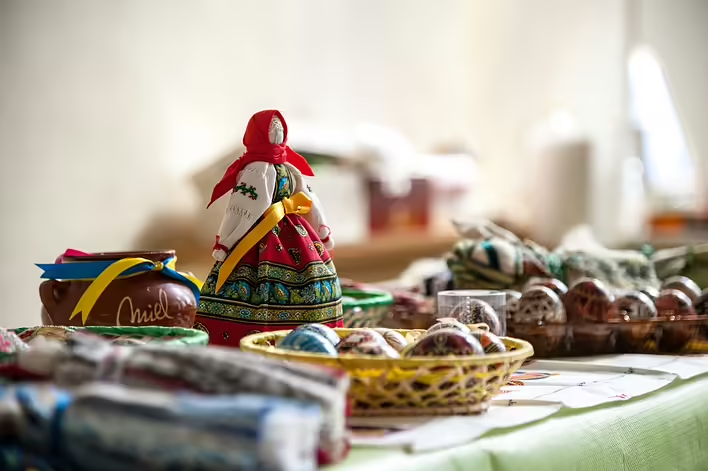
Wet Monday is the Monday after Easter, the first day after the Bright Resurrection of Christ, which is also called "splashing," "water," "simple Monday," or "tasty Monday" (especially in the Hutsul region). On this day, according to ancient tradition, boys splash girls with water, and sometimes vice versa. But it’s not that simple – this custom has its roots in pre-Christian times.
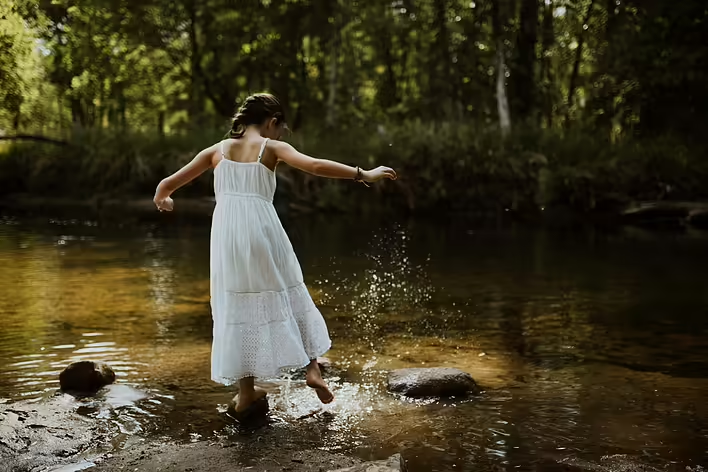
In ancient Slavs, water always had a special power – it was considered alive, capable of cleansing from all evil, restoring energy, and bringing happiness. Splashing with water is a symbol of spring renewal, purification, and, of course, youthful courtship.
Splashing as courtship
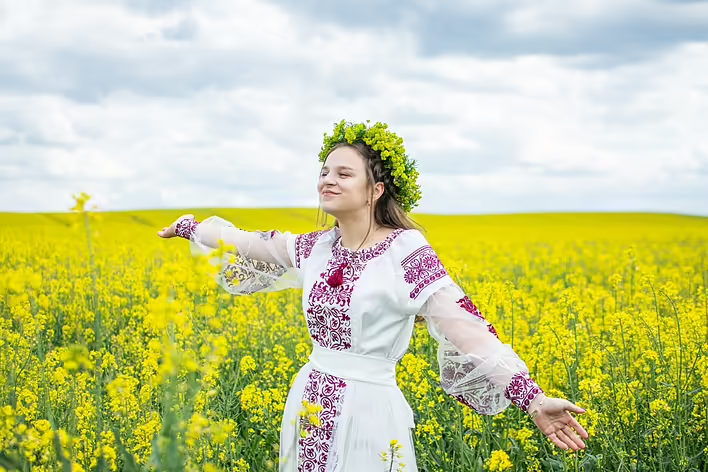
On Wet Monday, boys traditionally went to the homes of girls to "splash" them – it was a kind of sign of attention. A girl who was not splashed could consider it an unfortunate sign: it meant that no one paid attention to her, no one courted her. But if she was splashed – it meant she was liked. Sometimes boys not only splashed girls but also "kidnapped" them from the house, carrying them in their arms to the river or well. Those who did not want to "get caught" had to stay at home or run as far away as possible!
By the way, in some regions, girls had the opportunity to "pay back" on Tuesday – splashing boys in response. This made the tradition even more interesting, as it turned into a whole water marathon.
The symbolism of water after Easter
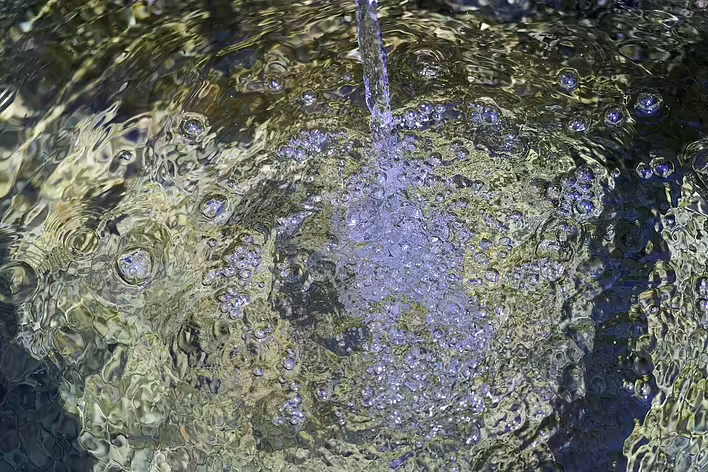
After Easter, when the world celebrates the victory of life over death, light over darkness, water acts as a symbol of purification and new beginnings. Thus, Wet Monday combines pagan notions of the life-giving power of nature and Christian rebirth.
In Christian interpretation, water is also a symbol of baptism. That is, splashing becomes an act of renewal, a symbolic "second birth." And although modern versions of the holiday resemble a fun flash mob with plastic bottles and water guns, its deep meaning has been preserved.
Regional features
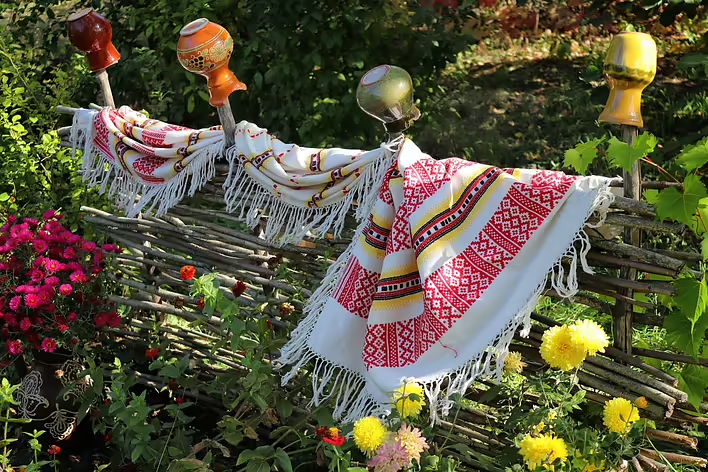
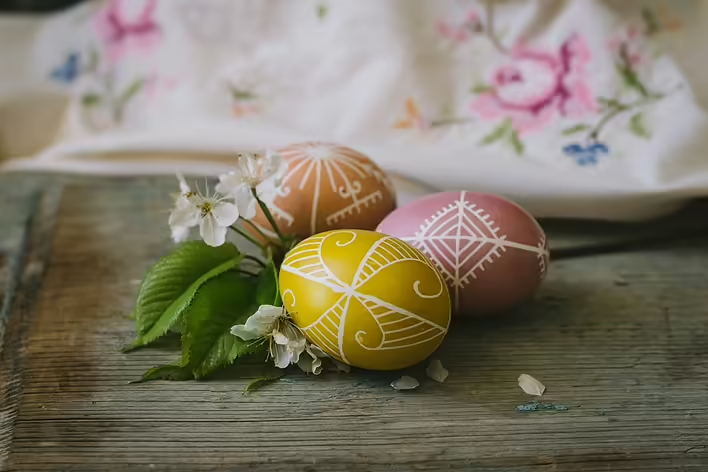
Interestingly, Wet Monday is especially popular in western Ukraine – in Galicia, Volhynia, Transcarpathia, and Bukovina. There, it is a real ritual with songs, jokes, treats, and symbolic gifts. For example, after splashing, boys may receive painted eggs or Easter cakes in gratitude. Moreover, in ancient times, there was a tradition of "ransom": if a girl did not want to be splashed, she had to pay a ransom – with something tasty or even with a kiss.
The modern version – a bit of chaos, a bit of tradition
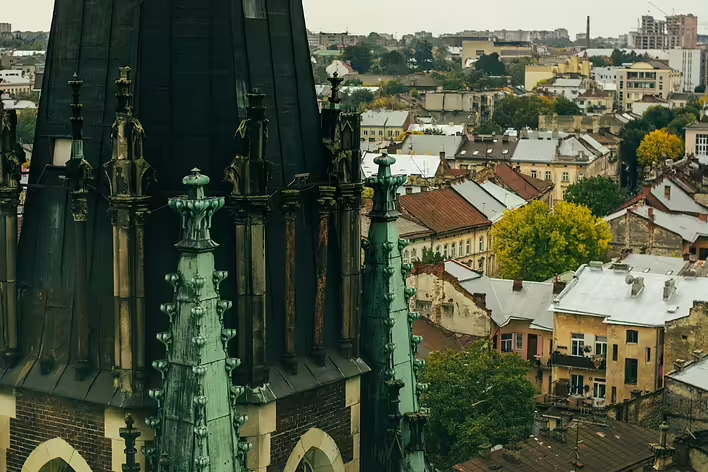
Today, Wet Monday is primarily a fun tradition, especially in Lviv or Ternopil, where real "water fights" are organized in the squares. Some see this as chaos and a violation of rules, but I view it as a modern continuation of an ancient idea: to celebrate spring, life, youth, and a sense of unity.
After all, when you stand soaking wet in the middle of the square, laughing like a child, and see happy people around you – you realize that traditions do not necessarily have to be strict. The main thing is that they unite and leave warmth in the heart.
So if someone invites you to Wet Monday next year – don’t be afraid. Perhaps this is exactly the case when you can step outside the ordinary, feel part of a great living ritual, and just have fun.
Like it?React
🧵
This post doesn't have any additions from the author yet.