This content has been automatically translated from Ukrainian.
What is lomography?
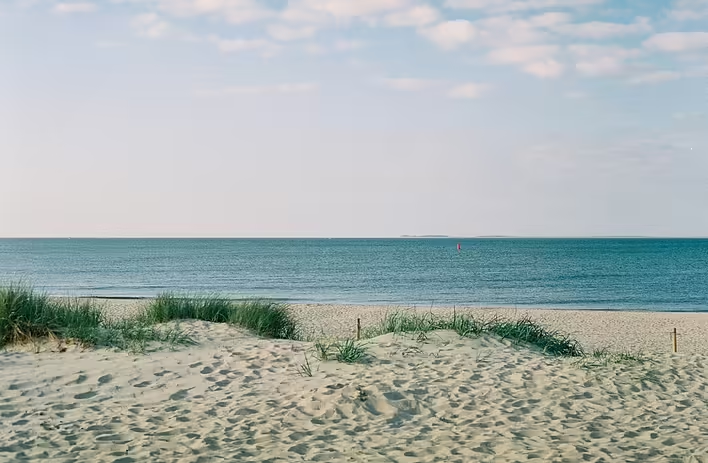
Lomography is not just a method of photography, but a true creative philosophy that challenges traditional rules of composition and technical perfection. It’s about emotions, experiments, and unpredictable results that make each shot unique.
Despite the fact that the world has fully transitioned to digital photography, lomography remains relevant, captivating both nostalgic film enthusiasts and new generations of photographers who want to add a bit of magic to their shots.
The history of lomography

Lomography began in 1991 when a group of Austrian students discovered a Soviet film camera, the LOMO LC-A (LOMO Compact-Automatic), at a flea market during a trip to Prague. It was a little-known camera produced in St. Petersburg at the Leningrad Optical-Mechanical Association (LOMO).
The students began experimenting with it and discovered interesting effects:
- Saturated, deep colors
- High contrast
- Vignetting (darkening of the corners)
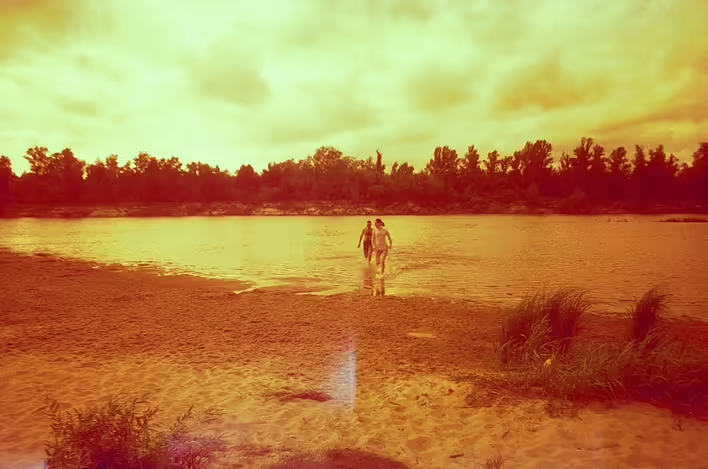
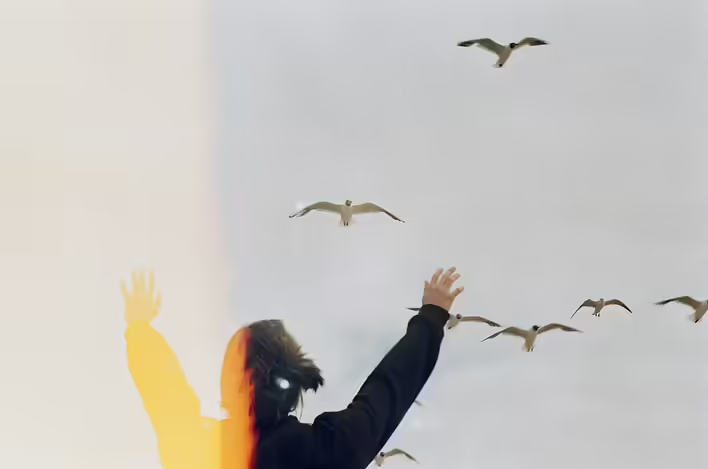
- Light leaks (bright spots appearing due to light entering the camera body)
Eventually, they decided not only to popularize this camera but also to create an entire cultural movement. Thus, the Lomographic Society International (LSI) was born, promoting a unique style of photography based on randomness and experimentation.
The demand for the LOMO LC-A skyrocketed, prompting the Austrians to approach the Leningrad factory with a proposal to resume production. In 1995, Lomography obtained official rights to sell these cameras, and the lomography movement spread worldwide.
Principles of lomography
The Lomographic Society International formulated 10 golden rules that became the foundation of lomography:
- Take your camera everywhere. Don’t be afraid to experiment anywhere.
- Shoot anytime – day or night. Even in challenging lighting conditions, you can achieve interesting effects.
- Lomography is not about planning. Trust your intuition.
- Photograph from hip level. This allows for unexpected perspectives.
- Don’t think about what will be in the frame. Spontaneity is key to unique shots.
- The closer, the better. Try shooting up close.
- Don’t think ahead! Let the camera work for you.
- Don’t stick to composition rules. Abandon traditional photography principles.
- Photograph what you feel. Trust your emotions and the moment.
- Forget all the rules! The most important thing is to have fun.
These rules create an atmosphere of creative freedom, where technical perfection doesn’t matter, and the main focus is on experimentation and the emotionality of the shot.
Why is lomography still popular?
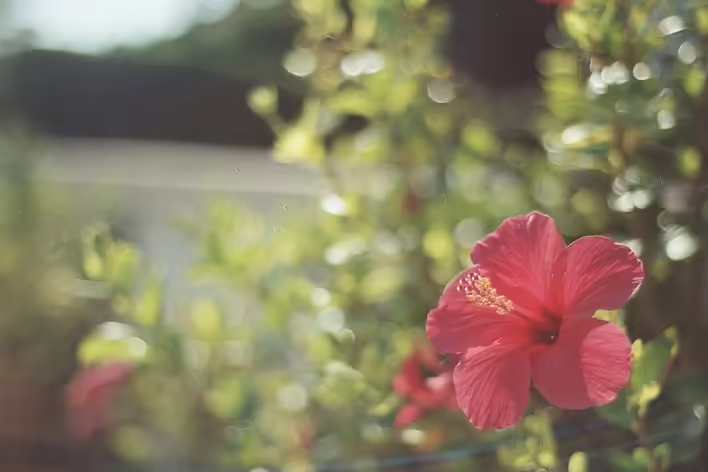
Even in the 2020s, when smartphones take perfectly detailed photos, lomography has not lost its appeal. Here are the main reasons why it still has many followers:
1. Nostalgia for film aesthetics
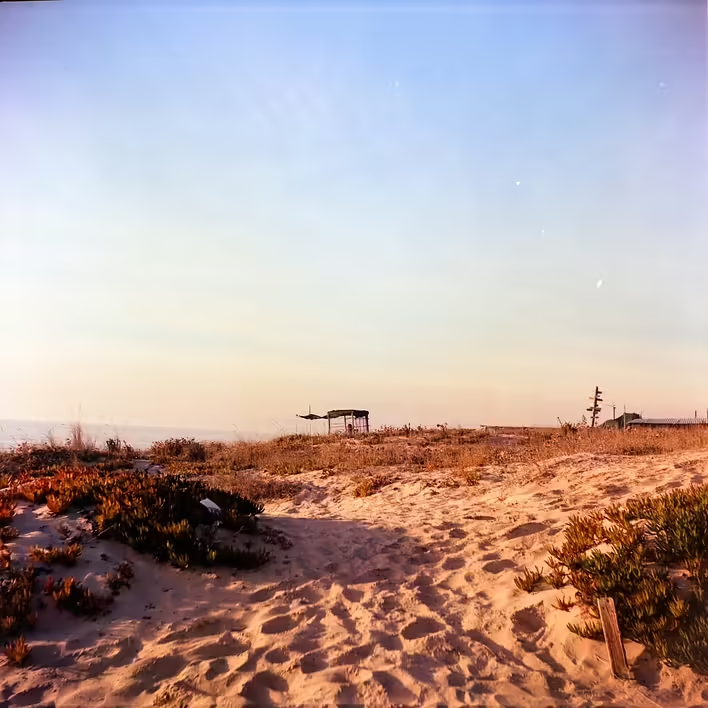
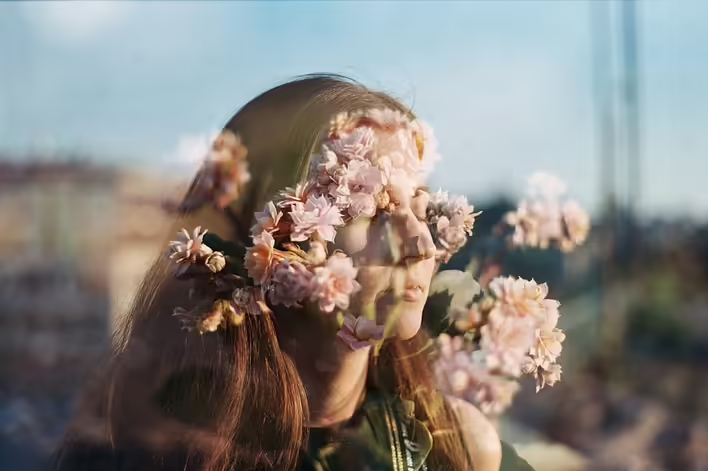
Photos taken with lomo cameras have a special look: warm tones, random flares, vignetting. This creates an effect of time, as if the shot was taken decades ago.
2. Randomness as an element of art
Unlike digital cameras, where you can see the result immediately, lomography leaves room for surprises. The film needs to be developed, and you never know what the outcome will be.
3. Physical manifestation of art
Working with film adds a special ritual to photography. The feeling of holding developed frames in your hands is entirely different from simply viewing shots on a screen.
4. Lomography community
There are large lomography communities around the world that share photos, hold exhibitions, and exchange films.
Lomographic cameras: which models to try?
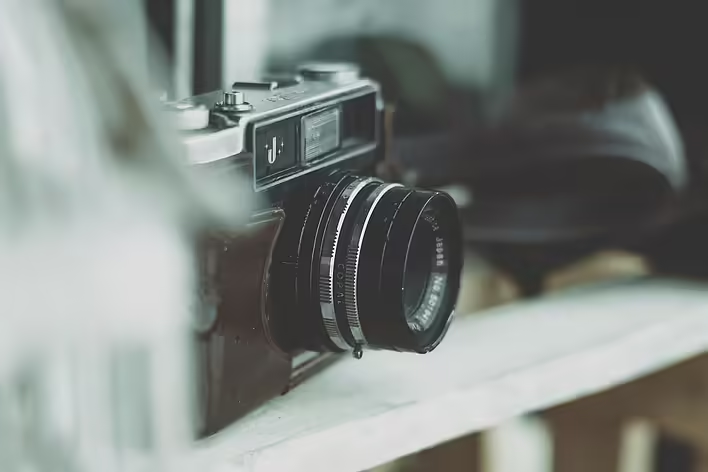
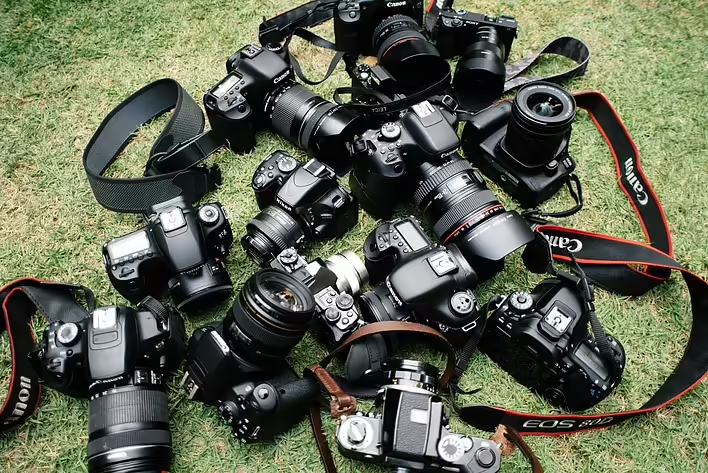
If you want to dive into the world of lomography, there are several camera options – from iconic models to modern lomographic solutions. Here’s a list that can help you choose the best camera for your film experiments.
1. Classic lomographic cameras (by Lomography)
These cameras are produced by Lomographic Society International and are specifically designed to achieve unusual effects.
📷 Lomo LC-A+ – a legendary camera that became the foundation of lomography. It has a wide-angle lens, saturated colors, and strong vignetting.
📷 Diana F+ – a medium-format plastic camera that produces soft, slightly blurred shots in a vintage style.
📷 Holga 120N – another iconic camera that uses 120 mm film. Known for its light leaks, soft focus, and unpredictable results.
📷 Lomography Sprocket Rocket – a unique panoramic camera that captures the frame along with the film perforation, creating an unusual effect.
📷 Lomo'Instant – a lomographic instant camera, similar to Polaroid, that works with Fujifilm Instax Mini film.
📷 Lomography Konstruktor – a DIY camera that you need to assemble yourself before use. It allows you to understand how analog photography works.
2. Soviet film cameras
If you want to shoot in the style of lomography, you can find old Soviet cameras. They often produce similar effects and are inexpensive.
📷 Смена 8М – a simple and compact camera with a plastic lens. Perfect for experiments.
📷 Зеніт-Е – a mirror camera with a Helios 44-2 58mm f/2 lens that creates beautiful swirly bokeh.
📷 ФЕД-5 – a rangefinder camera similar to Leica, with bright and contrasting shots.
📷 Київ-4 – another Soviet rangefinder that can be found at an affordable price.
3. Alternative film cameras (not just for lomography)
If you want to find something more versatile but still with a vintage aesthetic, consider these options.
📷 Olympus XA – one of the best compact film cameras that takes very sharp, saturated shots.
📷 Canon AE-1 – an iconic mirror camera with auto exposure, perfect for beginners.
📷 Minolta Hi-Matic 7sII – a small rangefinder with good light sensitivity.
📷 Pentax K1000 – a reliable mechanical camera suitable for both lomography and more classic film photography.
📷 Polaroid Now – a modern instant camera if you want to get shots right away.
If you’re tired of filters on your smartphone, try picking up a film camera and just shoot without overthinking. You might discover a new dimension of creativity!
Like it?React
🧵
This post doesn't have any additions from the author yet.