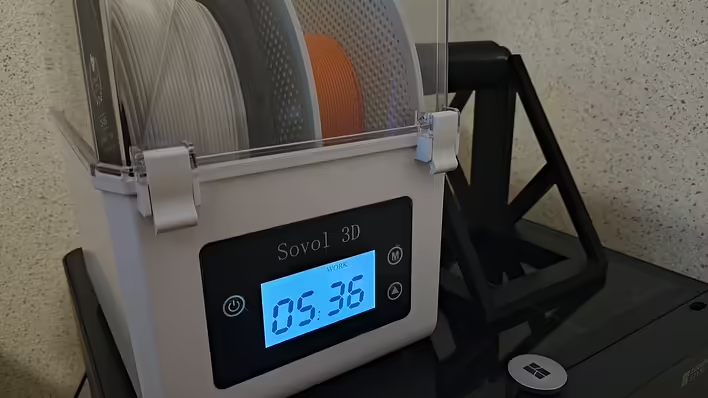
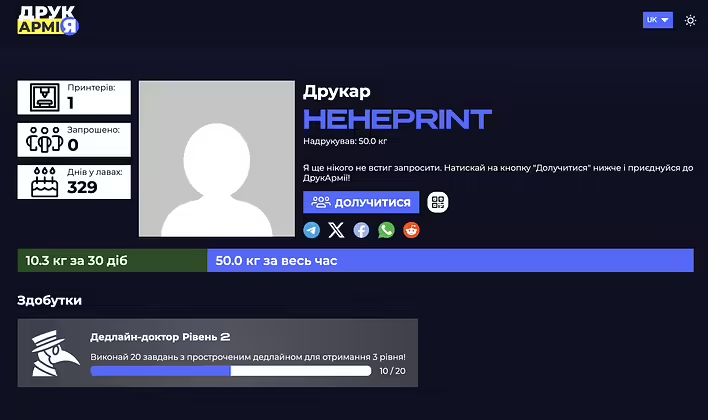
On April 19, I published a post about the experience of printing the first 10kg of products for the military. Today is August 20, and I just sent another package, and my filament counter shows - 50kg.
I almost forgot, but I also wrote a short post on June 11 about 25kg printed. Blogging is interesting because you document certain things that you can refer back to later.
For example, for the first 25kg of printed products, I had about ~3kg of waste. This plastic was sent for recycling (you can find contacts in the DA chat). And now, my package of waste contains about ~1.7kg of defective products. That is, almost half as much. This can be explained by the experience gained, as well as the fact that some products require a lot, and all that is needed is to run around changing plates.
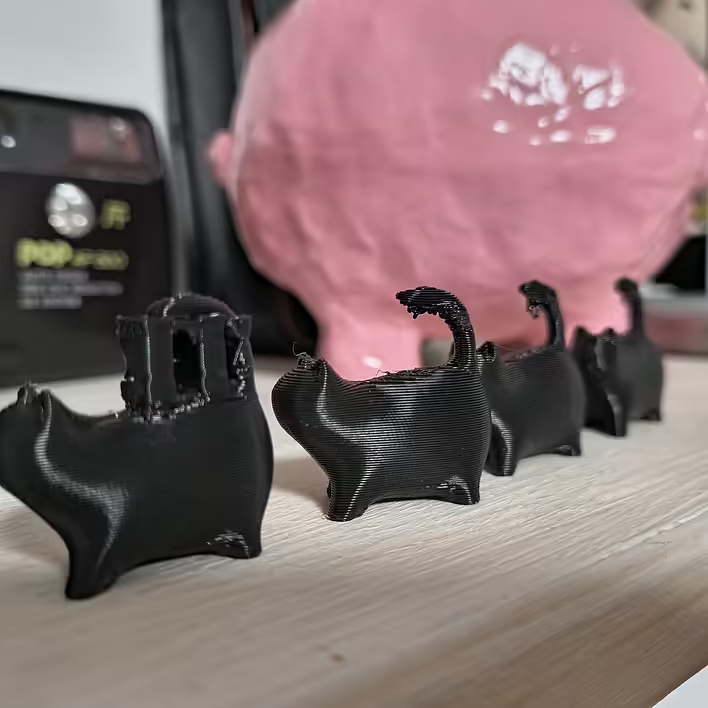
Currently, about half of the waste is not related to setup issues, etc. For example, a large batch of products broke halfway, and the printer "printed empty" when the filament got stuck in the dryer.
But for general statistics:
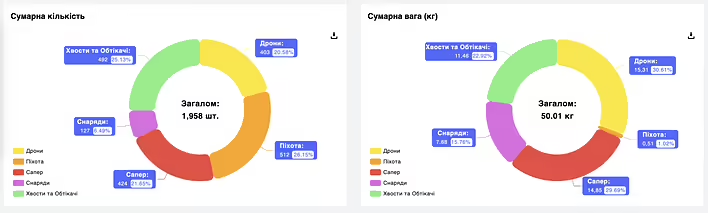
50kg of products printed for the PrintArmy
14 shipments via Nova Poshta
~4.7kg of waste or rounded to 10%
12 quality assessments of printing - Excellent. 2 - Unknown (one is still on the way, and I sent the other back in March, and I think people there are not in a hurry to give ratings)
1958 printed products (some consist of 2 or more parts)
And what about the money?
55kg (products + waste) * 300 UAH (average price for 1kg of plastic including home delivery) = 16,500 UAH
Boxes - not counted, as I use those that are available at home (animal feed comes in boxes 40x40x35)
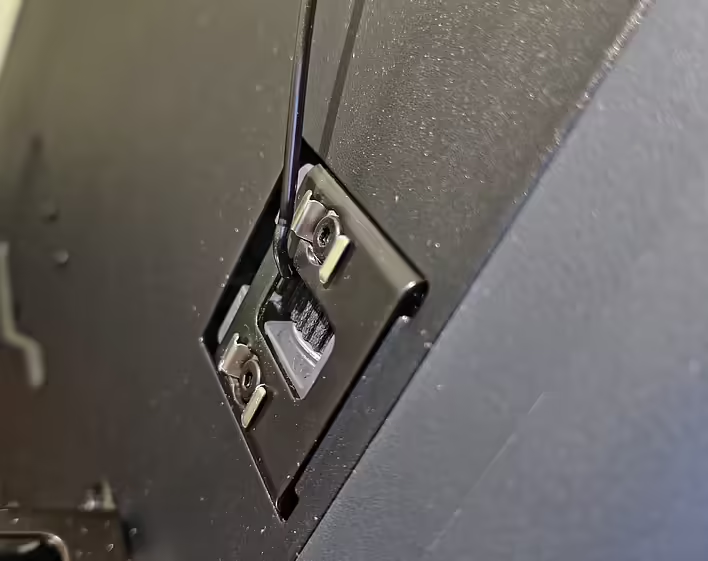
Printer maintenance. I will account for electronic expenses separately someday, but overall, this has not significantly affected the total. Lubricants, varnish, and spare parts ~ 3500 UAH for the entire time (but I bought a large volume of lubricant, and it will last a long time). I should probably write a small but separate post about this too.
Work and time - priceless ^_^
In total, for 50 kg of very useful products for the army, 23,220 UAH was spent. I do not count the printer and the dryer. It would also be reasonable to add electronic expenses here, but I currently do not have the figures.
In commercial 3D printing, the price per 1 gram of the finished product is used (the price depends on the layer height and other specifics). The average commercial price that other printers use to calculate their profit in monetary terms is 6 UAH.
That is, if we went to a company and ordered 50 kg of products at a price of 6 UAH per 1 gram... We would be quoted a price of 300,000 UAH.
My price for 1 gram of the finished product comes out to 0.4644 UAH (23220/50000). To make it easier to remember - I round it to 50 kopecks (I think it will cover the costs of electronics, rolls of tape, etc.).
To summarize. Approximately in 5 months, 50 kg of products for the military have been printed and sent (10kg per month). Monthly expenses are 5000 UAH (on average).
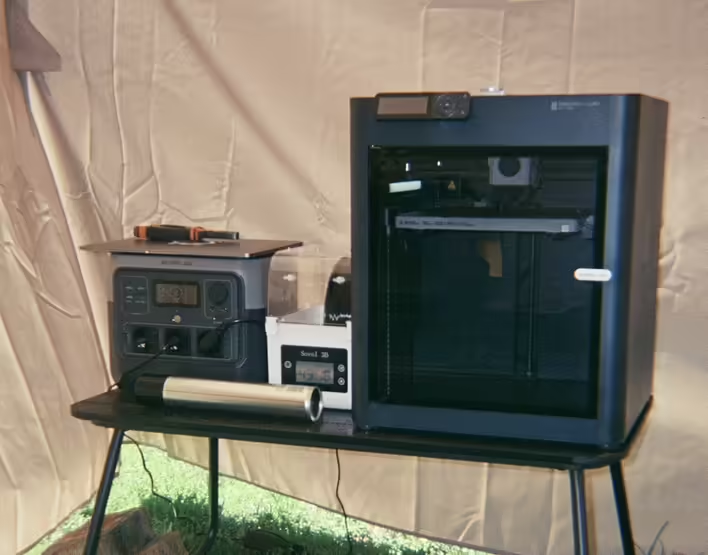
My printer P1S can print more, but there is not always time or capability. Printers organize farms with a continuous working cycle. But printing as much as possible (finances and time) is also very important.
By the way, here is an interesting video about a large Ukrainian 3D farm. I highly recommend watching it if you already have a printer and have printed the first 2-3 kg (then the processes described in the video will be more understandable).
Some products are being transferred to thermo-plastic machines, which is a logical step in the evolution of this process. But the load and the number of different products needed by the army are not decreasing. So don't hesitate and join DA.
![Post cover: [PrintArmy] The first 50kg of printed products for the military](https://cdn.tseivo.com/ud1y2vcjnjrg51pw18ljubptwmgd)


![HMS error: 0300-0d00-0002-0001 what does it mean and how to fix it? [P1S]](https://cdn.tseivo.com/0wi0y60gycmr9yktq6uss8vyao12)
![[P1S] Message on the screen - Z-axis lead screw needs lubrication](https://cdn.tseivo.com/n2484aszggdtb76vwovcelpt4vag)
![[What to print] Tube squeezer](https://cdn.tseivo.com/1n2nj9awamp0cal358blvpihswju)