This content has been automatically translated from Ukrainian.
What is DLC
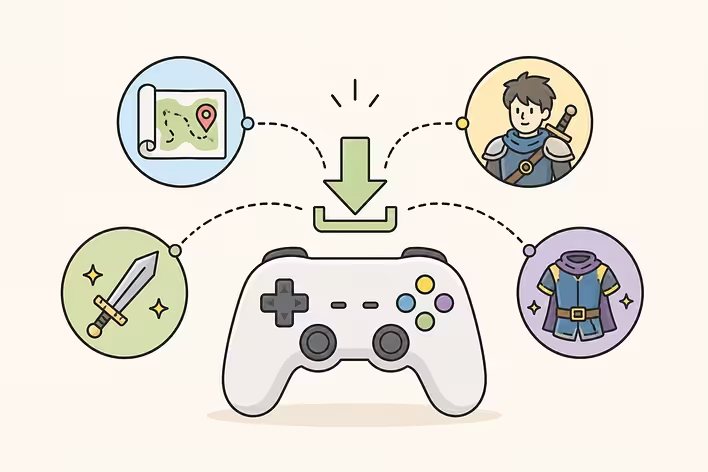
DLC (from the English Downloadable Content) is additional content for an already released video game that developers create after its release. Unlike patches that fix bugs or improve game stability, DLC adds new gameplay content.
In other words, if the base game is the main story, then DLC can be compared to a new chapter of a book or an expansion for a board game. It expands the already familiar world and gives the player new opportunities.
Depending on the game, DLC can include:
- new story missions or campaign objectives;
- additional locations to explore;
- new characters or gameplay classes;
- weapons, armor, vehicles, or other items;
- costumes, skins, and other cosmetic elements;
- new game modes or additional mechanics.
For example, after completing the main game, developers may release DLC that continues the story of the main character or opens up a completely new plot with new characters. In other cases, the expansion adds only cosmetic items that do not affect gameplay but allow changing the appearance of the character or equipment.
DLC can be free or paid. Free expansions are often released as a gift to the community or as part of major updates. Paid DLC usually contains significantly more content: new story campaigns, large areas, dozens of hours of additional gameplay, or unique mechanics.
Many modern games receive several DLCs over months or even years after release, which keeps the game interesting for much longer. This has become a common practice for most major game studios.
How DLC differs from patches, updates, and add-ons
The words DLC, patch, update, and add-on are often used as synonyms, although they actually mean different things.
For example, if after release developers fixed dozens of bugs, improved optimization, and made the game more stable — that is a patch or update.
If they added a new story campaign, a separate map, several characters, or a set of costumes — that is already DLC.
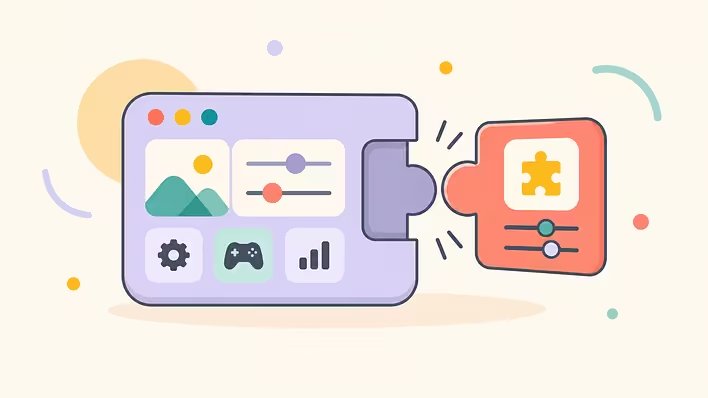
It is also worth explaining what the word add-on means. It is a broad term for an additional component that expands the capabilities of a game or application. In games, an add-on can refer to new content, a large story expansion, or a supplementary user tool. Because of this, the meanings of the terms DLC and add-on sometimes overlap. However, DLC is downloadable game content, while an add-on can add not only content but also new features or interface elements.
What types of DLC are there
Not all DLC is the same. Some add only a new costume for a character, while others effectively turn into a separate game in terms of scope.
The most common types of DLC:
- story expansions — continue the story or open a new plot line;
- new characters — especially popular in fighting games, RPGs, and online games;
- maps and locations — add new territories for exploration or multiplayer;
- weapons, vehicles, and equipment — open new possibilities during gameplay;
- cosmetic DLC — contains skins, costumes, animations, interface designs, or other elements that do not affect game balance;
- soundtracks, art books, and digital bonuses — often included in special or collector's editions.
That is why it is worth checking the description of the DLC before purchasing. Some expansions provide dozens of hours of new content, while others contain only a few cosmetic items. For some players, this is a great way to continue their favorite game, while for others, it is an optional bonus that can be comfortably skipped to complete the main campaign.
Examples of famous DLC
In recent years, many expansions have been released that have become just as popular as the games themselves. Some add a few new items, while others open up dozens of hours of additional gameplay.
Here are a few well-known examples:
- The Witcher 3: Blood and Wine — a large story DLC with a new region of Toussaint, characters, quests, and mechanics.
- Cyberpunk 2077: Phantom Liberty — a massive expansion with a new story campaign, city district, and characters.
- Elden Ring: Shadow of the Erdtree — adds a huge new area, bosses, weapons, and a separate storyline.
- The Sims 4 — has received dozens of DLC of varying scales: from large expansions with new features to small furniture and clothing packs.
- Mario Kart 8 Deluxe – Booster Course Pass — adds dozens of new tracks, significantly increasing the amount of content in the game.
These examples clearly show how different DLC can be. Some are effectively equivalent to a separate game in scope, while others only add cosmetic items or a few new missions.
Frequently Asked Questions
Is DLC necessary to complete the game?
In most cases — no. The base game can be completed without any expansions. DLC only expands the content and offers new opportunities.
Are all DLC paid?
No. Developers release both paid and free DLC. Free ones usually contain small additions or are given as gifts to the community, while large story expansions are most often sold separately.
Do you need to buy DLC separately?
Usually yes. However, there are Complete Editions, Game of the Year Editions, Ultimate Editions, and other special editions that include most or all DLC.
Can DLC be removed?
Yes. On most platforms, expansions can be installed and uninstalled separately from the base game. However, in some cases, this may make saves or items related to that DLC unavailable.
What is a Season Pass?
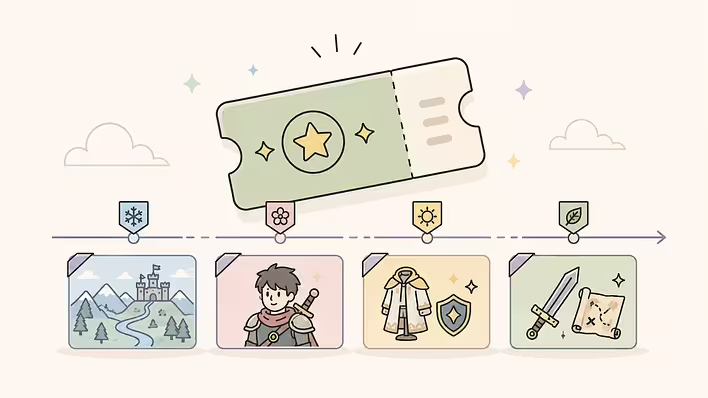
Season Pass is a bundle that provides access to several DLC at once. By purchasing it, the player usually receives all planned expansions at a lower price than if they were bought separately.
Like it?React
🧵
This post doesn't have any additions from the author yet.