This content has been automatically translated from Ukrainian.
Just ten years ago, most fashion trends were born on runways or in the wardrobes of celebrities. Today, the situation has changed. New styles are increasingly appearing on TikTok, Instagram, or Pinterest, and from there they make their way into everyday life, collections of well-known brands, and even interior design.
This is how dozens of so-called internet aesthetics emerged — directions that combine not only clothing but also color palettes, photography, music, room decor, social media approaches, and even a certain mood.
Despite often being referred to as subcultures, this is not entirely accurate. Most modern internet aesthetics do not have a shared ideology or strict rules. Rather, they offer a certain visual image that each person can adapt to their own taste.
What is internet aesthetics
The word aesthetic in English means "aesthetics" or "artistic style".
In social media, this term has taken on a somewhat different meaning. Today, internet aesthetics refer to a recognizable combination of colors, clothing, music, photographs, objects, and visual details that together create a certain mood.
That is why one direction may be associated with cozy libraries and old books, another with the bright colors of the early 2000s, and yet another with country cottages, wildflowers, and homemade baked goods.
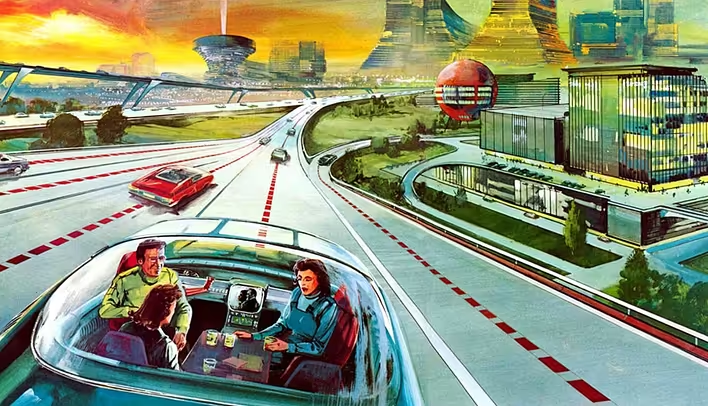
Y2K — the return of the early 2000s
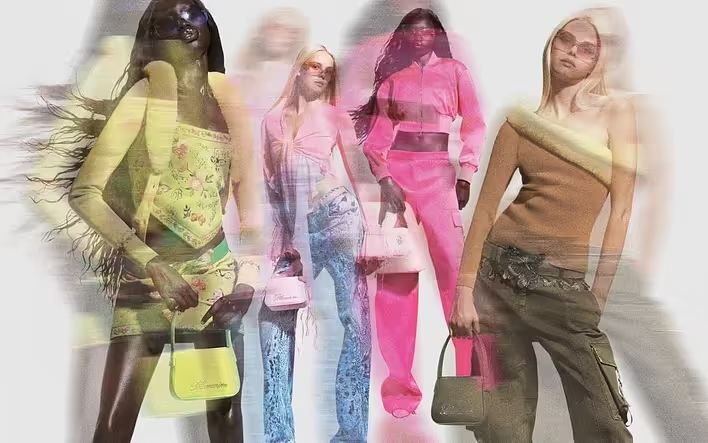
One of the most well-known trends of recent years has been Y2K.
The name comes from the English Year 2000. Initially, this abbreviation was used in connection with the so-called "Y2K problem," related to the functioning of computer systems. Later, Y2K began to refer to the characteristic fashion and visual culture of the late 1990s and early 2000s.
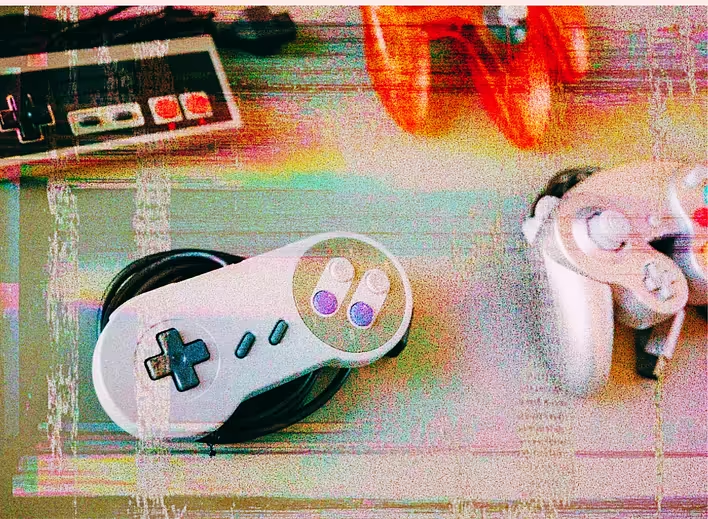
This direction is characterized by shiny fabrics, low-rise jeans, crop tops, colorful sunglasses, metallic accessories, small bags, bright plastic, and futuristic design.
After 2020, Y2K experienced a true revival thanks to TikTok, and its elements quickly returned to the collections of many fashion brands.
Dark Academia — the romance of old universities
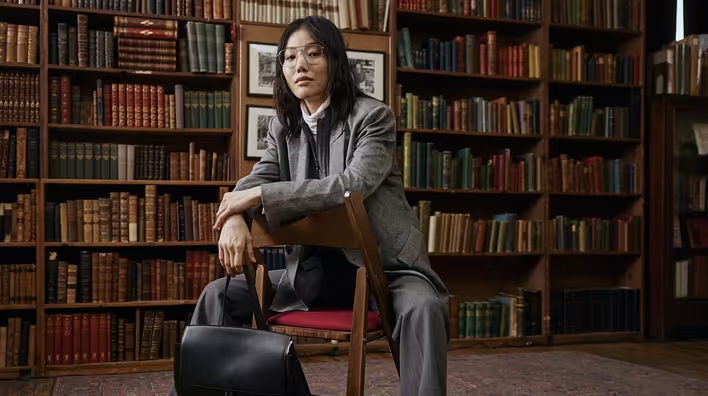
This direction is inspired by ancient universities, classical literature, libraries, art, philosophy, and the atmosphere of quiet autumn evenings.
In the wardrobe, dark brown, black, burgundy, and beige colors prevail, along with blazers, coats, shirts, vests, sweaters, and classic footwear.
Dark Academia gained particular popularity during the COVID-19 pandemic when many people began to read more, study remotely, and seek a cozy atmosphere for work and creativity.
Cottagecore — the romance of life in the countryside
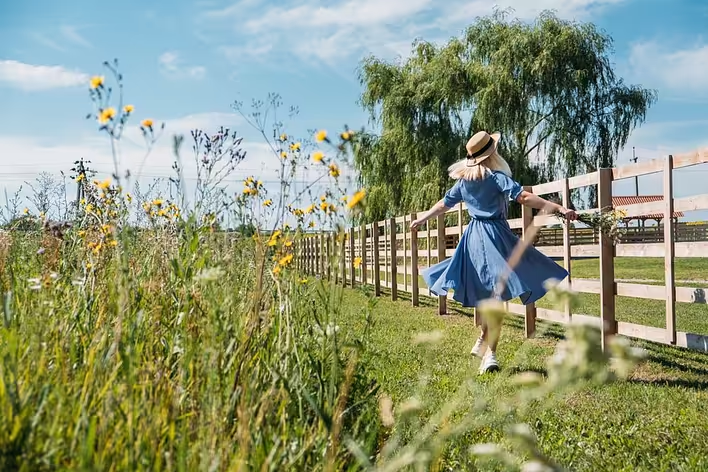
Another direction that has rapidly gained popularity is Cottagecore.
It can be described as a romanticized view of a peaceful life amidst nature.
Linen clothing, wildflowers, fruit baskets, old wooden houses, baking homemade bread, gardening, embroidery, herbal tea, and forest walks have become the main symbols of this direction.
The popularity of Cottagecore also sharply increased during the pandemic when many people began to dream of a slower life away from big cities.
Alt Girl — the freedom to combine different styles
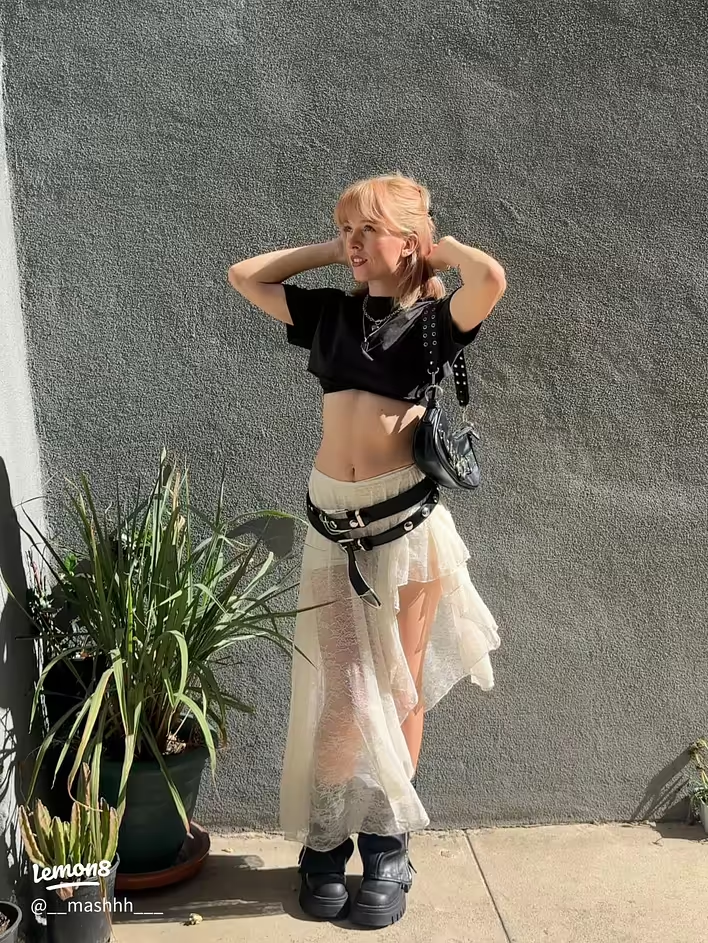
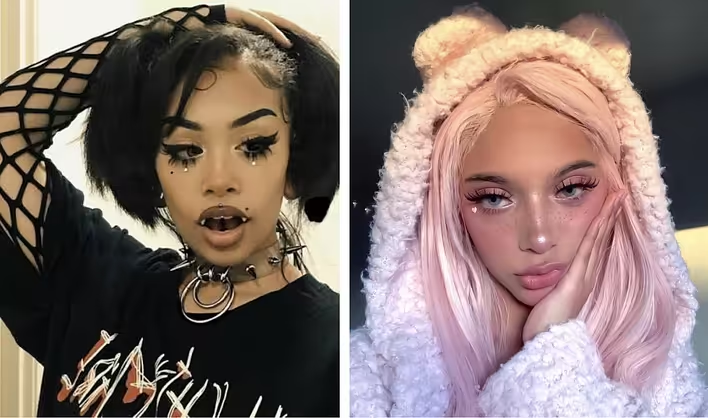
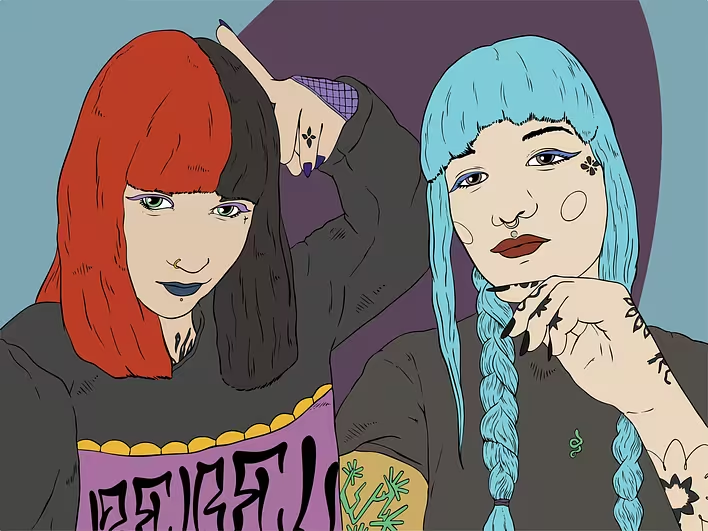
Among the most well-known modern internet trends, Alt Girl holds a special place.
Unlike many others, it does not have a single canonical image. Its main feature is the combination of elements from punk, grunge, goth, emo, skater fashion, Y2K, and many other styles.
That is why it is almost impossible to find two identical alt girls.
Coquette — romance in a modern interpretation
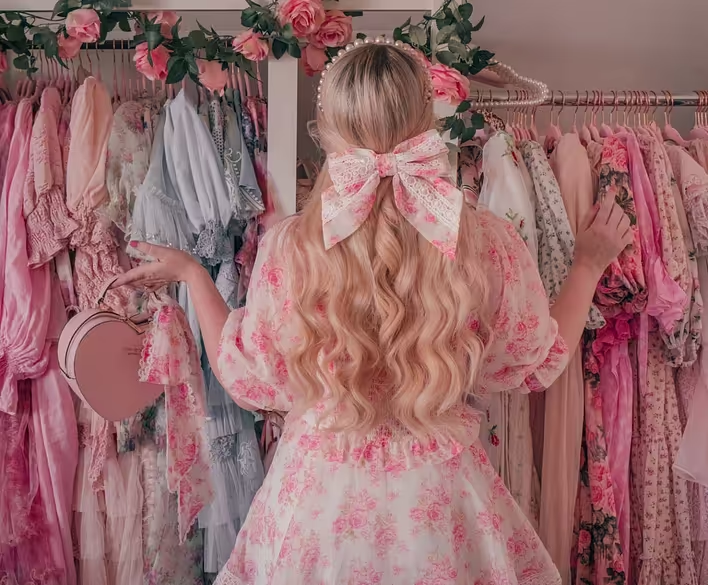
It is easily recognizable by its soft pastel colors, lace, satin ribbons, pearls, bows, and feminine silhouettes. Visually, it is inspired by mid-20th-century fashion, ballet aesthetics, and vintage images, but reinterprets them in a modern context.
The spread of this style has been significantly aided by TikTok and Pinterest, where users began actively sharing collections of clothing, cosmetics, accessories, and interior decor in a similar mood.
Clean Girl — the beauty of naturalness
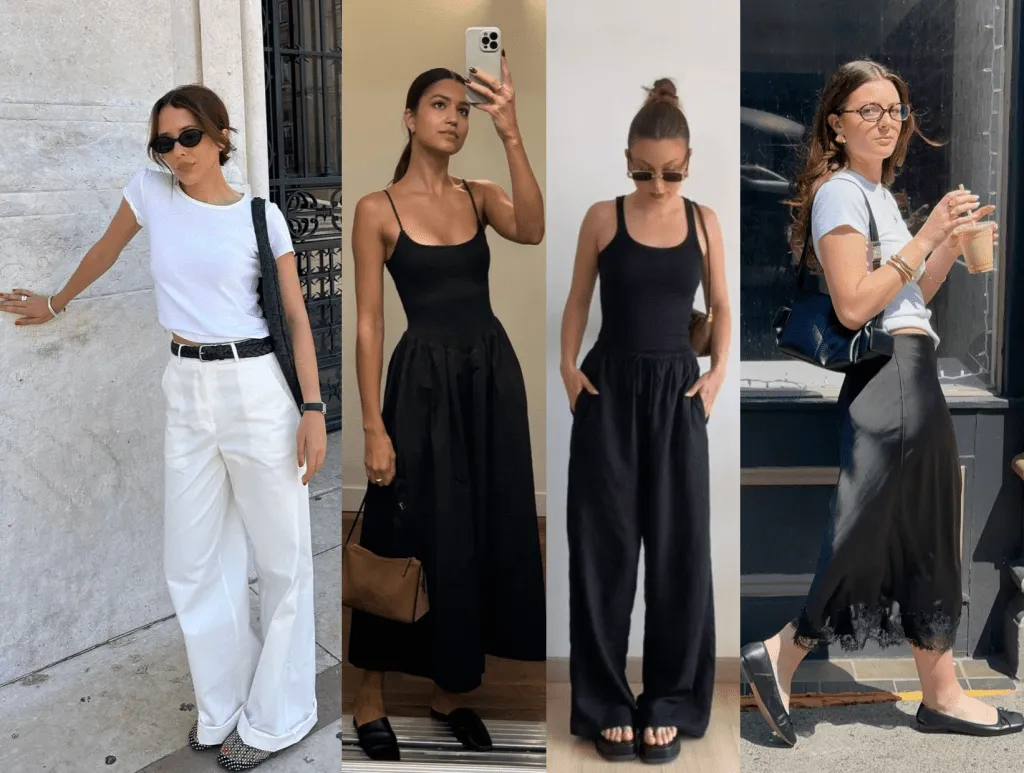
If Coquette leans towards romanticism, then Clean Girl focuses on simplicity and minimalism.
This style is characterized by natural makeup, smoothly styled hair, light clothing, quality basic items, and minimal accessories.
Its popularity is largely associated with the growing interest in skincare, healthy lifestyles, and a versatile wardrobe without excessive details.
Despite its name, this style does not imply that its followers look "better" or "neater" than others. It is just one of many modern internet aesthetics with its own distinctive features.
Fairycore — a fairy tale in real life
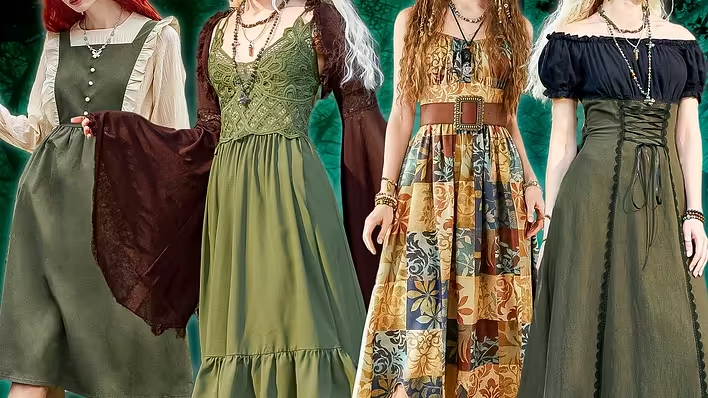
This direction is inspired by fairy tales, forest nature, folklore, and the world of fantasy. It is characterized by light fabrics, floral motifs, lace, wings, moss, ferns, mushrooms, old trees, and soft natural lighting.
Fairycore is especially loved by people interested in botany, photography, creativity, or literature in the fantasy genre.
Some of its features overlap with Cottagecore, however, Fairycore leans much more towards a magical, almost fairy-tale atmosphere.
Goblincore — the beauty of wild nature
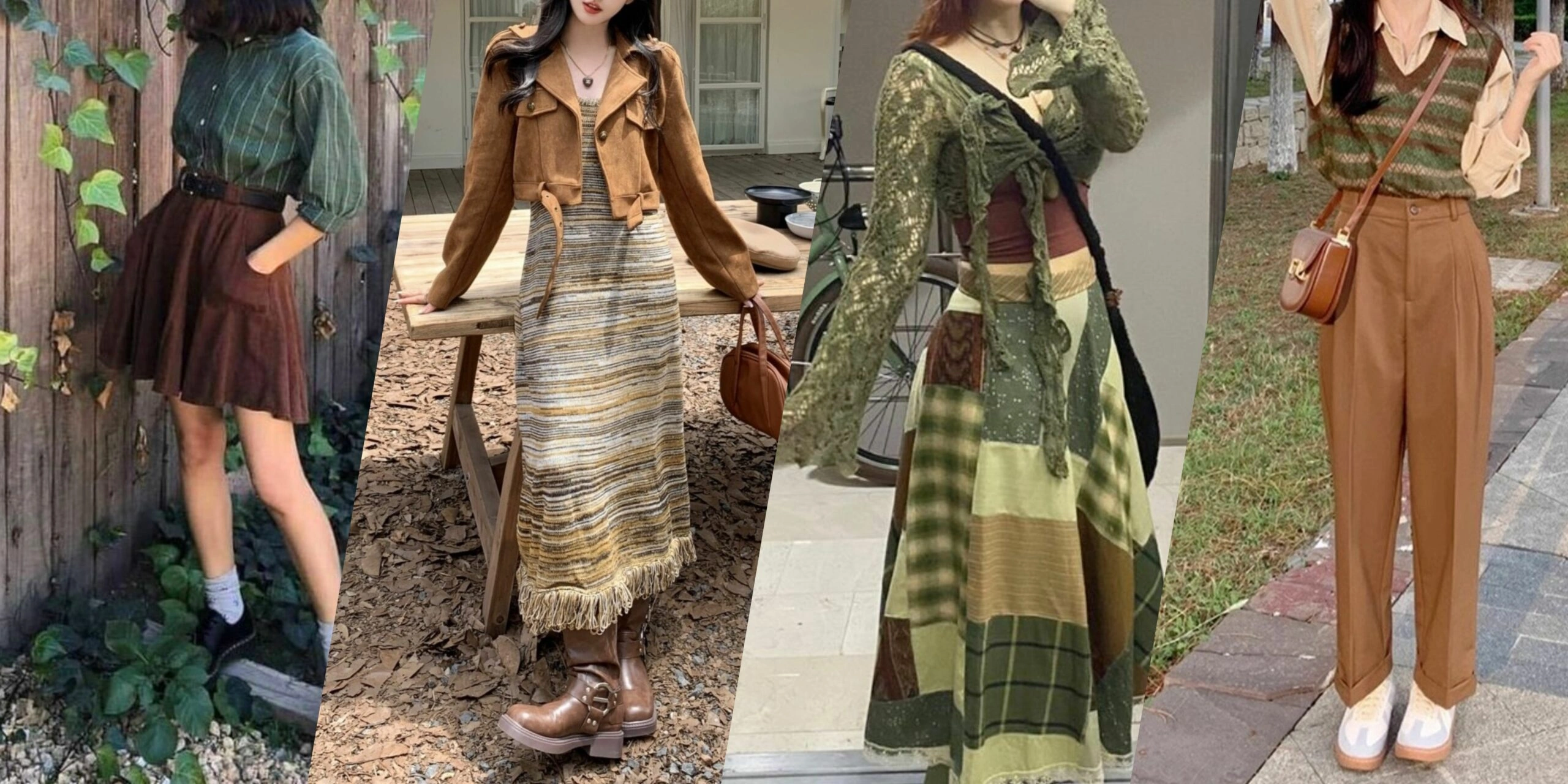
If most popular internet aesthetics strive for neatness and visual harmony, then Goblincore draws attention to the less obvious beauty of nature.
Moss, mushrooms, dry branches, stones, acorns, frogs, snails, old stumps, or fallen leaves — all of these become sources of inspiration.
Unlike Cottagecore, which romanticizes well-kept rural life, Goblincore finds beauty in nature as it is: wild, imperfect, and diverse.
That is why this style is often perceived as a kind of alternative to the overly "polished" images that have long dominated social media.
Why do internet aesthetics change so quickly
Unlike classic subcultures that could exist for decades, modern internet aesthetics change very rapidly.
The reason lies primarily in social media.
Algorithms constantly promote new content, creators inspire each other's work, and individual elements of different styles gradually mix and acquire new sounds.
That is why today it is increasingly difficult to draw a clear line between Y2K, Coquette, Alt Girl, Clean Girl, and other popular directions. Most people combine elements of several styles at once, creating their own individual image.
Do you need to choose just one aesthetic?
Not at all.
This is one of the main features of modern internet culture.
The popularity of individual directions does not mean that a person must strictly adhere to only one of them. On the contrary, today it is quite natural to combine elements of Y2K with Dark Academia, add details of Coquette to the minimalism of Clean Girl, or use accessories inspired by Fairycore.
It is this freedom to experiment that has become one of the main reasons for the popularity of modern internet aesthetics.
A new language of modern fashion
At first glance, internet aesthetics may seem like short-lived trends. However, their influence has long gone beyond social media.
Today, their elements can be seen in the collections of global brands, interior design, photography, advertising, music videos, and even the decor of cafes and shops.
Perhaps this is their main feature. They do not dictate strict rules and do not require belonging to a specific community. Instead, they offer a multitude of sources of inspiration that anyone can combine in their own way. That is why some internet aesthetics gradually disappear, others return after a few years, while new directions are constantly emerging, reflecting the tastes and moods of their time.
Like it?React
🧵
This post doesn't have any additions from the author yet.