This content has been automatically translated from Ukrainian.
Oujidere (Japanese: 王子デレ, Ōjidere or Oujidere) is an archetype of a character in anime, manga, light novels, and visual novels who behaves like a true prince. Such heroes are distinguished by noble manners, charisma, self-confidence, and a desire to live up to the image of the ideal noble hero.
The name comes from two Japanese words: ōji (王子) — "prince" and deredere (デレデレ) — a word that describes tenderness, infatuation, or open displays of affection. The suffix -dere is widely used in fan culture to denote various character archetypes.
Oujidere is often referred to as the male counterpart of himedere; however, this definition is not entirely accurate. Both archetypes indeed share many similarities, but the image of oujidere is built not only on the desire to be treated like a prince. Such a character usually strives to embody this image: to be noble, elegant, charismatic, and to inspire admiration in those around them.
That is why oujidere is not necessarily arrogant or capricious. In many works, such heroes gradually reveal their best traits, becoming attentive, noble, and caring. Over time, they truly transform into those "ideal princes" that other characters initially perceive them to be.
Origin of the Term
Unlike tsundere, yandere, or dandere, the term oujidere does not have such a clear origin story. Most researchers of anime culture agree that it originated as the male equivalent of himedere and gained popularity primarily in the international fan community.
Because of this, different sources may interpret this archetype somewhat differently.
Some consider oujidere to be a character who simply wants to be treated like a prince. Others emphasize that the main trait is the desire to live up to the ideal image of a prince: to be noble, charismatic, well-mannered, and worthy of admiration. This interpretation is the most commonly encountered in English-language materials about dere archetypes, although the boundaries of this type remain quite conditional.
Main Traits of Oujidere
Despite the fact that different sources may describe this archetype differently, most characters classified as oujidere share common traits. They strive to impress as noble, self-confident, and admirable people, and their behavior often resembles that of a classic prince.
Noble Manners
Oujidere tries to behave impeccably. He pays attention to his appearance, speaks confidently, adheres to etiquette, and often gives the impression of someone with an aristocratic upbringing.
Even if such a character comes from an ordinary family, his behavior creates the image of a true prince.
Charisma
One of the most characteristic traits of oujidere is natural charisma. Such heroes easily attract attention, quickly win the affection of those around them, and often become the most popular students in school or informal leaders of their group.
That is why in many school anime, they are called "school princes," even if they have no relation to royalty.
Self-Confidence
Oujidere knows his strengths well and is not shy about demonstrating them. He rarely doubts his decisions, behaves calmly and confidently, and his composure often earns the respect of others.
At the same time, this confidence does not always turn into arrogance. For many representatives of the archetype, it is more important to live up to the created image than to prove their superiority over others.
Aspirations to Be an Example
Unlike himedere, who primarily expect special treatment, oujidere often strive to meet the high standards they have set for themselves.
That is why they often take on responsibility, help others, protect the weaker, or strive to behave as they believe a true prince should.
Hidden Care
Despite their outward confidence, most oujidere gradually reveal their kind side. As the story develops, they become more attentive to their close ones, care more about their feelings, and often start acting not for their own image but for those they hold dear.
This evolution often makes oujidere one of the most attractive archetypes in romantic anime.
How Does Oujidere Differ from Other Archetypes?
Due to similar traits, oujidere is often confused with himedere, kamidere, or simply the image of the "ideal prince." In reality, each of these types has its own characteristics.
Oujidere and Himedere
These two archetypes are compared most often.
At first glance, they are very similar. Both oujidere and himedere love attention, are self-confident, and are accustomed to making a strong impression on those around them. However, there is a fundamental difference between them.
Himedere seeks to be treated like a princess. It is important for her that others fulfill her wishes, admire her, and acknowledge her exceptionalism. Such a character can often be capricious, demanding, or egocentric.
Oujidere, on the contrary, focuses more on living up to the image of the ideal prince. It is important for him to be noble, charismatic, well-mannered, and worthy of admiration. While himedere expects privileged treatment, oujidere often strives to earn respect through his actions.
That is why representatives of this archetype often become a support for other characters and gradually justify the image created around them.
Oujidere and Kamidere
Despite high self-esteem, these archetypes are built on different ideas.
Kamidere believes he is above others. His confidence is so great that he may consider himself an exceptional individual or the only person capable of making the right decisions.
Oujidere does not seek to dominate or control everyone around. His main trait is the desire to live up to the image of a noble prince. He may behave confidently or even a bit condescendingly, but usually does not consider others to be inferior to himself.
In other words, kamidere seeks to be the highest, while oujidere seeks to be worthy of admiration.
Oujidere and the "School Prince" Image
Another common misconception is to assume that any popular or handsome hero is automatically an oujidere.
In many romantic anime, you can find characters referred to as “school princes” (ōji-sama). Usually, these are beautiful, charismatic, and popular students who enjoy widespread admiration.
However, the status of "school prince" alone does not make a hero an oujidere. What matters is not popularity or appearance, but the character's behavior. If he strives to live up to the ideal of a noble prince, behaves nobly, and takes responsibility for others, then he can truly be classified as this archetype.
That is why not every popular hero is an oujidere, just as not every oujidere necessarily has to be the most popular person in their environment.
Is Oujidere Always a Guy?
No.
Although the word ōji literally means "prince," the archetype itself is not tied to the character's gender.
In anime, there are often girls referred to as "school princes" or who consciously emulate the image of a noble hero. If such a character demonstrates the characteristic traits of oujidere, they can also be classified as this archetype.
However, in practice, most oujidere are still male characters, while among female characters, himedere is encountered much more frequently.
Most Notable Examples of Oujidere in Anime
Oujidere is one of the least common and least established dere archetypes. Because of this, the list of its representatives may vary depending on the source.
Below are characters most often associated with this archetype or who best demonstrate its characteristic traits.
Tamaki Suoh — Ouran High School Host Club
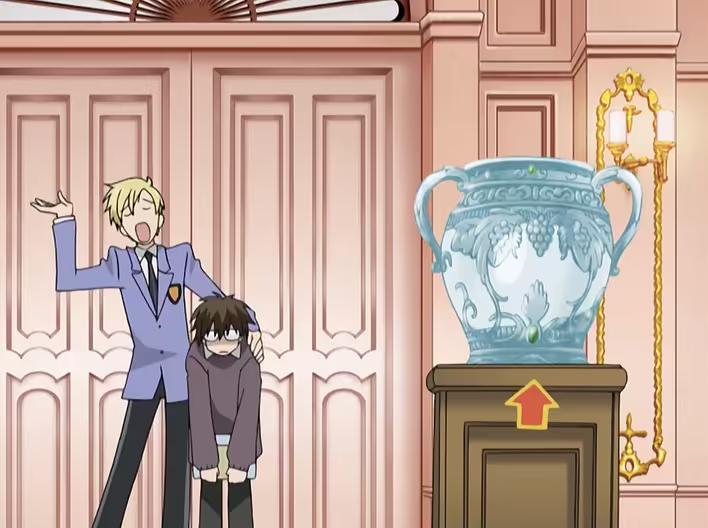

Tamaki Suoh is often mentioned as a classic example of oujidere. He is elegant, charismatic, loves being the center of attention, and consciously maintains the image of a flawless prince.
Despite his tendency towards drama and vanity, Tamaki genuinely cares for his friends and is always ready to help those in need. As the story progresses, he increasingly reveals his kind and noble side, which fully justifies the image he has created around himself.
Hidziri Koganei — Romantic Killer
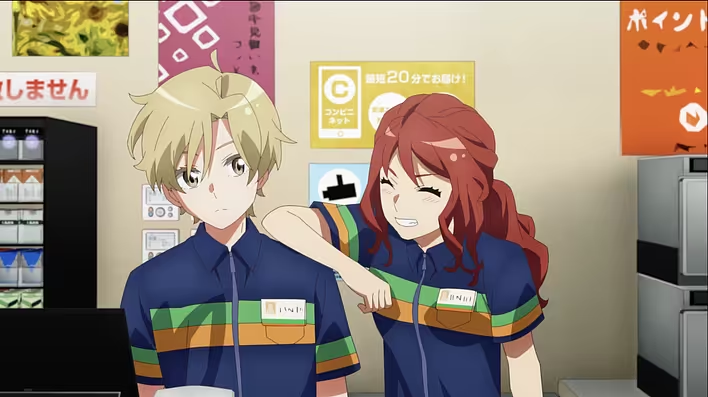
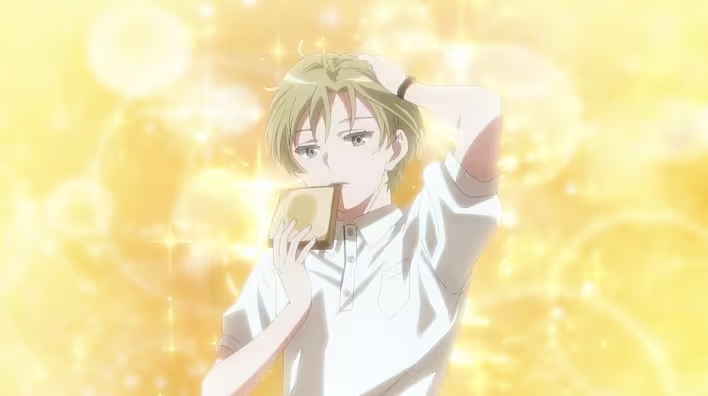
Hidziri Koganei is one of the few modern characters that fan guides almost unanimously classify as oujidere.
Handsome, popular, and self-confident, he is accustomed to widespread admiration and initially expects special treatment from others. However, gradually Hidziri becomes more attentive to people's feelings and starts to behave like a true gentleman. This change well illustrates the development characteristic of many representatives of the archetype.
Utena Tenjou — Revolutionary Girl Utena

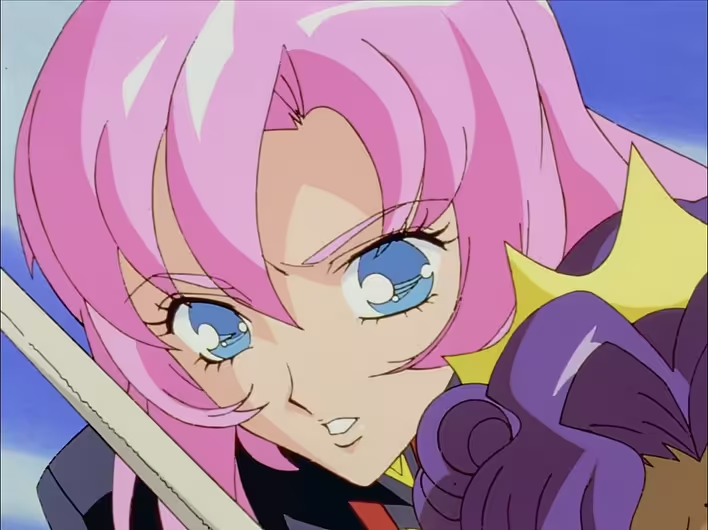
Utena is a special case.
She does not seek to be treated like a princess or for someone else to protect her. On the contrary, even as a child, she decides to become a prince herself — a person who protects others and helps those in need.
That is why Utena is sometimes mentioned alongside oujidere. At the same time, it is more accurate to say that she is not a classic representative of this archetype but rather embodies the very ideal of a prince. Her image well illustrates that "princeliness" in anime can be defined not by the character's gender but by their values, nobility, and willingness to protect others.
Characters Sometimes Classified as Oujidere
Due to the lack of a single definition for this archetype, it sometimes includes characters about whom there is no unanimous opinion among fans.
Among them, the following are most often mentioned:
- Kyou Ootori (Ouran High School Host Club);
- Takashi Morinozuka (Mori) (Ouran High School Host Club);
- other characters referred to as "school princes" in the plot.
However, most of them are more accurately described by other archetypes or simply as the image of a popular and charismatic hero. The status of "school prince" alone does not mean that a character belongs to oujidere.
Are All Popular or Handsome Heroes Oujidere?
No.
In romantic anime, characters referred to as "school princes" are often encountered. However, this title alone does not define the archetype of the hero.
Popularity, attractive appearance, or high social status are not the main signs of oujidere. Much more important is whether the character strives to live up to the image of a noble prince, behaves nobly, is willing to take responsibility for others, and inspires admiration not only through appearance but also through their actions.
That is why not every beautiful or successful hero automatically belongs to this archetype.
Other Dere Archetypes
If you are interested in other character archetypes in anime, also take note of:
- Tsundere — hide their feelings behind cold or harsh behavior.
- Yandere — obsessed with love to the point of extreme actions.
- Dandere — quiet and shy characters who open up only to those they trust.
- Kuudere — restrained heroes who rarely show emotions.
- Deredere — open, friendly, and sincere characters.
- Himedere — behave as if they are true princesses.
- Kamidere — consider themselves superior to others and seek to control the world.
- Mayadere — former adversaries who switch sides to the main character.
- Bakadere — sincere, kind, but very naive or clumsy heroes.
Like it?React
🧵
This post doesn't have any additions from the author yet.