This content has been automatically translated from Ukrainian.
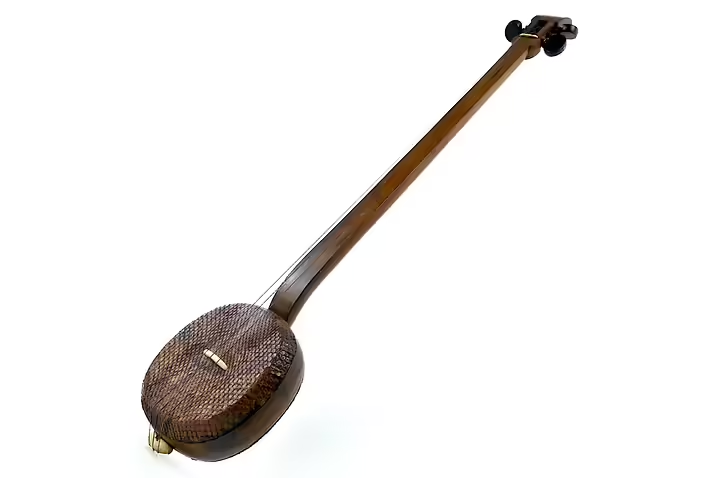
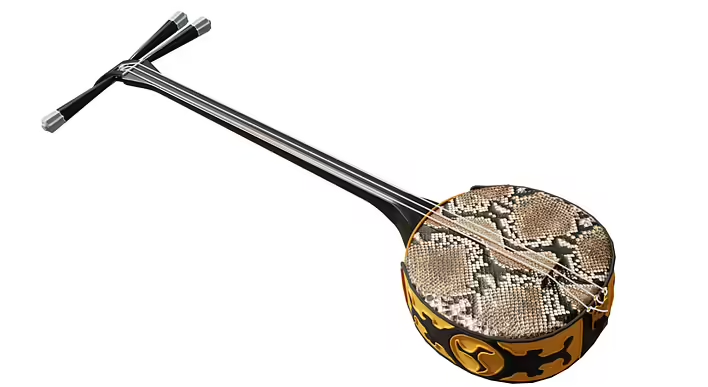
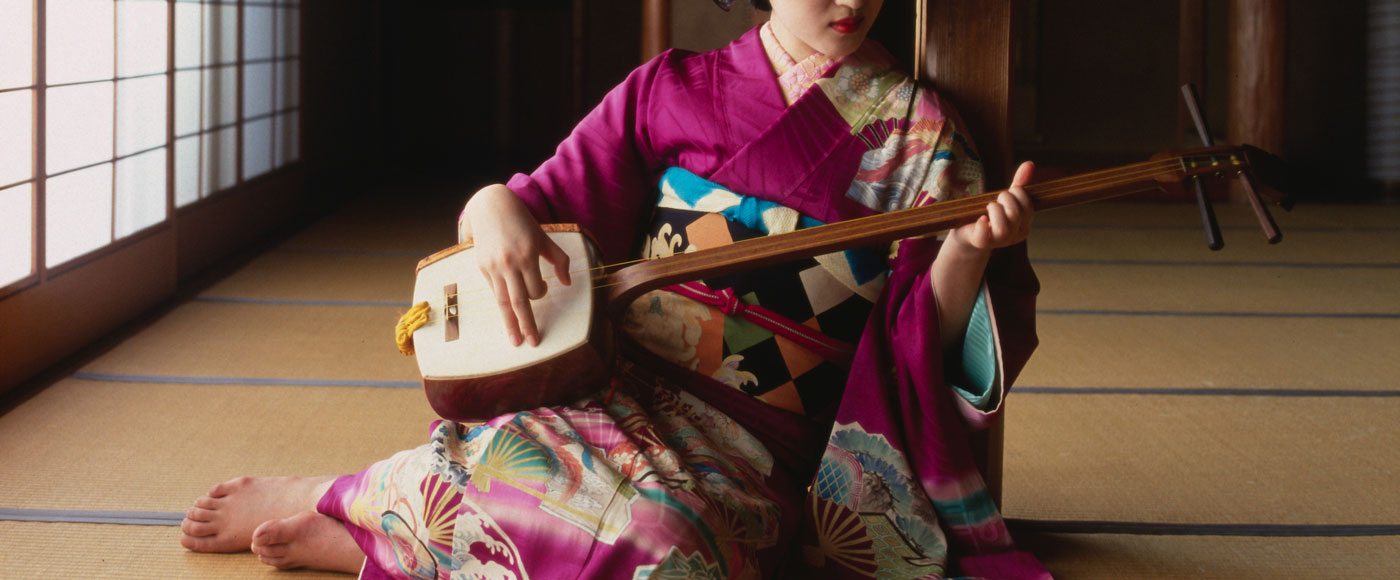
Shamisen - is a traditional Japanese stringed musical instrument that resembles a banjo. It has three strings, which are tuned with the help of three large pegs at the top of the instrument.
The body of the shamisen is usually made from various types of wood, such as mulberry, rosewood, or sandalwood, and has the shape of a long, thin neck that ends in a round resonating box. Both sides of the resonating body are covered with skin (often cat or dog skin is used, although modern instruments may use synthetic materials).
The shamisen is used in various forms of Japanese music, including folk, classical, and theatrical (for example, in traditional forms of theater such as kabuki and bunraku). Playing the shamisen requires the performer to use a special plectrum called "bachi" to strum the strings.
When and where did the shamisen appear?
The shamisen appeared in Japan in the 16th century. The instrument has its roots in an older three-stringed instrument "sanxian," which came from continental China through Okinawa, where it was adapted into an instrument known as "sanshin".
When the sanshin reached the main islands of Japan, it was adapted and transformed into what we now know as the shamisen.
This instrument became widely popular in Japanese music, especially in forms such as kabuki and bunraku, as well as in various genres of folk and popular music.
Like it?React
🧵
This post doesn't have any additions from the author yet.