This content has been automatically translated from Ukrainian.
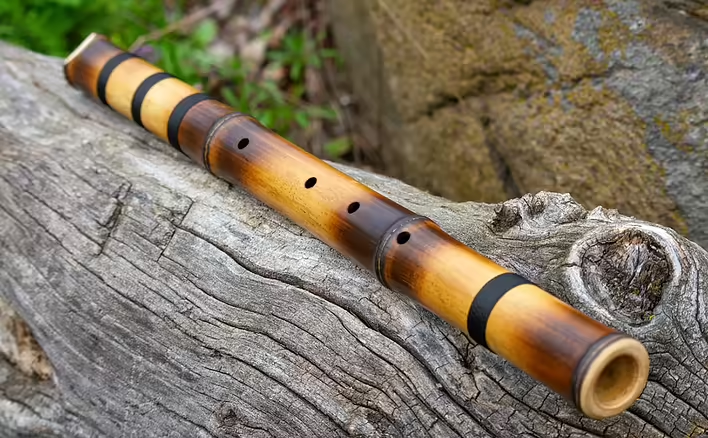
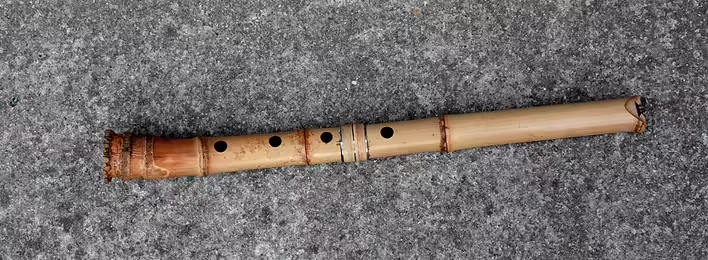
Shakuhachi (尺八) — is a traditional Japanese vertical bamboo flute known for its deep, meditative sound. It is not only used in music — it is a tool for spiritual practice, especially in the Zen Buddhism tradition.
Origin and Name
- The word "shakuhachi" literally means "1.8 shaku" — that is, the approximate length of the instrument (about 54.5 cm), where "shaku" (尺) is a Japanese unit of length.
- The instrument has Chinese roots but took on a unique form and function in Japan during the Nara period (8th century).
- The shakuhachi gained particular significance during the Edo period when it was used by the Fukeshū Buddhist monks who practiced meditation through playing (the practice of "suizen" — "spiritual breathing").
Instrument Construction
The shakuhachi features a very simple yet technically sophisticated design:
Element Characteristic Material - Usually bamboo, sometimes wood or plastic Length - Standard — 1.8 shaku (approximately 54.5 cm) Holes - 5 holes: 4 in front, 1 in the back (for the thumb) Shape - Cylindrical with a widening towards the bottom Mouthpiece - Cut edge — does not have a separate mouthpiece
There are variations with 7 or more holes, as well as instruments of different lengths to create other scales and tunings.
Sound and Playing Technique
The shakuhachi is renowned for its deep, breathing sound with a wide range of tones — from a light rustle to a full-bodied resonance.
- It is played by blowing across the beveled edge (similar to a Western transverse flute, but vertically).
- Sounding possibilities:
- Microtones,
- Vibrato and glissando,
- Variations in intonation depending on the angle of breath.
- The instrument beautifully imitates natural sounds — wind, water, silence — making it particularly effective in a meditative environment.
Shakuhachi in Spiritual Practice
- Fukeshū (虚無僧) — monks of the Zen Komuso school who used the shakuhachi not just as a musical instrument but as a means to achieve enlightenment.
- The practice of "suizen" (吹禅) — meditation through breath and sound — teaches focus, deep listening, and inner peace.
- These monks even used the shakuhachi as a staff and spiritual symbol.
Musical Styles and Repertoire
- Gagaku — classical Japanese court music, where shakuhachi is sometimes used.
- Honkyoku (本曲) — traditional solo compositions for meditation.
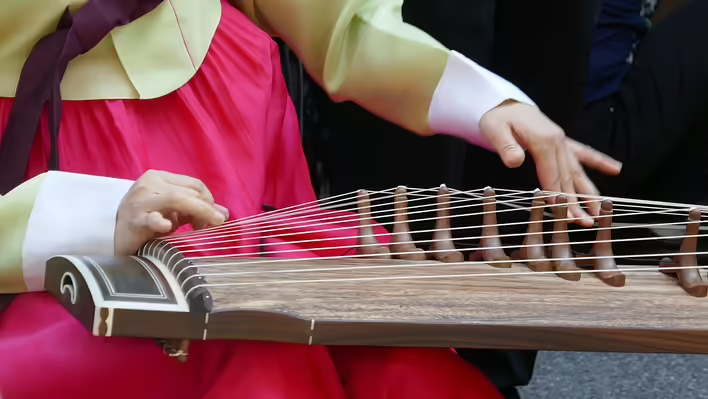
- Duets and ensembles: shakuhachi is often combined with koto, shamisen, or vocals.
- In the 20th–21st centuries, it is actively used in:
- Jazz,
- Ambient,
- Soundtracks for films and anime.
Modern Use
- Shakuhachi is studied not only in Japan — there are schools and masters in Europe, the USA, and Australia.
- Famous performers: Kudo Yoshimitsu, Riley Lee, Kokan Shimizu.
- The instrument is featured in films such as The Last Samurai, Ghost Dog, Baraka.
The shakuhachi is not just a flute. It is a fusion of breath, silence, and sound that touches the deepest part of the human soul. Its unique timbre and philosophical depth make it a unique instrument in both music and meditation.
Like it?React
🧵
This post doesn't have any additions from the author yet.