This content has been automatically translated from Ukrainian.
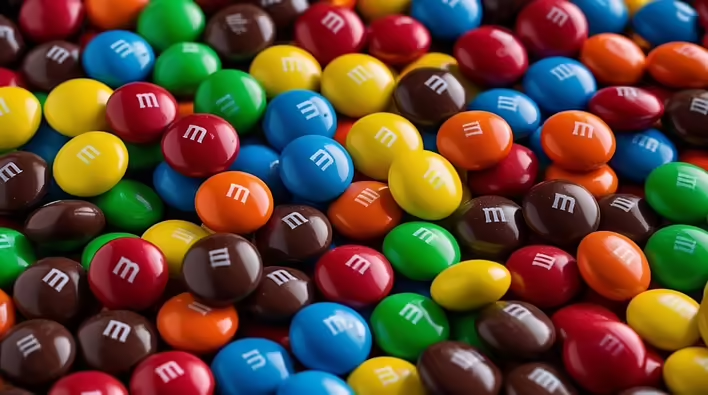
The story of the M&M's brand is one of those interesting tales that combine ingenuity, a bit of chance, and great ambition. Anyone who has ever tasted these colorful candies has probably wondered: how did they come to be? Let's dive into the history and find out how these small colored candies became a global icon.
It all began in 1941 when Frank Mars, the founder of Mars, Inc., and his son Forrest Mars Jr. traveled to Spain. During the trip, Forrest noticed that soldiers were eating chocolate covered with a sugar shell. This helped the chocolate not to melt under the scorching sun, which was a significant advantage in wartime conditions.
Forrest liked this idea and decided to use it to create new candies. He returned to the USA and began collaborating with Bruce Murrie, the son of the president of Hershey's, who had access to vast supplies of chocolate. Thus, the first batch of M&M's was born - candies named after Mars and Murrie.
Interestingly, the first M&M's were released exclusively for the military during World War II. Soldiers needed a lightweight and transportable dessert that wouldn't melt in their hands. Thanks to the convenient packaging in paper tubes and the hard sugar shell, these candies quickly gained popularity among the military, and after the war, they became available to the civilian population as well.
Over time, M&M's became increasingly popular. They expanded their range by adding new colors and flavors. Nutty M&M's, peanut, caramel, and even almond varieties appeared. Each new variation became a hit, and the brand steadily strengthened its position in the candy market.
Particularly interesting is the brand's marketing. In 1954, they launched the famous advertisement with the phrase "Melts in your mouth, not in your hands." This became not only a slogan but also a guarantee of product quality.
M&M's also actively collaborates with the film industry and pop culture. Remember the movie "E.T."? Initially, the directors wanted to use M&M's in a scene where a boy lures an alien with candies, but the company declined. This worked in favor of Reese's Pieces, which became famous thanks to this film. However, M&M's remained iconic without that.
In the early 1990s, Mars, Inc. decided to refresh the M&M's brand and make it more modern and appealing to a new audience. One of the most effective ways to draw attention to the product was to create unique and memorable characters that could interact with the audience through advertisements and marketing campaigns.
The first cartoon characters of M&M's appeared in television commercials in the early 1990s. These commercials became an instant hit as they brought ordinary candies to life, turning them into charismatic and fun heroes. The original characters included Red and Yellow, representing classic chocolate M&M's and peanut M&M's, respectively.
Over time, new characters joined Red and Yellow, each with its unique personality and color:
- Green: a character that appeared in 1997, became a symbol of boldness and charm. She immediately attracted attention with her femininity and grace.
- Blue: first appeared in 1995, became a symbol of coolness and confidence.
- Orange: embodies insecurity and anxiety, appeared later, adding even more humor and charm to the team.
- Brown: the last of the main characters, added in 2012, became a symbol of intelligence and businesslike demeanor.
M&M's characters are actively used in advertising campaigns, on packaging, in social media, and other marketing activities. They participate in special events, promotions, and even appear on red carpets. Such integration into popular culture helps the brand remain relevant and appealing to various age groups.
Today, M&M's are not just candies; they are a part of culture. They have their themed stores in New York, Las Vegas, and other major cities, where fans can buy souvenirs and see how their favorite sweets are made. Each new product, each new advertising campaign only strengthens their position in the market.
Thus, the story of M&M's is a story about how a simple idea can become a global hit when combined with the right approach, good marketing strategy, and a large dose of creativity. And the next time you enjoy these little colorful candies, remember that they have come a long way from the battlefield to your palm.
Like it?React
🧵
This post doesn't have any additions from the author yet.