This content has been automatically translated from Ukrainian.
In the world of psychology, literature, and art, there are many terms that originate from ancient Greek mythology. One such term is "Cassandra complex." It symbolizes a particular type of tragedy where a person who predicts the future or warns of danger is not heard or taken seriously. Let's explore where this term comes from, what it means, and how it is used in contemporary culture.
Who is Cassandra? A Legend from Mythology

Cassandra is a character from ancient Greek mythology, the daughter of the Trojan king Priam and queen Hecuba. According to legend, she was extraordinarily beautiful, and the god Apollo fell in love with her. He granted Cassandra the gift of prophecy, but she rejected his feelings. Angered by the rejection, Apollo cursed her: although her prophecies would always be true, no one would believe her.
The most famous example of her prophecy is the prediction of the fall of Troy. Cassandra warned the Trojans about the danger of the Trojan Horse, but she was ignored, which ultimately led to the city's destruction.
What is the Cassandra Complex?

The Cassandra complex is a psychological and social phenomenon that reflects a situation where a person accurately predicts a problem, crisis, or danger, but their words remain unheard or ignored. This term is used in psychology, cultural studies, ecology, and even politics to describe situations where warnings are disregarded, leading to catastrophe.
Manifestations of the Cassandra Complex
The Cassandra complex can manifest in various situations:
- In interpersonal relationshipsFor example, when one person warns their partner about a problem in the relationship, but the partner refuses to believe or listen.
- In the professional sphereIn a corporate environment, the Cassandra complex can arise when an employee anticipates a project's failure or a threat, but management ignores their words.
- On a global scaleEnvironmental activists who warn about climate change often face ignorance or denial of their forecasts.
The Cassandra Complex in Culture

The theme of misunderstanding and ignoring the truth is deeply rooted in literature, film, and other forms of art. Here are a few examples where this phenomenon has been mentioned or utilized:
1. Literature
- "Frankenstein" by Mary Shelley: Dr. Frankenstein realizes the danger he has created, but his warnings go unheard.
- "1984" by George Orwell: In a world where propaganda obscures the truth, the protagonist tries to convey the truth but remains isolated and misunderstood.
2. Film and Television
- "Don't Look Up" (2021): A satirical film where scientists warn about the danger of an asteroid, but their words are ignored by politicians and society.
- "Armageddon" (1998): Initially, warnings about a meteor threat are met with skepticism, putting humanity at risk.
- "12 Monkeys" (1995): The film uses this concept to emphasize the helplessness of characters who foresee disaster but cannot convince others of the truth of their words.
3. Video Games
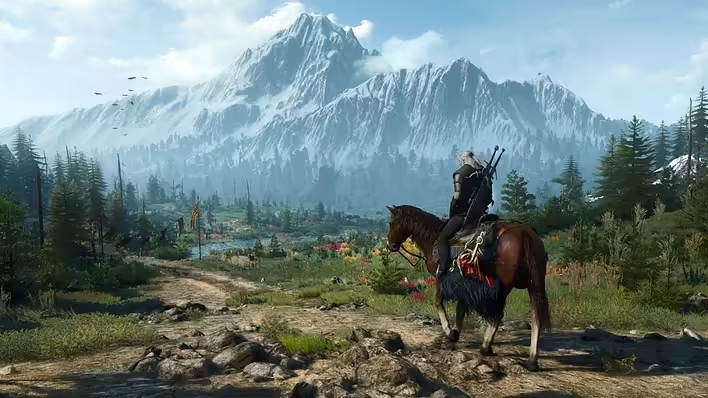
- In the world of video games, there are often prophetic characters who are ignored by others. For example, in the "The Elder Scrolls" series or "Mass Effect," the main characters often predict disasters, but their warnings are not always heeded.
4. Politics and Ecology
- The environmental movement is often associated with the Cassandra complex. Warnings about climate change, resource depletion, or threats to biodiversity are frequently ignored or denied until the consequences become apparent.
The Psychological Aspect of the Cassandra Complex
In psychology, the Cassandra complex is also linked to situations where a person is not taken seriously due to their gender, age, or status. For example:
- Women trying to convey important information in patriarchal communities often face ignorance.
- Children warning about danger may be taken less seriously by adults.
How to Combat the Cassandra Complex?
- Support and ArgumentationIf you are trying to convey important information, find ways to back up your words with facts or evidence that are hard to ignore.
- Working on CommunicationExplain your position clearly and assertively, but without aggression. Emotionality can reduce trust in your words.
- Engaging AlliesWhen more people share your point of view, the chance of being heard increases.
- Accepting the SituationSometimes it is worth accepting that your warnings may go unheeded. In such cases, it is better to focus on how to minimize the consequences.
The Cassandra complex reminds us of the importance of listening to those who warn of danger and acting proactively before it is too late. In a world where it is so easy to ignore the truth, Cassandra remains a symbol of the importance of perseverance and the willingness to fight for the truth, even when you are not heard.
Like it?React
🧵
This post doesn't have any additions from the author yet.