Problem and Context: in a five-story building, there is an apartment with a new renovation on the third floor. A bad smell constantly appears in the bathroom. After checking all the bends (siphons), it was found that in the shower cabin, where a trap with a water seal is installed - there is no water (water is being sucked out of the siphon due to vacuum in the sewage pipe).
I accidentally heard a noise similar to suction and went to check the bathroom. Indeed - there was no water in the shower cabin. Although it should have been there, as the shower had been used just a few minutes before.
Calling a plumber yielded nothing - he could only say that it was impossible (suction), and if it was possible - then the workers did something wrong during the renovation. He could not answer the question of what could theoretically be done to cause such suction of water.
A search online showed that most likely the vent pipe leading to the roof is clogged. To confirm my theory - we go to the neighbors above, flush the water, and simultaneously record the water seal at our place on video. The suction of water from the dry seal is recorded on video, so there will be something to show to the plumber.
The neighbors above and below us also have a problem with a bad smell, but they have been ignoring it for years and think it is a smell from the exhaust. So the water seals are being disrupted for almost everyone, but everyone ignores it.
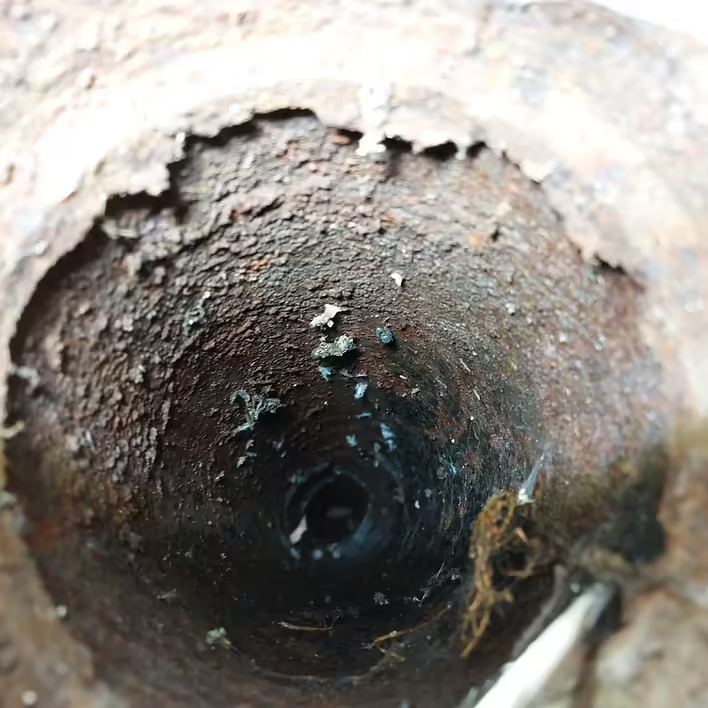
We go to the roof with a good flashlight. We find the vent pipe from our stack, peek inside, and see that it is clogged. There is a plug of dirt. We take a photo, report it to the homeowners' association, and call the plumber. Cleaning the vent pipe will allow air to enter and prevent the creation of a vacuum in the pipe, which disrupts the water seals.
Забита фанова труба. Видно як сміття лежить на грязьовій пробці
Cleaning the vent pipe will help solve this problem for you and all the neighbors in the stack.At the same time as this 'investigation', we are looking for information online on how to fix this situation locally (while waiting for the plumber, a week or two). This is not a mandatory step. But I wanted to get rid of the bad smell right now. There are two possible solutions found online - a sewage aerator (air valve) or a dry seal.
Experience of Installing a Sewage Aerator for a 50mm Pipe
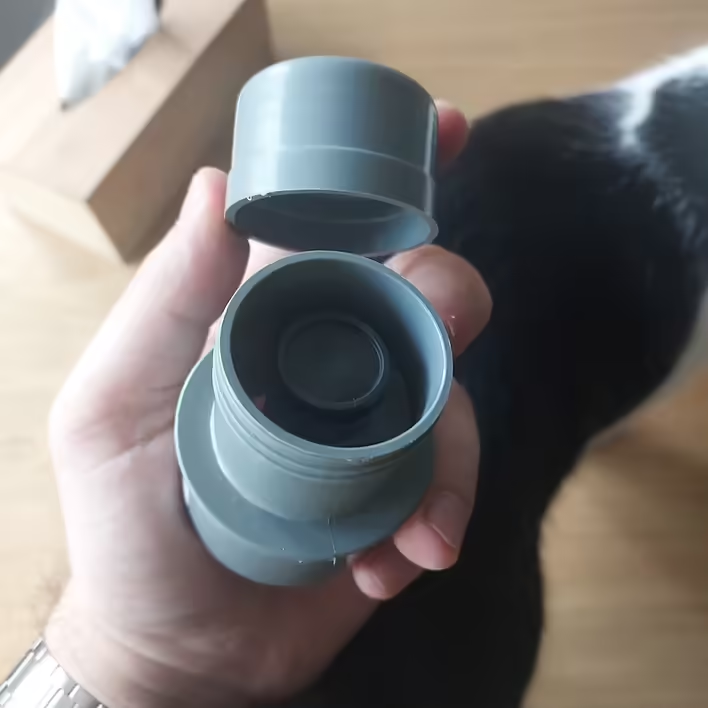
I started with a sewage aerator for a 50mm pipe. It works like a check valve. When the pressure inside the sewage system rises - it opens and air enters the sewage, reducing the pressure. When there is no pressure - the valve closes and prevents bad smells from entering the room.
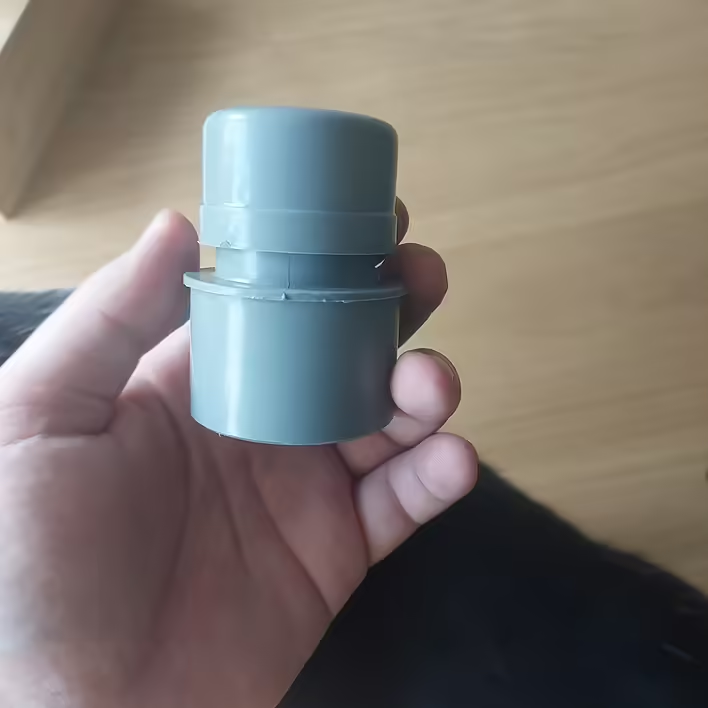
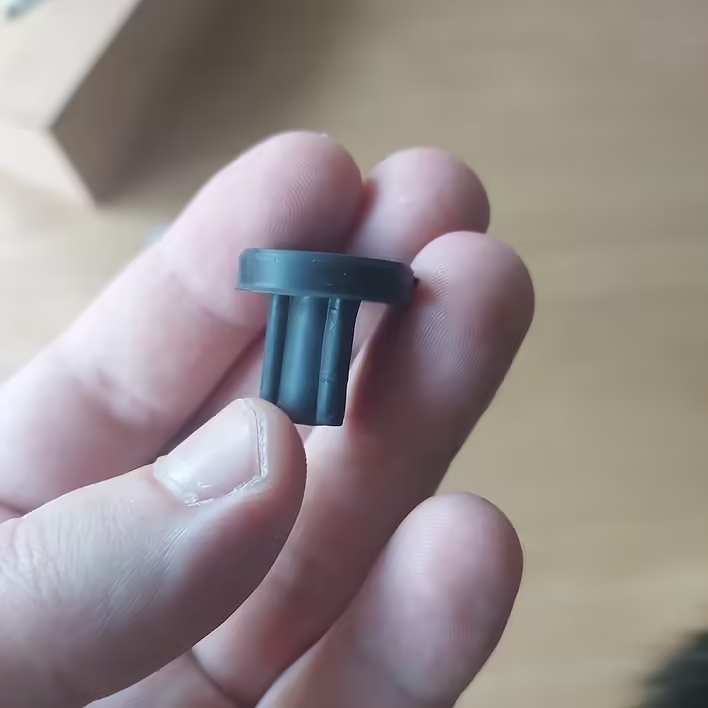
Here’s what a budget sewage aerator for a 50mm pipe looks like:
Каналізаційний аератор 50мм
One nuance. When I bought it in the store - I didn't check for the presence of a valve inside. So I had to go back. Be sure to check for availability.
This thing needs to be inserted into a vertical pipe. That is, the valve is gravitational and may not work if it is not installed perfectly vertically. To check if the check valve works - you can stretch a bag filled with air over it and tie it. When there is a vacuum in the system - the valve will open and pull air from the bag. This will be visually noticeable.
In my case - the valve worked, but it still sucked water from the shower. Perhaps this is related to the fact that I installed the valve in the kitchen, which is further away from the shower cabin in the system. Or there isn't enough air to prevent the vacuum from disrupting the water seals. So in my conditions, it didn't work, but it might help someone.
I played around a bit, dismantled this valve, and went to try another option - a dry seal.
Inserting a Dry Seal (Siphon) into the Existing Shower Trap
I have a tiled shower cabin, and the shower trap is built-in. So completely replacing the trap with a trap with a dry seal is not an option. I started looking for options on how to modify the trap and found universal check valves (dry seals). They come in vertical, horizontal, and universal types. The prices vary quite a bit. I took a not very budget option - Aco EasyStop.
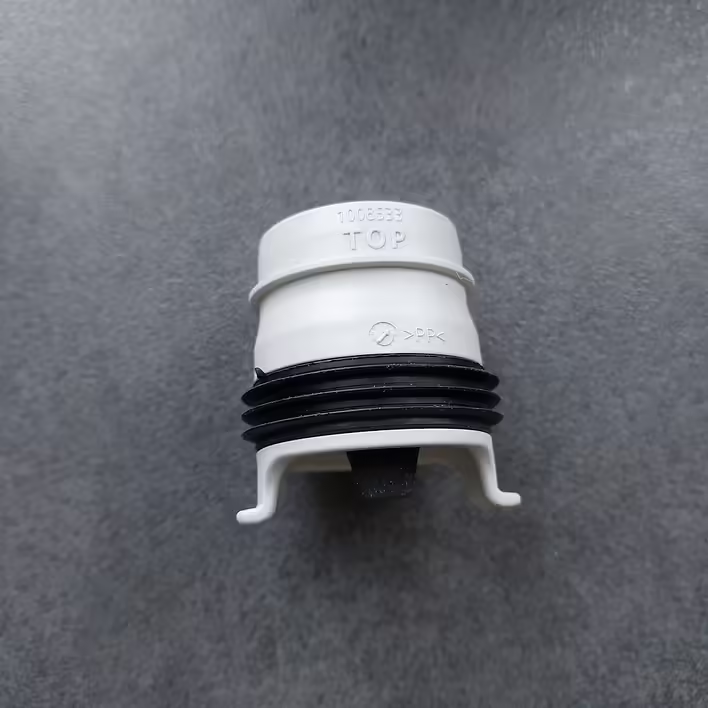
The essence of the dry seal (check valve) is that when water flows, the membrane rises under the pressure of the water. And when there is no water flowing - the elastic membrane closes again and prevents bad smells from the sewage from entering the room.
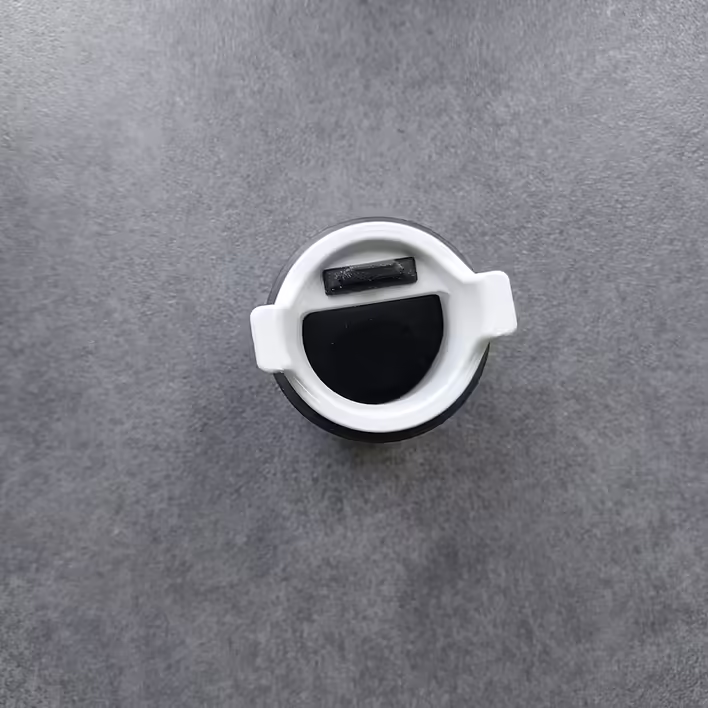
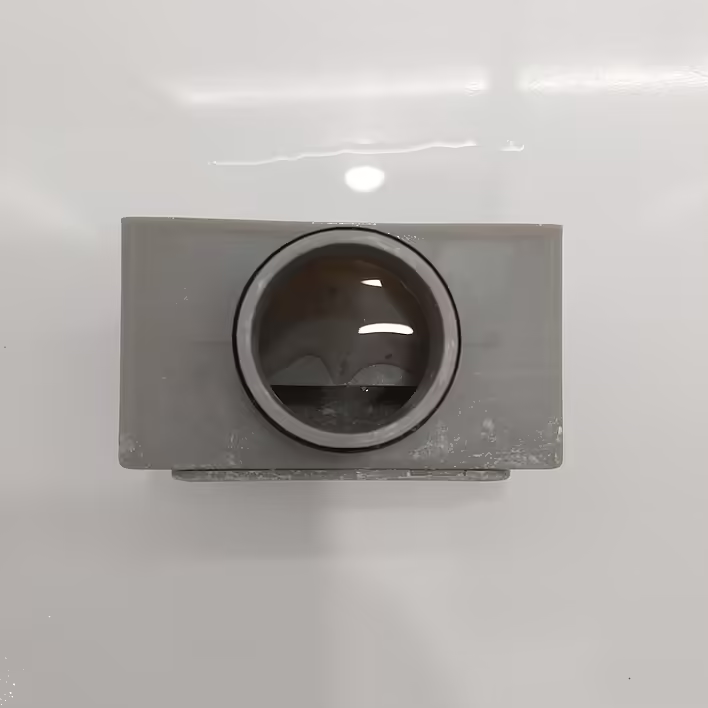
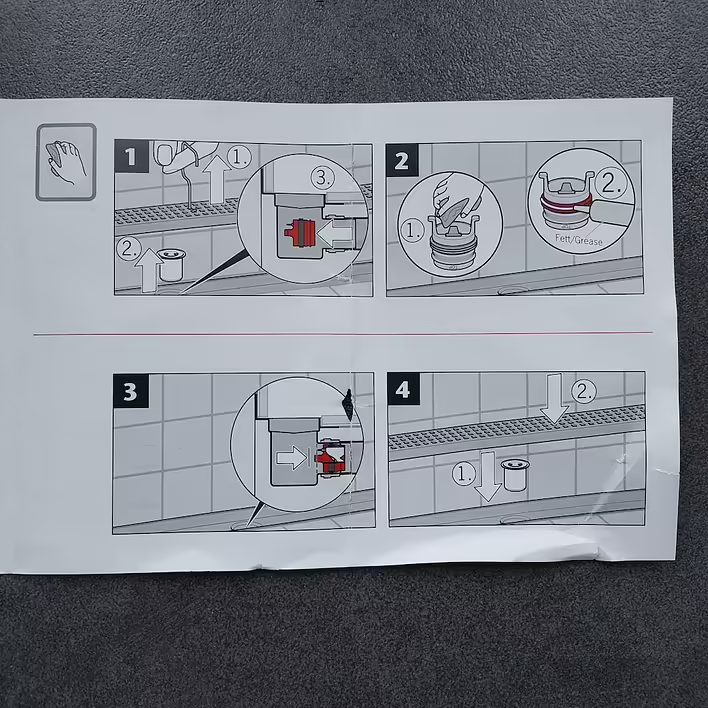
The installation is quite simple. Insert the dry seal of the required diameter into the hole of the shower trap.
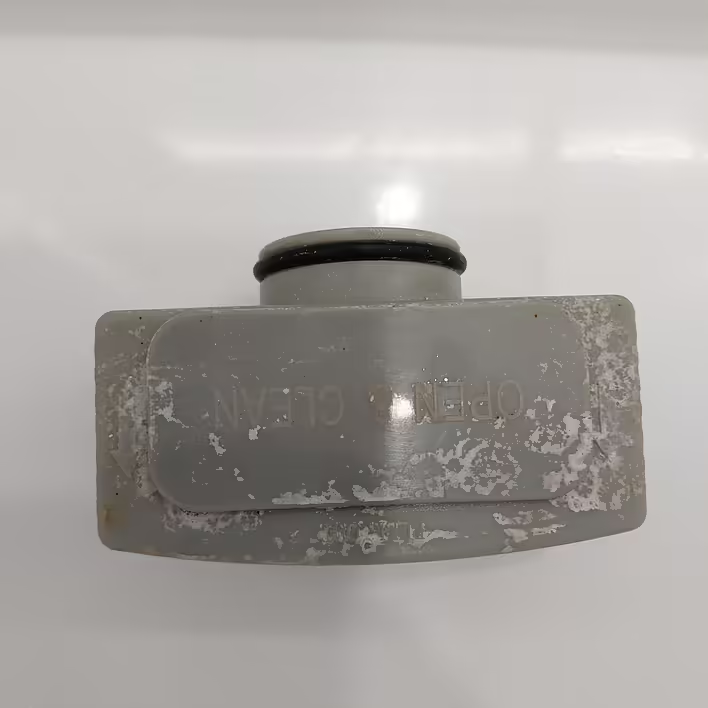
Of course, first remove the existing water siphon.
Старий водний сифон з душового трапу
Старий водний сифон з душового трапу
Look at the 'TOP' label on the dry siphon - it should be on top for it to work. The handles on the siphon make it easy to install or remove.
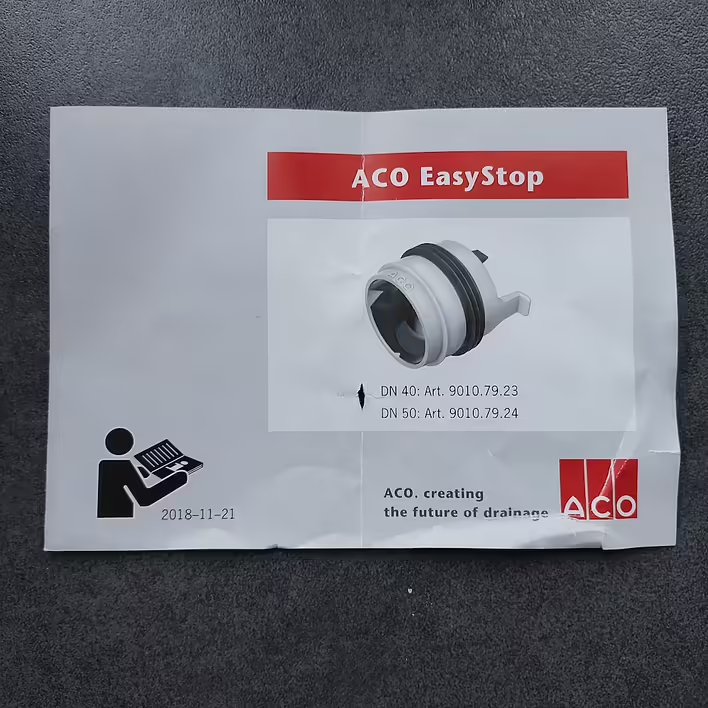
Here are photos of the instructions from the Aco EasyStop siphon:
Aco EasyStop Інструкція Стор #1
By the way, Aco EasyStop comes in diameters (DN) of 40 and 50 (mm). In my case - 40mm. Remove the water siphon and measure the diameter (or check the trap instructions if they are still available).
Well, that's it. When a vacuum is created in the system due to the clogged vent pipe - water is not sucked out from the shower cabin, and bad smells do not enter the room. The dry siphon (membrane) opens under pressure for a few seconds and then closes again.
So as a temporary option, replacing the wet siphon with a dry one helps get rid of the bad smell that enters the room due to the vacuum in the sewage pipe (which in turn sucks water from the wet siphon and opens access for air from the sewage to the room).
Among the disadvantages of a dry siphon in the shower, one can note its sensitivity to clogging with debris. And among the disadvantages of a wet seal - possible drying out. This is purely from personal experience.
After cleaning the vent pipe - the problem for me and other neighbors disappeared. The wet siphon was returned. I plan to install the dry siphon during long absences from home. Because after a few days without using the shower - the water dries out (there isn't much water there), and the bad smell accumulates in the apartment.
After talking to several builders, I heard interesting cases. People on the top floors during renovations may either completely cut the vent pipe or make it of a smaller diameter (for savings). So sometimes for a complete inspection, it is worth checking if everything is correct with the neighbors above.
![[Personal Experience] Pumping water from the basement (from the pit) using the Dnipro-M ND-5 drainage pump.](https://cdn.tseivo.com/qlt5q6gue4dw5pqxi5hblq8y6aqn)