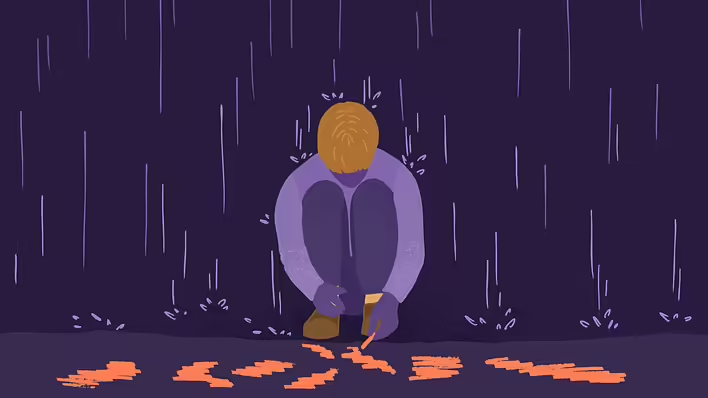
Stockholm Syndrome is a psychological reaction where victims (for example, hostages) form an emotional bond with their abusers, feeling sympathy and compassion for them, and sometimes even defending them. It is an unconscious defense mechanism that helps a person adapt to an extreme situation that threatens their life.
Key Psychological Signs
1. Emotional Attachment to the Abuser
The victim begins to justify the actions of the aggressor, seeks reasons for their cruelty (for example, "he had a difficult childhood"), feels compassion for them, and believes in their "good" sides. This can result from prolonged time spent together and dependence on the aggressor.
2. Cooperation with the Abuser
The victim voluntarily helps their aggressor, fulfills their demands, and even hinders the actions of the police or rescuers. This cooperation is a way to survive and reduce the threat. The victim tries to "guess" the desires of the abuser to avoid punishment.
3. Refusal of Rescue
A person under the influence of the syndrome may resist attempts to free them, fearing rescue more than remaining in captivity. They perceive rescuers as a threat that could worsen the situation, while the abuser seems "understandable" and "safe."
4. Traumatic Attachment
This is a deep emotional bond that arises in conditions of intense fear and dependence. The victim feels gratitude for minor "acts of kindness," such as food or the absence of physical violence. This is a distorted perception of reality, where a person values what is essentially their basic right.
5. Identification with the Aggressor
The victim may adopt the worldview, values, and behavior of their abuser. They begin to perceive themselves as a "part" of the aggressor or their "community." This manifests in the victim repeating the abuser's phrases, mannerisms, or even justifying violence against others.
Origin of the Term and Its Scientific Justification
The term "Stockholm Syndrome" comes from a dramatic event that occurred in Sweden.
In 1973, in the capital of Sweden, Stockholm, a bank robbery took place at Kreditbanken. The robber, Jan-Erik Olsson, took four bank employees hostage. The hostages were held for six days, during which an unexpected emotional bond developed between the hostages and Olsson.
Olsson did not treat them cruelly, and at one point even showed "kindness," for example, giving them blankets or comforting them.
After their release, the hostages refused to testify against Olsson. Moreover, they openly defended him, stating that he had no intention of harming them, and one of the hostages even became engaged to him.
Psychiatrist Nils Bejerot was the first to use the term "Stockholm Syndrome" to explain this unusual behavior of the victims. He concluded that under conditions of intense stress and life threat, the human psyche can form a defense mechanism that helps "adapt" to the aggressor in order to survive.
Today, this term is also applied to other situations where there is a strong dependency of the victim on the abuser, as noted below.
Areas of Manifestation and Relevance in the Modern World
Domestic Violence
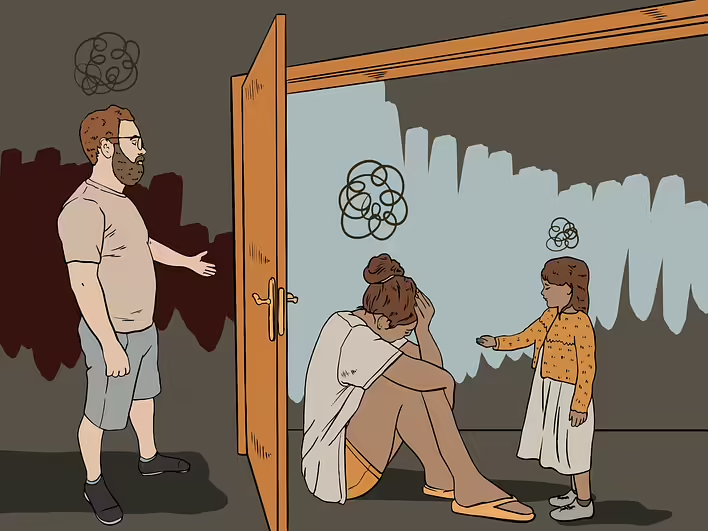
This is one of the most common areas where Stockholm Syndrome manifests. The victim (usually a woman or child) forms an emotional attachment to the aggressor. This occurs when violence alternates with periods of "kindness" or "repentance" from the abuser. The victim begins to justify the actions of the aggressor, believes in their changes, and fears leaving the relationship, as this may lead to even greater danger.
Hostage Situations
This is a classic example from which the term originated. A victim who is isolated and under constant threat begins to feel sympathy for the kidnapper. This is because the aggressor becomes the only source of information and "control" over the victim's life. Even minimal displays of humanity from them are perceived as a favor, evoking gratitude.
Totalitarian Sects and Cults
In these groups, the manipulative leader establishes complete control over the lives of their followers. They use psychological violence, intimidation, and isolation to subdue their will. Sect members may develop Stockholm Syndrome as they are completely dependent on the leader and the group, believe in their "kindness," and justify cruel rules.
Military Captivity or Concentration Camps
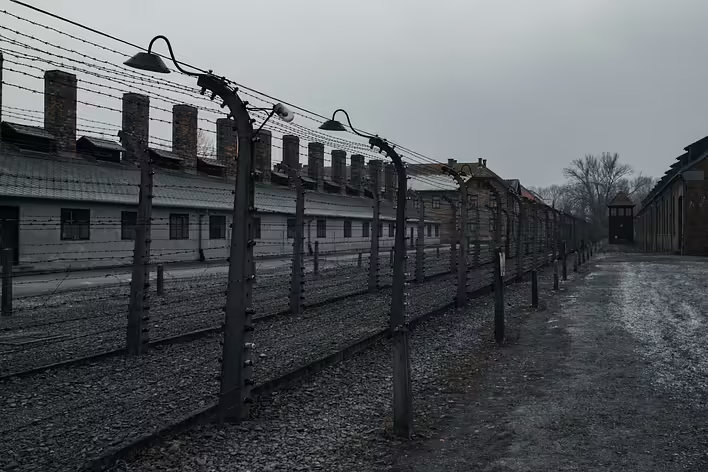
Prisoners in inhumane conditions may develop a traumatic attachment to their guards. This allows them to survive as they try to "please" the abuser to obtain better conditions or avoid punishment. This is an extreme form of adaptation to traumatic conditions.
Labor and Sexual Slavery
Victims of human trafficking are often under the complete control of their exploiters. Intimidation, physical violence, and isolation from the outside world lead the victim to form a psychological dependency. In some cases, they may defend their abusers, believing that they "care" for them or that escape will bring even more suffering.
Psychological Mechanisms
The syndrome is based on several key psychological processes:
Primitive Defense Mechanism (Identification with the Aggressor)
A person who cannot fight or flee may identify with the aggressor. This mechanism, known in psychoanalysis, helps reduce fear as the victim begins to perceive themselves as a "part" of the abuser rather than as their target. This creates an illusion of safety.
Traumatic Attachment
Minor displays of humanity from the abuser are perceived by the victim as acts of mercy. This evokes gratitude and attachment, which is part of a distorted survival system. The victim begins to believe that "good" behavior depends on themselves, giving them an illusory sense of control.
Cognitive Dissonance
To explain the unbearable reality where the source of fear and pain is simultaneously the only "caretaker," the victim's psyche tries to reconcile these opposing ideas. The victim justifies the actions of the aggressor (for example, "he is not to blame, he is a victim of circumstances") and downplays the danger, helping them maintain internal integrity.
Regression
In conditions of captivity or violence, a person may revert to a childlike state of psychological dependence. They fully submit to the aggressor, just as a child submits to parents, which is a way to ensure basic needs—food, water, safety.
Relevance of Stockholm Syndrome in the Modern World
The relevance of Stockholm Syndrome remains significant as it is a tool for understanding the psychological mechanisms of human survival in extreme conditions. The phenomenon manifests in various areas of modern life, particularly in criminology, where it is used to analyze cases of hostage-taking and kidnappings. According to the FBI, manifestations of Stockholm Syndrome are observed in 27% of such situations. In the field of domestic violence, this phenomenon helps explain why victims, despite suffering, do not leave their abusers. The alternation of violence with "displays of love" creates a vicious circle in which the victim feels trapped.
Stockholm Syndrome has become a populartheme in culture and media, indicating its significance for public consciousness. Films like "Beauty and the Beast" or "Tie Me Up!" show how this complex psychological phenomenon is interpreted in mass culture.