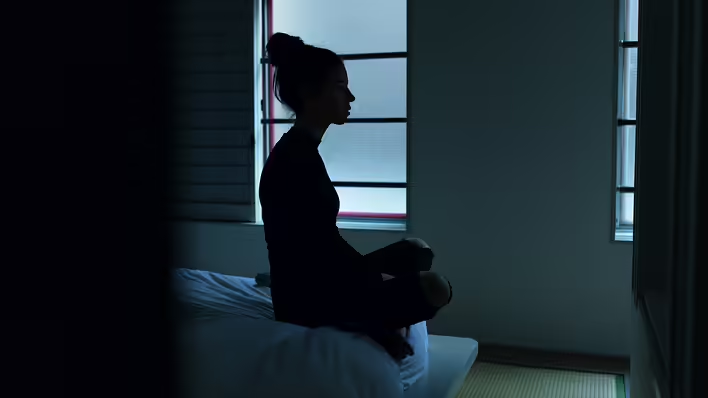
Hikikomori (from the Japanese 引きこもり, meaning "one who withdraws") refers to people who voluntarily isolate themselves from society, minimizing or completely halting contact with others, except for close relatives. This phenomenon was first described in Japan, but is now observed in other countries around the world.
This is not just about introverts or those who enjoy solitude — it is a deep and prolonged social isolation that lasts from six months to sometimes even years. This phenomenon is not an official psychiatric diagnosis, but it is closely related to various psychological conditions and has significant consequences for both the hikikomori themselves and their families and society as a whole.
What leads to isolation?
The path to hikikomori is rarely sudden; it is usually the result of a buildup of various factors. Social pressure and high expectations, especially in cultures where achievements in education and career are important, become a tremendous burden. The inability to meet these standards leads to frustration, anxiety, and withdrawal from interaction. Traumatic experiences (bullying, social rejection, failures in personal relationships/work) leave deep psychological scars, causing a person to "shut down" from the world to avoid further pain.
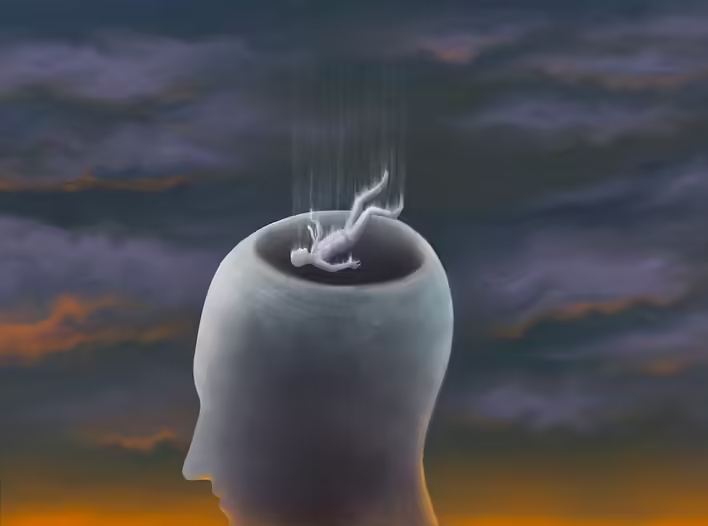
Some individuals exhibiting such behavior are heavily influenced by biological factors that compel them to isolate. For example, these may be people suffering from mental illnesses such as schizophrenia, depression, obsessive-compulsive disorder (OCD), and panic disorder. Some of these conditions provoke such intense feelings of anxiety and fear that encounters with people become extremely difficult, or the symptoms of the illness themselves limit the ability to move and interact, leading to hikikomori. Additionally, some individuals may have mild intellectual disabilities, learning difficulties, or high-functioning autism spectrum disorders (ASD) that remain unrecognized and misunderstood by those around them. This creates immense stress for the individual, and when this stress becomes unbearable, some people fall into the trap of hikikomori as a way to escape it. However, such isolation ultimately only reinforces their mentally unhealthy state. Some studies also point to the role of excessive parental overprotection, which may lead to the development of an infantile and dependent personality unprepared for adult life.
Life in isolation
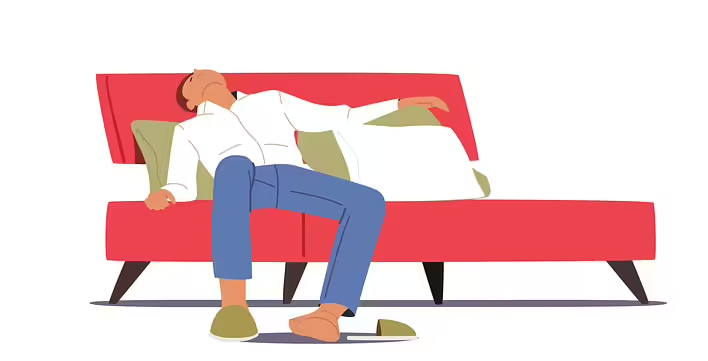
The life of hikikomori is usually characterized by an inverted sleep schedule, where activity occurs at night, and the day is spent sleeping, providing a sense of safety and avoidance of unwanted contacts. Most of their time is spent in the virtual world: computer games, watching anime, reading manga, or simply surfing the internet become the only sources of communication and entertainment. Financial dependence on parents is a typical feature, as hikikomori usually do not work or study. Social contacts are minimized, often limited to interactions with parents when they bring food. Hygiene and order in the room may be neglected, and eating habits are often irregular, focusing on fast food or food consumed at night.
Consequences for hikikomori and society
The consequences of social isolation for hikikomori are serious and long-lasting. It deepens depression and anxiety, leads to a loss of social communication skills, feelings of loneliness, guilt, and low self-esteem. For families, this is a huge emotional and financial burden, as parents often feel shame, guilt, and helplessness trying to understand and help their children. For society, the hikikomori phenomenon means the loss of a significant portion of the working population and additional pressure on social services, as further integration of these individuals into society becomes a challenging task.
Paths to recovery
Helping hikikomori is a complex and lengthy process that requires patience and a professional approach. It includes psychological support (individual or family therapy) to address underlying issues, as well as medication in cases of depression or anxiety disorders. A key aspect is gradual reintegration, which begins with small steps, such as short outings from home and restoring communication with loved ones. Family support is also important, as they need understanding and guidance on how to interact properly with their children. In some countries, such as Japan, there are specialized centers offering temporary housing and socialization programs. Ultimately, helping hikikomori is not just about returning them to "normal" life, but also about finding meaning, motivation, and interests that can become the source of their return to an active life.