This content has been automatically translated from Ukrainian.
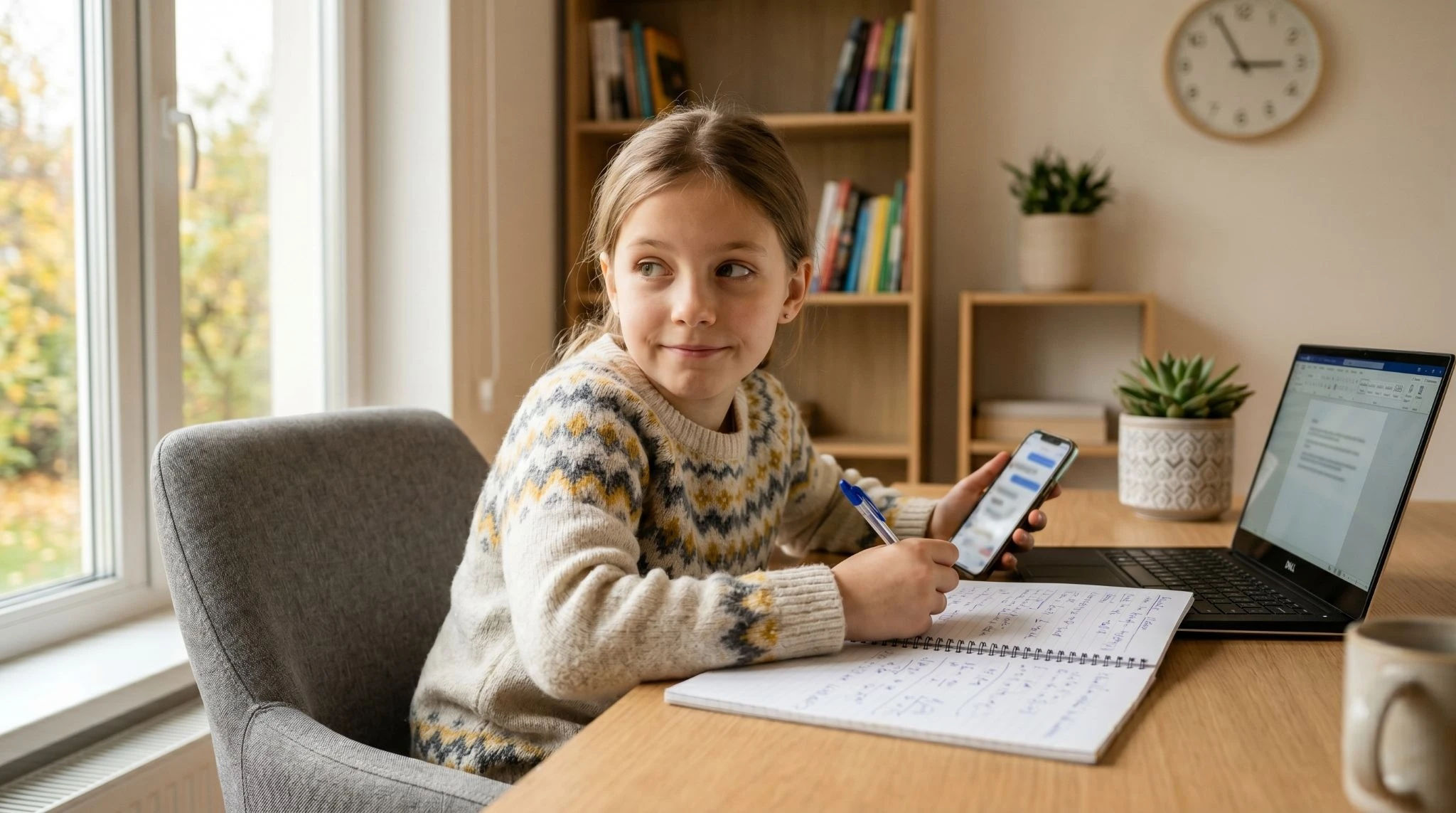
The picture is familiar to many parents: homework for tomorrow is still not done, and the child says "just five more minutes" – and those five minutes stretch until the evening. Then comes the rush, tears, and a half-finished task. And it goes in circles. The first thing that comes to mind is that the child is lazy or irresponsible. But in reality, the procrastination almost always has understandable reasons behind it, and when you see them, it becomes much easier to help. Especially since modern distance learning provides more convenient tools for this than traditional school.
Procrastination is not laziness
It’s important to distinguish right away: laziness is when you don’t want to do anything at all, while procrastination is when the child knows they should, even wants to do it, but still puts it off. This is not about a lack of willpower, but about emotions. The brain avoids tasks that cause anxiety, boredom, or a feeling of "I can't handle it," and chooses immediate relief – another video, another game. Therefore, admonitions like "just take it and do it" don’t work: they hit the consequence, not the cause. It’s much more useful to understand what exactly the child is trying to avoid.
Why the child procrastinates
There are usually several reasons. The task seems too big and unclear – the child doesn’t know where to start, so they don’t start at all. For example, "write an essay" is intimidating because of its volume, while "write three sentences" is not scary at all. Or they fear doing it poorly, and procrastination becomes a way to avoid possible failure. Sometimes the material is simply boring or unclear why it is needed. Add to this fatigue after a long day and a phone at hand that is always more interesting than a paragraph – and procrastination is guaranteed. Notice: almost every reason is driven by an emotion, not a spoiled character.
How to help the child start
The hardest part is getting started, so the main strategy is simple: lower the entry threshold. Break the large task into small steps and agree to work for just five minutes – often that’s enough to get engaged. Put the phone in another room during lessons: willpower doesn’t compete with notifications. Help create a specific plan – not vague "do your homework," but "first three math problems, then a paragraph." Sometimes a timer helps: agree to work for, say, twenty minutes, and then a short break – this way the task doesn’t seem endless. A small reward after completing the task also helps: something pleasant that the child looks forward to turns a boring obligation into a step towards a bonus. And make it a habit to start with the hardest tasks while the mind is fresh – it will get easier afterward.
Support works better than control
The worst thing you can do is pressure, shame, and hover around with reproaches: anxiety only intensifies the desire to escape from the task. Instead, notice and praise even a small beginning: "I see you’ve already started math" motivates more than "finally." If procrastination is hiding fear or exhaustion – talk about it calmly, without judgment. Sometimes it’s worth just being there for the first few minutes: not to control, but to lend a shoulder while the child gets into it. And take care of the daily rhythm: when there is a predictable time for lessons and for rest, it’s much easier for the child not to slip into endless "later."
When the reason is gaps, and where the format helps

Sometimes a child procrastinates not because of emotions in general, but because they really don’t understand the subject: gaps have accumulated, and every task is a struggle. In this case, the best help is not pressure, but substantive support: online tutor can calmly, at the child’s pace, close the gaps and restore the feeling of "I can" – and when the subject becomes clear, the main reason to avoid it disappears.
The format of online learning also helps. When the day has a clear structure, procrastination is harder by definition. A modern online school with live lessons in small groups sets the rhythm, and a personal curator notices when a student starts to "fall behind" and timely lends a shoulder. For example, at ThinkGlobal, the focus is on math, English, and Ukrainian, and small groups allow students not to get lost and receive attention exactly when they need it.
Small steps instead of a big "later"
Procrastination is not a verdict and not a spoiled character, but a signal that the child is struggling somewhere: emotionally or due to gaps in knowledge. Therefore, the solution lies not in strictness, but in understanding: to see the reason, lower the entry threshold, support instead of reproaching, and build a clear daily rhythm, in which quality distance education also helps. Start with a tiny step today – and the big frightening "later" will gradually turn into a calm "done."
Like it?React
🧵
This post doesn't have any additions from the author yet.