All original content is created in Ukrainian. Not all content has been translated yet. Some posts may only be available in Ukrainian.Learn more

What is Meemaw: an American word that often appears in TV shows

Post cover: What is Meemaw: an American word that often appears in TV shows
This content has been automatically translated from Ukrainian.
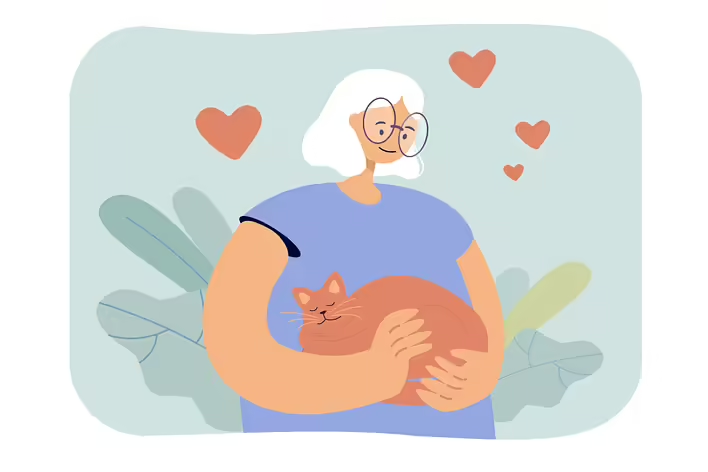
If you have watched American TV shows — for example, “Young Sheldon” or “The Big Bang Theory” — you have probably heard the characters refer to their grandmother as “Meemaw.”
Meemaw (sometimes spelled Memaw or Mawmaw) is a tender, informal word used in some regions of the USA to refer to grandmother. It is not literary or official — rather, it is a regional variant similar to the Ukrainian words “баба,” “бабця,” “бабуня.”
The origin of the word Meemaw is associated with the southern states of the USA, particularly Texas, Alabama, and Tennessee. There are many similar family terms formed from children's distortions of sounds — just as children once created their versions of “mommy” or “daddy.” Similarly, Meemaw is just a cute way a child might have once pronounced “grandma,” and the word has remained in family use.
In culture, this word gained popularity thanks to television. In the show “Young Sheldon”, the character Connie Tucker — the lively, witty grandmother of the main character — is known to everyone as Meemaw. Her character made this word recognizable far beyond the borders of the USA.

This post doesn't have any additions from the author yet.
What is "Lorem ipsum" and where is it used?
Oct 23, '25 12:18

What is "Lorem ipsum" and where is it used?

Пу-пу-пу
Fanzines: how fans created their own media culture
Nov 4, '25 10:47

Fanzines: how fans created their own media culture

Пу-пу-пу
Comics: history, culture, and the phenomenon of visual storytelling
Nov 4, '25 11:05

Comics: history, culture, and the phenomenon of visual storytelling

Пу-пу-пу
Drinks Created Not for Pleasure: How Medicines, Elixirs, and Tonics Became Legends
Nov 6, '25 18:13

Drinks Created Not for Pleasure: How Medicines, Elixirs, and Tonics Became Legends

Пу-пу-пу
Things of peace born from war: how military inventions became part of our everyday life
Nov 6, '25 18:27

Things of peace born from war: how military inventions became part of our everyday life

Пу-пу-пу
What is pig Latin?
Nov 6, '25 18:32

What is pig Latin?

Пу-пу-пу
What is the endowment effect?
Jan 7, '26 12:14

What is the endowment effect?

Пу-пу-пу
The classical economic model of the "rational person": what is it?
Jan 7, '26 12:24

The classical economic model of the "rational person": what is it?

Пу-пу-пу
Building model trains: a hobby for the patient and detail-oriented
Jan 9, '26 18:07

Building model trains: a hobby for the patient and detail-oriented

Пу-пу-пу
What is a "comfort character" and why do we emotionally attach ourselves to fictional heroes?
Jan 26, '26 21:57

What is a "comfort character" and why do we emotionally attach ourselves to fictional heroes?

Пу-пу-пу
Nostalgia as a product: how the industry sells memories
Jan 27, '26 17:53

Nostalgia as a product: how the industry sells memories

Пу-пу-пу
From a single click to a whole ritual
Jan 29, '26 19:38

From a single click to a whole ritual

Пу-пу-пу