Bananas in Ukraine are no longer exotic but a daily fruit: available, tasty, and nutritious. However, there is a persistent myth among the people that supposedly Ukrainians are imported not real dessert bananas, but some "feed" ones, which taste worse and are not meant for humans. Let's figure out if there is any truth to this — and what we are actually eating.
Where bananas grow and who cultivates them
The banana is one of the most common fruits on the planet. It is grown in over 130 countries, mainly in the tropical belt. The largest producers are:
India (~34 million tons per year),
China (~12 million),
Indonesia, Brazil, Philippines, Ecuador.
Although these countries provide the world with huge volumes of fruit, not all bananas are the same in taste, purpose, and way of consumption.
What types of bananas are there: dessert and culinary
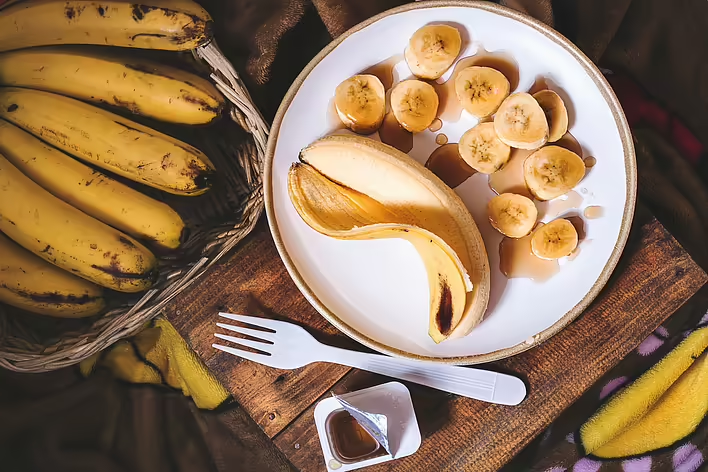
1. Dessert (sweet) varieties They are eaten raw. The most famous is Cavendish. It is the hero of supermarkets and the leader in international trade. The most common sub-varieties in this group are:
Grand Nain — "the short one with a big heart," resistant to transportation.
Dwarf Cavendish — more compact, also popular.
Lady Finger — small, fragrant, sweeter than Cavendish.
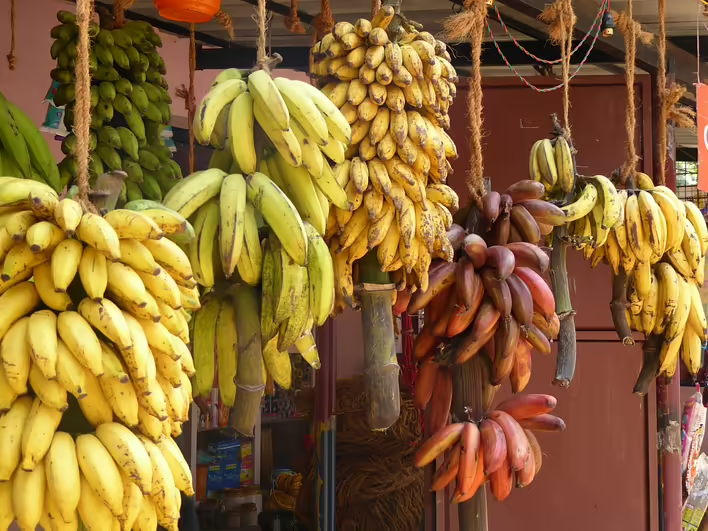
2. Culinary (plantains, pseudo-feed) These bananas are not eaten raw — they are firm, with low sugar content. They are fried, boiled, or baked like vegetables. The most common are:
Plantain (Platano) — the giants of the banana world.
Saba — popular in the Philippines, the basis of many dishes.
Bluggoe, Pisang Awak — other regional varieties.
Where are fried bananas eaten?
In countries where bananas grow, the culinary diversity is simply impressive. For example:
Philippines: Saba bananas are stewed with meat or in caramel.
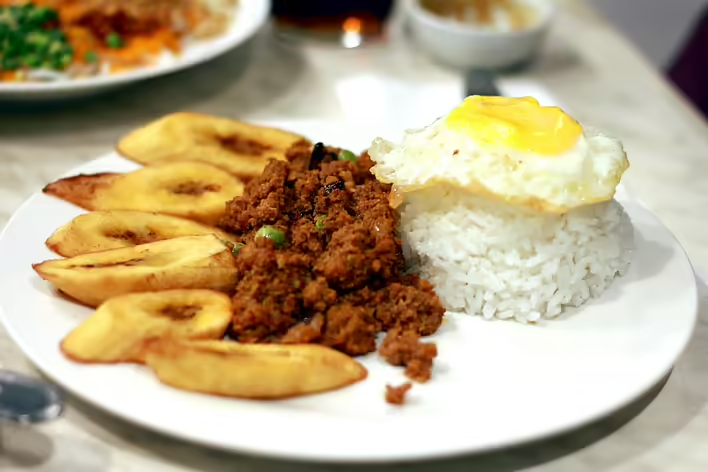
Colombia, Venezuela: plantains are fried, made into chips — tostones.
Africa: green bananas — like potatoes, added to soups.
Southern India: salty fried chips — a popular snack.
But such varieties hardly go beyond their regions — they are poorly transported and have no demand in countries where bananas are dessert.
What do they eat in Ukraine?
In Ukraine, the vast majority of imported bananas are Cavendish. The likelihood of buying a culinary variety is extremely low — it is simply not imported on a large scale. The reasons are:
Demand – for sweet, ready-to-eat fruit.
Logistics – dessert varieties transport better.
Culinary culture — bananas are not fried in Ukrainian cuisine.
The main supplier to Ukraine is Ecuador (over 50% of imports). We also import from:
Costa Rica,
Colombia,
Guatemala.
Overall, Ukraine imports about 250–300 thousand tons of bananas annually. Even despite the war and logistics disruptions, this volume remains relatively stable.
What about "feed" bananas?
This is a myth. The bananas that end up on the shelves of Ukrainian stores are Cavendish. They are not a culinary variety, not technical, not for livestock.
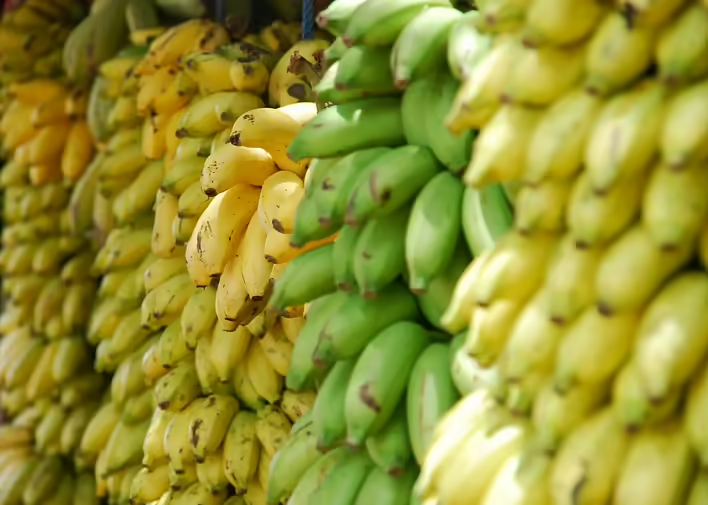
Sometimes confusion arises due to the greenish appearance, firmness, or lack of flavor. But this is not a sign of "feed" — just bananas that were picked unripe so they could withstand transportation. They ripen in warehouses or at home. By the way, bananas ripen with the help of the natural gas ethylene — just like avocados or kiwis.
Are there really "feed" bananas?
Yes, but not in the sense that they are "worse bananas" or "for animals."
In countries where bananas are an important part of agriculture, part of the harvest is indeed used for feed: mainly overripe, defective, or unsellable fruits. These are not separate varieties — this is a by-product.
Some culinary varieties (such as plantains, Saba) due to their high starch content can be used for feed, but their main purpose is food, culinary (they are fried, boiled, baked).
"Feed bananas" are not a separate biological group. They are either culinary varieties that are not consumed raw, or low-quality fruits that did not make it to the market. In countries where there are too many bananas — yes, some go for feed. But bananas are primarily grown for people, not for livestock.
In Uganda or Burundi, varieties like East African Highland bananas (group AAA-EAHB) are grown, which are used in fermentation, for making beer, and indirectly go for livestock feed.
In Indonesia or the Philippines, when there is an excess harvest, low-quality plantains are sometimes fed to pigs or used in silage.
What are really technical or inedible varieties?
There are inedible wild bananas, with seeds, tough, fibrous — they are not consumed, and people do not cultivate them for consumption. But in an agricultural context, "feed" banana is rather a secondary use, not a special group. Such varieties are not imported to Ukraine, and there are no real "feed" bananas on the shelves.