Everyone has their own dish that "saves" them on a bad day. It's what you want to order or prepare without thinking when you're tired, feeling down, or just need something familiar. This is what is called go-to comfort food — food that provides a sense of comfort and stability.
On social media platforms like TikTok or Instagram, this term has long become part of everyday language. People share their “comfort meals,” discuss recipes, and even create videos with captions like “my go-to dinner after a long day.”
What go-to comfort food means
The phrase consists of two parts: go-to — something you automatically turn to, and comfort food — food that evokes feelings of coziness and emotional warmth.
Together, it’s not just a favorite dish. It’s something more personal: something that is associated with home, childhood, or a sense of safety. And importantly, it doesn’t have to be something “fancy” — often quite the opposite.
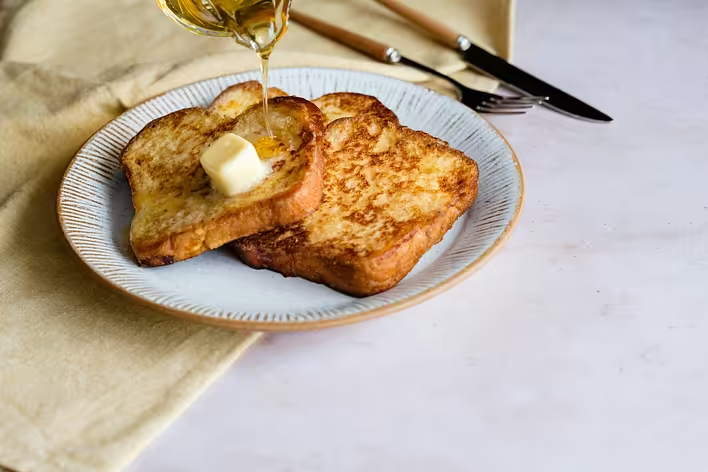
For some, it might be mac and cheese, for others — soup, and for others still — even a simple toast with butter.
Go-to comfort food works not only on a taste level but also on a psychological level.
Firstly, it’s about predictability. In a world full of uncertainty, a familiar dish provides a sense of control.
Secondly, it’s about memory. Food is closely tied to emotions: smells and tastes can instantly bring back certain moments in life.
Thirdly, it’s a form of self-care. Zoomers often talk about self-care, and food has become a part of it — simple and accessible.
What comfort food looks like today
Interestingly, the concept of comfort food has slightly changed for Generation Z. While it used to be primarily associated with home cooking, the spectrum is now much broader.
Among popular options:
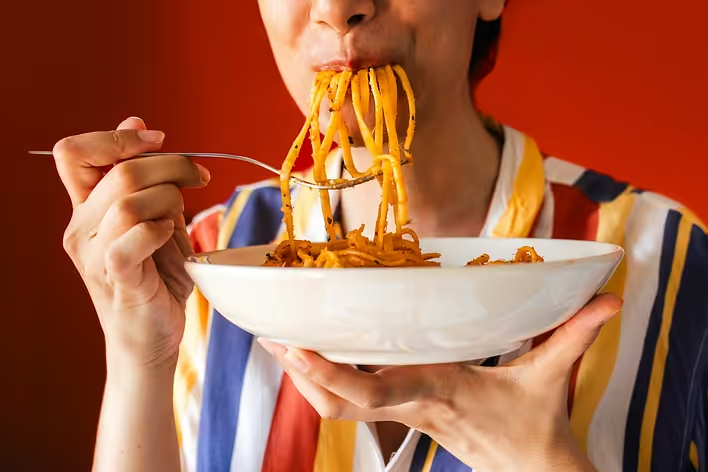
simple dishes that are easy to prepare (pasta, rice, noodles)
“nostalgic” food from childhood
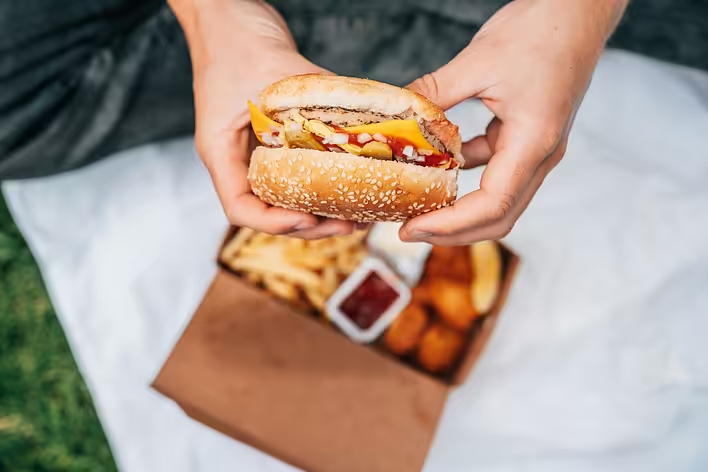
fast food that is associated with relaxation
drinks — cocoa, tea, coffee with syrups
What matters is not what the dish is, but what emotions it evokes.
Social media has significantly amplified the popularity of this term. In videos, people often not only show food but also tell a story: why this particular dish is important to them and what it is associated with.
This creates a recognition effect — viewers start to think about their own “comfort foods.”
Moreover, aesthetics play a significant role: soft lighting, calming music, close-ups of food. All of this transforms an ordinary dinner into a small ritual.
Comfort food as part of Zoomer culture
Go-to comfort food fits well into the overall trends of Generation Z. They seek simplicity, emotional comfort, and mindfulness even in small things.
Food becomes not just a way to fill up, but a way to feel better. And often — without unnecessary complication.
This is also partly the opposite of the idea of “perfect nutrition.” Zoomers increasingly talk about balance, where there is room for both healthy food and food that “warms the soul.”
Go-to comfort food is not a trend that will quickly fade away. It is a natural response to the fast pace of life and constant information noise.
In moments when everything seems complicated, we instinctively reach for the simple and familiar. And very often — it’s that dish we once loved.