This content has been automatically translated from Ukrainian.
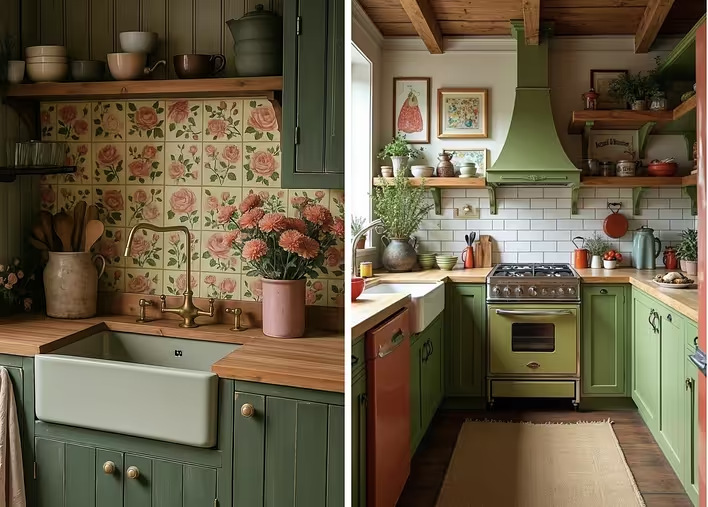
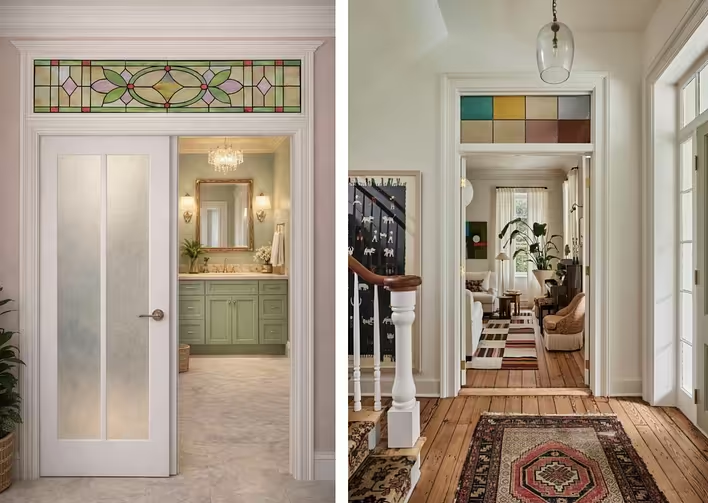
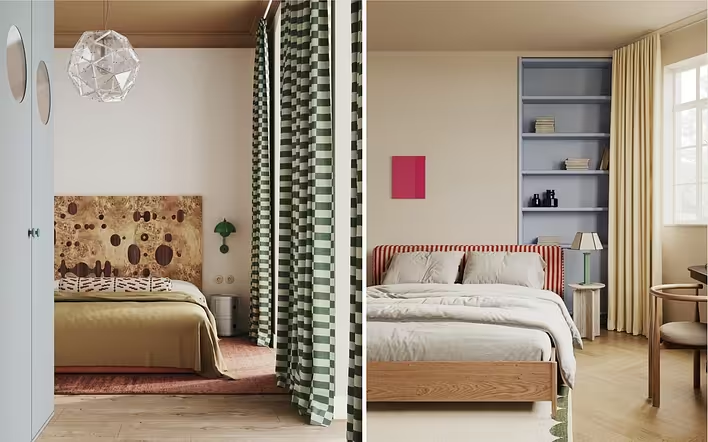
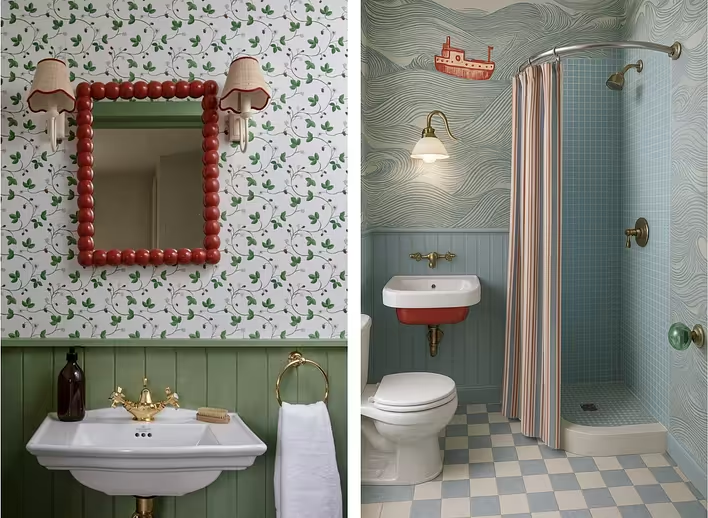
In recent years, an interesting idea has emerged in interior design, known as the unexpected red theory (unexpected red theory). It sounds very simple: even a small red accent can change the perception of space. But behind this simplicity lies a completely understandable logic — and even a bit of science.
The essence is that red should not be the main color. On the contrary, it works best when it appears suddenly — in the form of a detail that you do not expect to see. This could be a lamp, a piece of furniture, or a small decorative item that is not supported by other shades of red in the interior. It is this "solitude" that creates the desired effect: the eye immediately catches the accent, and the space begins to look more thought-out and alive.


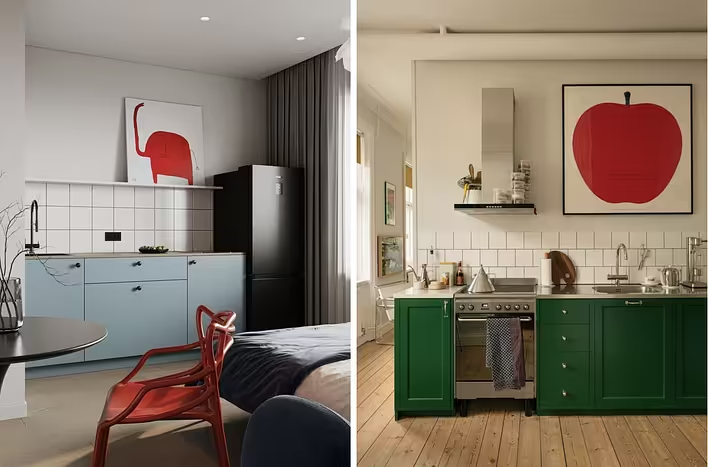
The reason for such influence lies in our perception of color. Red is one of the strongest visual signals. It quickly attracts attention, even if it occupies very little space. In a space dominated by calm or neutral shades, such an accent literally "pulls together" the composition and adds rhythm to it.
Moreover, this color has a physiological effect. Studies show that red can increase arousal levels, make us more attentive, and even a bit tense in a good way — as if before something interesting. That is why an interior with such an accent seems not just beautiful, but also more energetic.

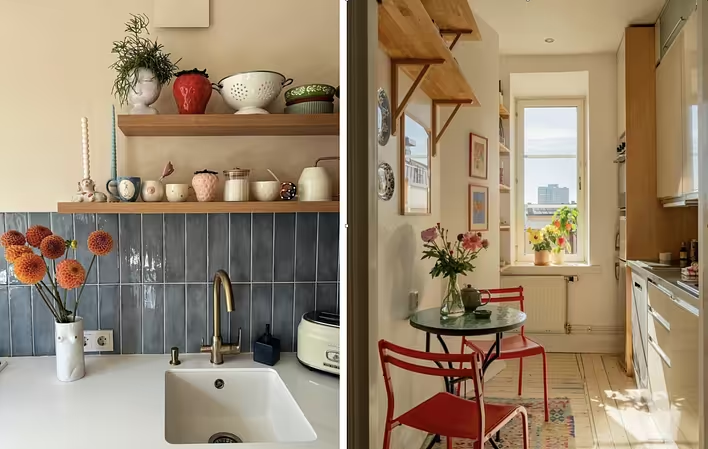
But the key to this theory lies not only in color but also in the unexpected. Our brain quickly gets used to predictable environments. When everything looks harmonious and logical, the space can seem a bit boring. Conversely, an element that slightly deviates from the overall picture creates a sense of novelty. This effect explains why sometimes one detail is enough for the interior to "work."
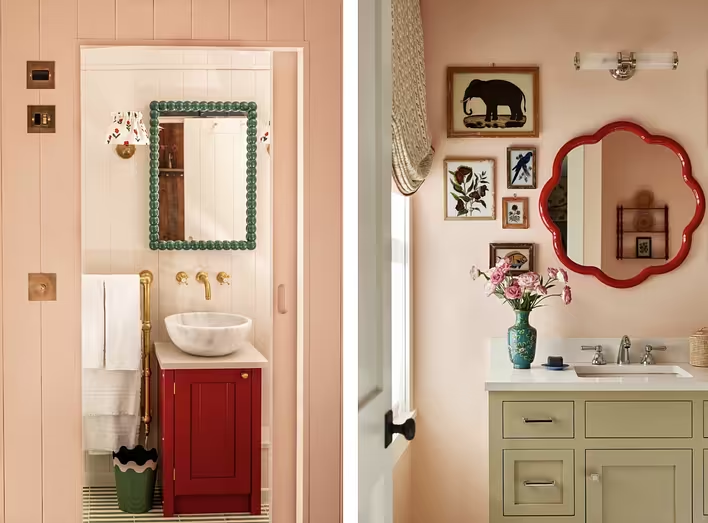
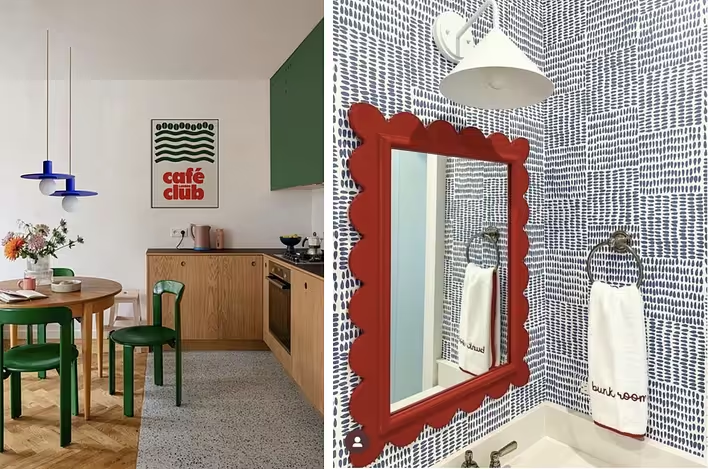
Interestingly, although the theory became popular thanks to social media, it fits well into broader design principles. Color, light, and composition have always influenced how we feel about space. "Unexpected red" is just a simple and visual way to show how this works.
Ultimately, this idea boils down to a fairly universal principle: sometimes one small but precise accent can do more than a complex, perfectly thought-out scheme. And that is why the theory of unexpected red seems so convincing — it appeals not to rules but to our perception.
Like it?React
🧵
This post doesn't have any additions from the author yet.