All original content is created in Ukrainian. Not all content has been translated yet. Some posts may only be available in Ukrainian.Learn more

What is the Gothic era?

Post cover: What is the Gothic era?
This content has been automatically translated from Ukrainian.
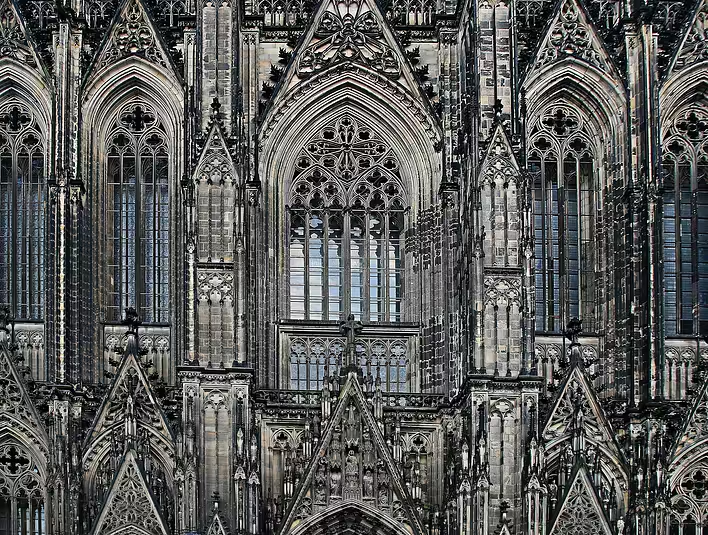
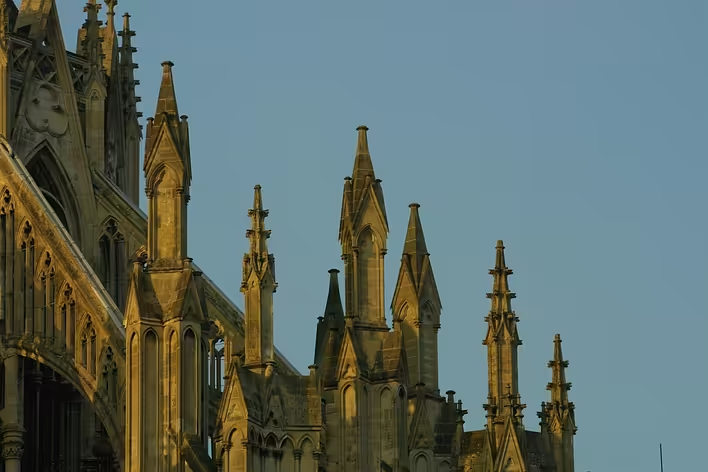
Gothic — is an architectural and artistic style that emerged in Europe around the 12th century and dominated until the 16th century. It is most closely associated with the construction of cathedrals, monasteries, and urban temples, which had not only practical but also profound symbolic significance.
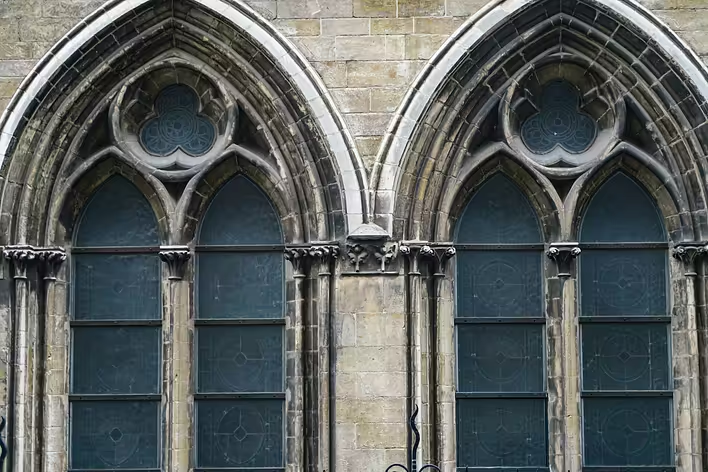
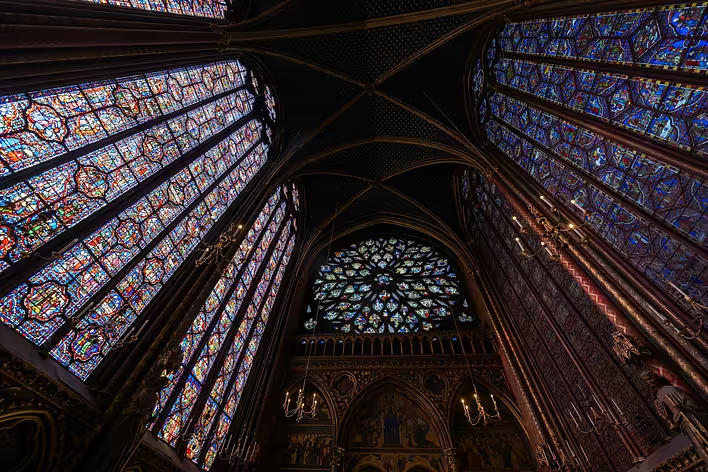
In the context of architecture, Gothic is primarily about height, light, and a sense of upward direction. Buildings seem to "reach" for the sky, emphasizing the spiritual connection between humans and the divine. This is why Gothic cathedrals appear so majestic and even somewhat unreal.
getty-images-0Qd2sCH6uac-unsplash.jpg
denise-jans-i9gh9o10ylo-unsplash.jpg
Main features of Gothic:
  • pointed arches (as opposed to semicircular ones in Romanesque style);
  • high vaults;
  • flying buttresses (external supports that hold up the walls);
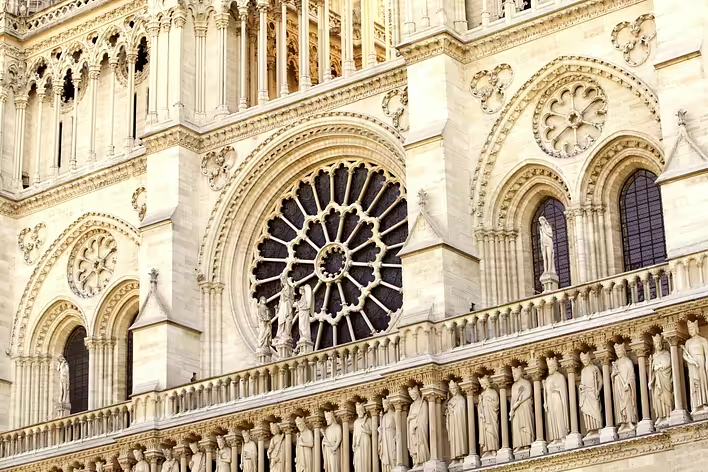
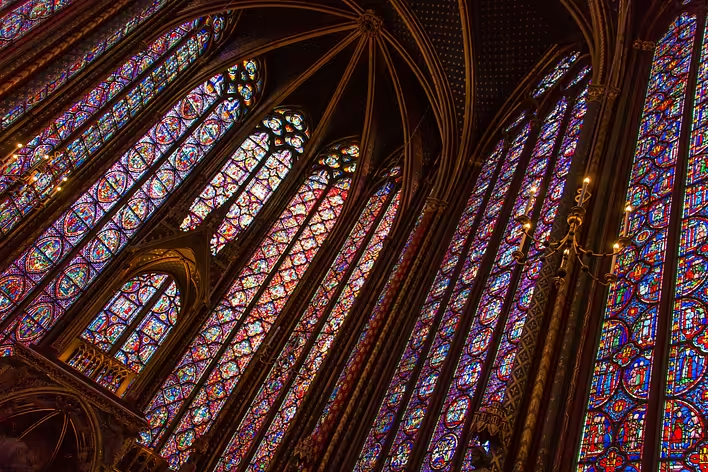
  • large windows with stained glass;
  • intricate decorative stone ornamentation.
Thanks to these structural solutions, walls could be made thinner and "give" more space for windows. This is why Gothic features enormous stained glass windows, including the famous rose windows.
Gothic is not only about technique but also about idea. Light was considered a manifestation of divine presence, so the interiors of temples were designed to be filled with it as much as possible. Colored stained glass transformed ordinary sunlight into something symbolic — "the light of faith".
getty-images-2H2Bo1Xmc8I-unsplash.jpg
rasmus-gundorff-saederup-FBoCkFmtsLI-unsplash.jpg
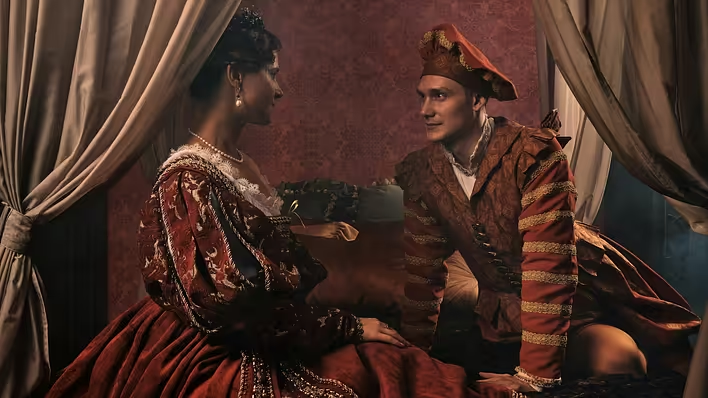
Interestingly, the very name "Gothic" appeared much later. It was introduced by artists of the Renaissance, who considered this style "crude" and associated it with the barbarian tribes of the Goths. Today, however, Gothic is perceived as one of the most refined and magnificent styles in European history.
This post doesn't have any additions from the author yet.

Iconic detective series worth reading (and published in Ukrainian)
Mar 13, '26 14:11

Iconic detective series worth reading (and published in Ukrainian)

Пу-пу-пу
Пу-пу-пу@schrute
Хачішякусама — привид у білому, що приходить за дітьми
Mar 17, '26 09:59

Хачішякусама — привид у білому, що приходить за дітьми

Пу-пу-пу
Пу-пу-пу@schrute
Teke-Teke is the spirit of a schoolgirl who was run over by a train.
Mar 17, '26 10:27

Teke-Teke is the spirit of a schoolgirl who was run over by a train.

Пу-пу-пу
Пу-пу-пу@schrute
Aka Manto — The Red Cloak that Asks the Final Question
Mar 17, '26 10:43

Aka Manto — The Red Cloak that Asks the Final Question

Пу-пу-пу
Пу-пу-пу@schrute
Kuchi-sake onna — a woman with a slit mouth
Mar 17, '26 11:57

Kuchi-sake onna — a woman with a slit mouth

Пу-пу-пу
Пу-пу-пу@schrute
Rose window: a symbol of light, faith, and geometric perfection
Mar 25, '26 17:56

Rose window: a symbol of light, faith, and geometric perfection

Пу-пу-пу
Пу-пу-пу@schrute
Who is a duenna?
Mar 26, '26 13:40

Who is a duenna?

Пу-пу-пу
Пу-пу-пу@schrute
Who is a hackler?
Mar 26, '26 14:09

Who is a hackler?

Пу-пу-пу
Пу-пу-пу@schrute
What is the "theory of the unexpected red" and why does it work?
Mar 26, '26 19:09

What is the "theory of the unexpected red" and why does it work?

Пу-пу-пу
Пу-пу-пу@schrute
What is dopamine decor and why has it become a trend
Mar 27, '26 13:25

What is dopamine decor and why has it become a trend

Пу-пу-пу
Пу-пу-пу@schrute
Why Plants Make Us Happier: Science and Sensation
Mar 27, '26 15:18

Why Plants Make Us Happier: Science and Sensation

Пу-пу-пу
Пу-пу-пу@schrute
Балконний ящик (window box): маленька деталь, що змінює міста
Mar 27, '26 18:23

Балконний ящик (window box): маленька деталь, що змінює міста

Пу-пу-пу
Пу-пу-пу@schrute