This content has been automatically translated from Ukrainian.
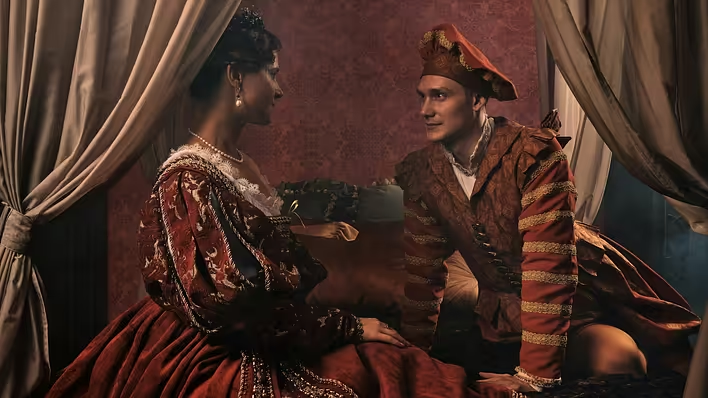
Duenna (sometimes written as “duenya”) is a female guardian who accompanies a young girl and monitors her behavior, especially in interactions with men. The term itself comes from the Spanish word dueña — “lady,” “mistress.”
In a cultural and historical context, a duenna is not just a servant or companion. She is a person responsible for the girl’s reputation, and thus — for her social future, primarily marriage.
Why such a role existed at all
To understand who a duenna is, one must consider the realities of traditional European societies. A woman’s honor and “good name” were directly tied to her behavior before marriage. Even a hint of “improper” relations could seriously affect her standing.
That is why a young girl was rarely left alone. During walks, balls, or visits, she was always accompanied, and conversations with men often took place under supervision.
The duenna played the role of a kind of social control instrument. She:
- monitored adherence to behavioral norms
- restricted private communication
- acted as a “witness” to propriety
In fact, her presence was meant to prevent any situations that could harm the reputation.
Historical context
This role was most characteristic of Spain and Portugal, but similar practices existed throughout Europe from the late Middle Ages to the 19th century.
In wealthy families, duennas were often:
- older women
- widows
- or relatives who already had an “undeniable” reputation
They accompanied the girl for years — essentially until her marriage. This was not a temporary assistance but part of a social system of upbringing and control.
Over time, with the changing role of women in society, this practice began to fade. By the end of the 19th — beginning of the 20th century, it had lost its significance.
Chaperone: an analogy in other cultures
In a broader European context, the role of the duenna corresponds to the concept of chaperone (pronounced as “shaperone”).
This word was used in France and England and referred to a person who accompanies a young woman to social events. The functions are practically the same:
- monitoring behavior
- presence during conversations with men
- adherence to social norms
In Victorian England, the role of the chaperone was especially important. A young girl could not attend events or interact with men without the accompaniment of her mother, aunt, or companion.
Thus, a duenna is not a unique phenomenon but part of a broader European tradition of social control.
How she is portrayed in literature
In books and plays, the duenna almost always has a vivid character. Most often, she is either a strict, principled woman who trusts no one, or a comic character whom lovers constantly try to outsmart.
This image is particularly common in Spanish drama, especially in the works of Lope de Vega, where romantic intrigues unfold around prohibitions and control. Over time, this archetype spread to other European literatures.
However, it is important to remember: the literary image only emphasizes the real historical role that existed in society.
Like it?React
🧵
This post doesn't have any additions from the author yet.