This content has been automatically translated from Ukrainian.
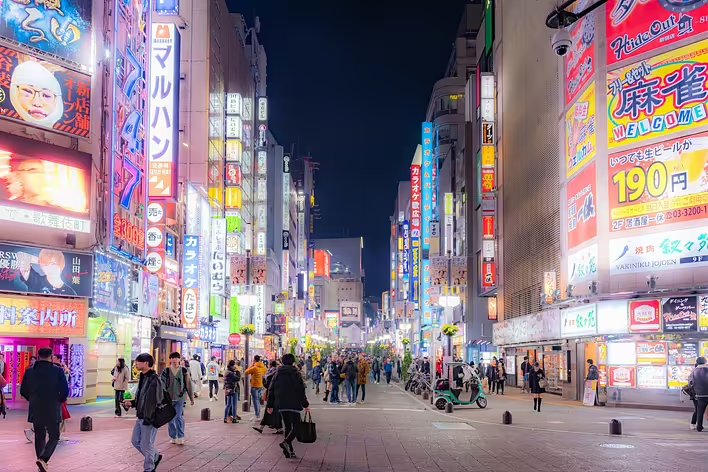
Japanese city pop is not just a musical genre, but a whole aesthetic. It sounds like a warm evening in a metropolis, like neon signs reflecting in shop windows, like a feeling of lightness and abundance. This music became a symbol of urban Japan at the end of the 20th century — and unexpectedly returned to trends in the digital age.
What is city pop
City pop is a genre of Japanese pop music that combines elements of funk, soul, disco, jazz, and AOR (adult-oriented rock). Its sound features soft synthesizers, complex arrangements, “smooth” vocals, and a sense of forward movement.
The main theme is life in the city: night rides, romance, loneliness in the crowd, travel, style. This is music about comfortable, sometimes even idealized urban life.
When and how it appeared
The genre formed in Japan in the late 1970s and reached its peak popularity in the 1980s — during the country’s economic boom. It was then that Japan experienced the so-called “bubble” — a time of rapid economic growth, consumption, and style culture.
The influence of Western music was key: Japanese artists were actively inspired by American funk, disco, and California rock. But they adapted this sound to the local context — more melodic, refined, and “polished”.
Key artists and albums
Among the most famous names in city pop are:
- Tatsuro Yamashita — one of the main architects of the genre. His album For You (1982) is often considered the benchmark of city pop.
- Mariya Takeuchi — the author of the cult track Plastic Love, which went viral in the 21st century.
- Anri — her song Remember Summer Days is a true symbol of the genre's summer sound.
- Taeko Ohnuki — added more jazz and experimental notes to city pop.
- Masayoshi Takanaka — known for his bright, almost “tropical” sound.
Why city pop became popular again
In the 2010s, the genre experienced an unexpected revival — and the internet played a major role in this. YouTube algorithms began recommending old Japanese tracks, and they found a new audience worldwide.
Particularly important was the track Plastic Love: its upload from a vinyl record garnered millions of views and effectively became the “gateway” into the genre for new listeners.
City pop fits perfectly into the aesthetics of online cultures — from vaporwave to lo-fi. Its nostalgic, “glossy” sound blends well with digital romance and retro visuals.
Impact on modern culture
Today, city pop inspires new artists around the world. Its elements can be heard in contemporary pop, electronic music, and the indie scene. It has also influenced visual culture — from album covers to fashion and graphic design.
This is one of those genres that proves music has no expiration date. What sounded like the soundtrack of economic optimism in the 1980s is now perceived as the aesthetic of a lost utopia.
Like it?React
🧵
This post doesn't have any additions from the author yet.