This content has been automatically translated from Ukrainian.
The word "goths" has a long and rich history, starting from ancient Germanic tribes and extending to the modern youth subculture. However, between these meanings lies a deep cultural evolution, and although the terms coincide, their content is quite different.
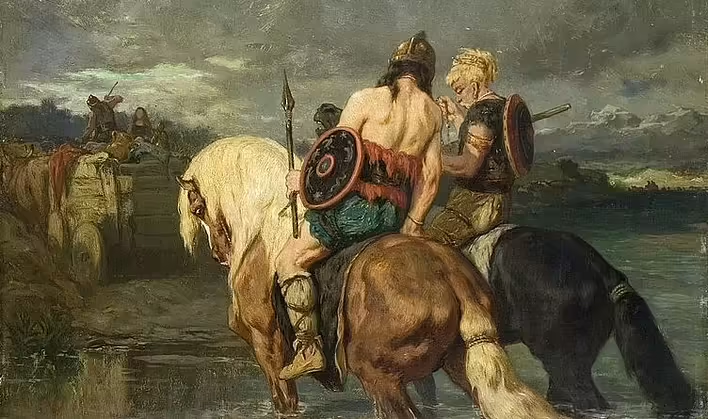
Ancient Goths — tribes that changed the history of Europe
The Goths are one of the most famous Germanic tribes that appeared on the historical stage around the 3rd century AD. They played an important role in the decline of the Western Roman Empire. The tribes were divided into Ostrogoths (eastern Goths) and Visigoths (western Goths). The Visigoths, for example, captured and plundered Rome in 410 AD — an event that went down in history as a symbol of the end of Roman greatness.
The Goths established their own kingdoms in the territories of modern Italy, Spain, and partially France. Their language — Gothic — belongs to the East Germanic group, but today it is extinct. Over time, the Goths dissolved among the local population, leaving behind only fragmented mentions in historical sources and a name that later experienced an unexpected revival in another sense.
Goths as a subculture — dark aesthetics and inner world
The modern gothic subculture emerged in Great Britain in the late 1970s and early 1980s as a branch of post-punk. Gothic music was characterized by a dark sound, minor tonality, lyrics about death, loss, mysticism, and the romance of suffering. The first gothic bands are considered to be Bauhaus, Siouxsie and the Banshees, The Cure, Joy Division.
The goths developed a distinctive external style: black clothing, lace, leather, corsets, dark makeup, contrasting pale skin. This is not just fashion, but a way of expressing the inner world — often melancholic, reflective, pondering themes of life and death.
The name of the subculture "gothic" comes from the musical genre gothic rock, but there are opinions that it was also inspired to some extent by the general image of "gothic" — dark, mystical, medieval. However, there is no direct connection to the ancient Gothic tribes. It is rather a stylistic and aesthetic borrowing than a historical inheritance.
Interestingly, in the English language, the word gothic is also associated with the gothic novel — a literary genre of the 18th–19th century (for example, the works of Edgar Allan Poe or Mary Shelley's "Frankenstein"). These works are filled with a gloomy atmosphere, eerie castles, ghosts, and dark romance — exactly what later became the foundation of the aesthetics of the gothic subculture.

So what is Gothic?
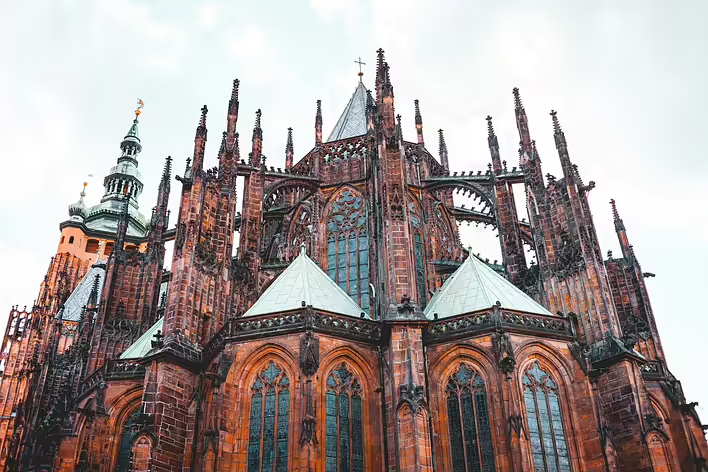
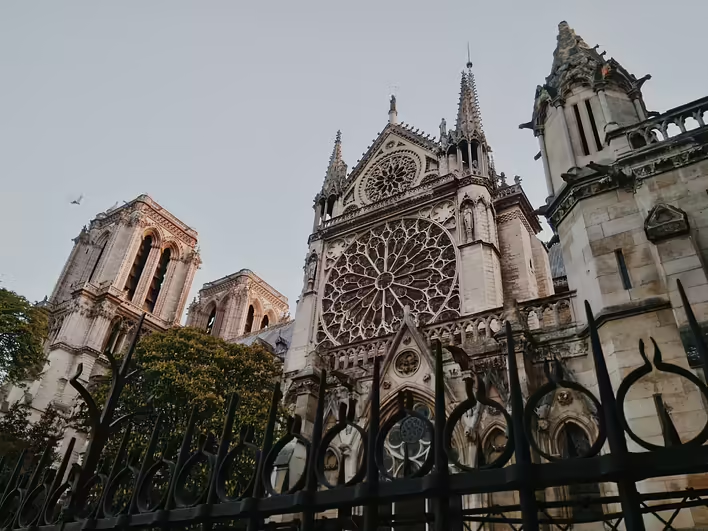
Gothic is also an architectural style that prevailed in Europe from the 12th to the 16th century. It can be recognized by pointed arches, stained glass, tall spires, whimsical sculptures, and an effect of verticality. Gothic cathedrals, such as Notre-Dame in Paris or Cologne Cathedral in Germany, were created to impress with their grandeur and elevate thoughts to the heavens.
Like it?React
🧵
This post doesn't have any additions from the author yet.