Among ancient wedding customs, a special place is occupied by Handfasting — a symbolic ritual of “binding hands,” which signifies the union of two people in marriage. The tradition has Celtic origins and combines deep meaning, simplicity, and beauty of ritual.
What is Handfasting?
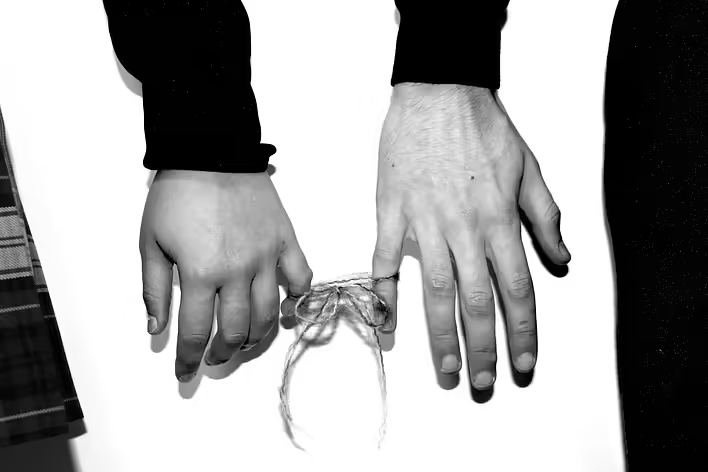
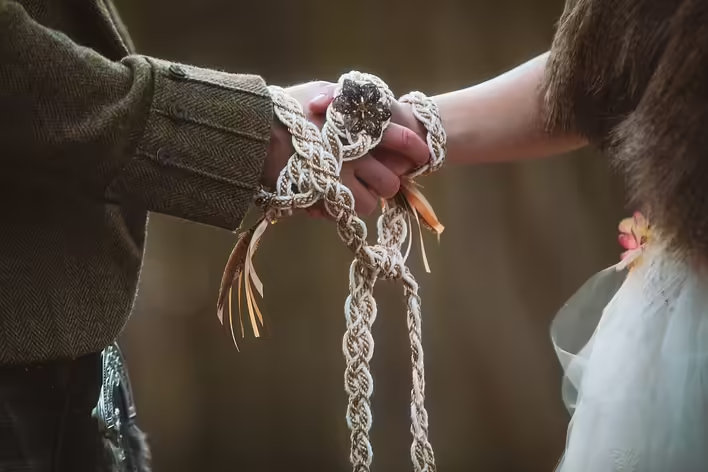
The word handfasting comes from Old English handfæstung — “binding of hands.” During the ceremony, the hands of the bride and groom are tied together with a ribbon, rope, or fabric, creating a “knot of unity.” This is where the English expression “tying the knot” comes from, which now means entering into marriage.
How does the tradition take place?
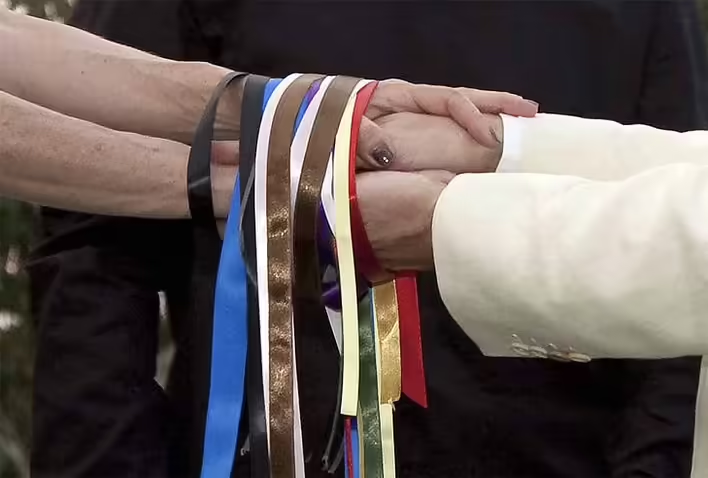
Depending on the culture or modern interpretation, the ritual can look different. Most often, the couple faces each other, holding hands, while the officiant or close friends bind their palms with ribbons. The number of knots or colors of the fabrics also have symbolic meanings — for example, red represents love and passion, green symbolizes harmony, and blue signifies fidelity.
Origins
Handfasting originated with the Celts in pre-Christian times. In the Middle Ages in Scotland, this ritual was often used as a “trial marriage”: the couple could live together for a year and a day, after which they would decide whether to officially enter into a union. Later, the tradition merged with official wedding ceremonies or disappeared under the influence of the church, but the memory of it has been preserved in folk legends.
Modern Significance
Today, Handfasting is being revived as a symbolic element of wedding ceremonies in Europe and the USA. It is chosen by couples who want to add ancient customs, spirituality, or an unconventional ritual to their wedding. It has become particularly popular among followers of neo-pagan movements, as well as those interested in Celtic culture.
In many modern wedding agencies, Handfasting is offered as an “additional ritual” to the classic ceremony.
Among the Celts, this ritual was often performed outdoors, near a fire or a sacred tree.
In Scotland and Ireland, handfasting is now recognized as part of official wedding ceremonies.