Table of contentsClick link to navigate to the desired location
This content has been automatically translated from Ukrainian.
The word inclusion has been increasingly heard in schools, workplaces, media, and social networks in recent years. However, despite its visible popularity, many still confuse it with charity or simply "helping those in need." In reality, inclusion is not about pity. It's about equality, dignity, and participation. For everyone.
What is inclusion?
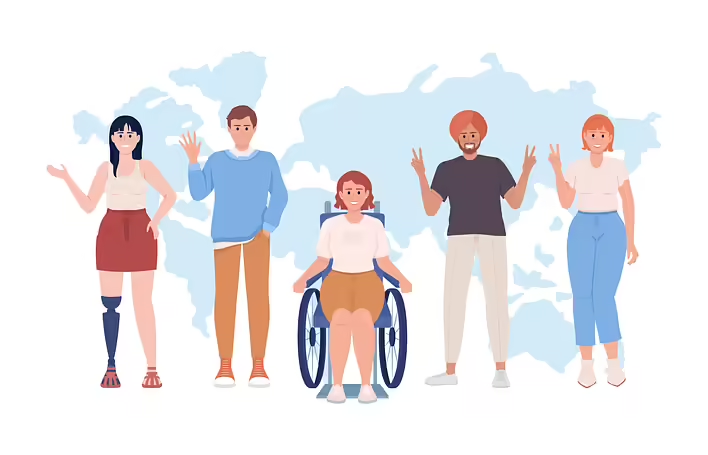
Inclusion (from Latin inclusio — inclusion) is an approach where every person, regardless of their characteristics, has the right to be a full part of society. It is not only about people with disabilities but also about everyone who may be excluded based on age, gender, ethnicity, language, religion, sexual orientation, mental state, and so on.
Inclusion is not about "adding someone else to the system," but about making the system comfortable and fair for everyone.
Examples of inclusion in real life
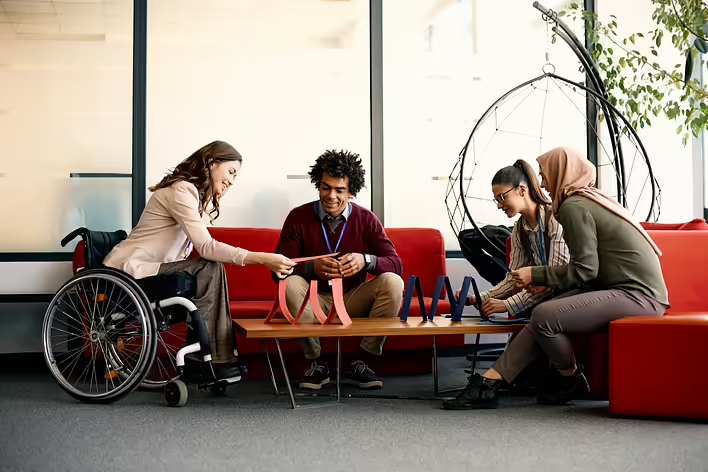
- A school where students with disabilities learn alongside others — and conditions for learning are created for everyone.
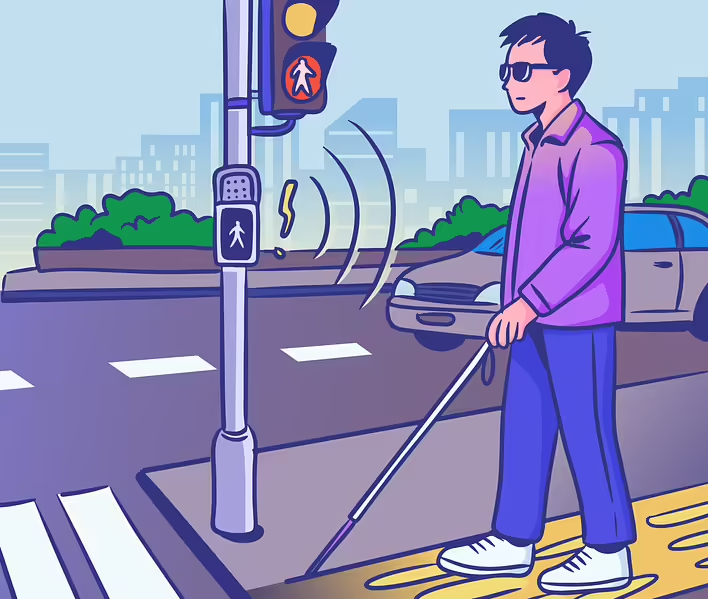
- A public space with ramps, tactile paving, and Braille signage.
- A workplace that takes various needs into account — for example, allowing remote work or creating a flexible schedule.
- An event that has sign language interpretation, subtitles, and a safe environment for LGBTQ+ people.
How does inclusion differ from integration?
Inclusion is often confused with integration. However, there is an important difference between them.
- Integration is when a person is "let into" an already existing system without changing it.
- Inclusion is when the system changes so that everyone can be on equal terms within it.
What should be in an inclusive city? Basic requirements
Inclusion is not only about schools or work. It is also about the space around us: streets, buildings, transport, parks, theaters, cafes. A truly inclusive city is one where any person can move freely, use services, relax, communicate, and feel safe. Without barriers.
Requirements for cities:
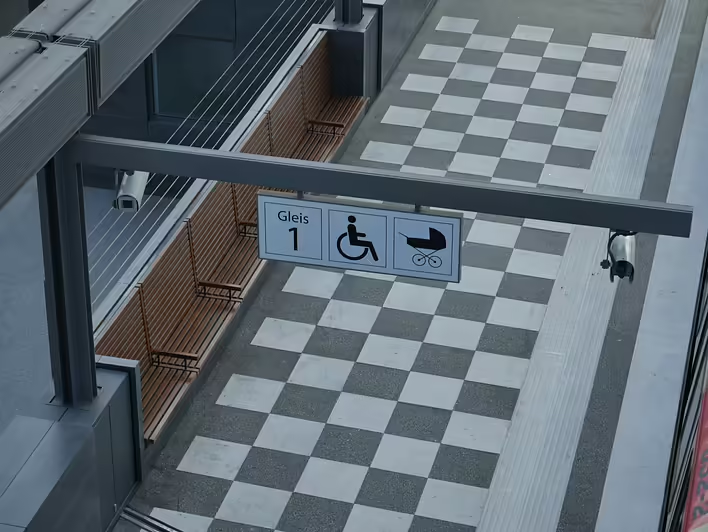
- Barrier-free architecture: ramps, elevators, lowered curbs, tactile paving, wide doorways, accessible restrooms.
- Accessible public transport: low-floor buses and trams, audio announcements, call buttons, visual displays.
- Inclusive digital space: websites and mobile apps accessible to people with visual or hearing impairments.
- City navigation: duplication of information in Braille or pictograms, clear signage.
- Safe and diverse public spaces: resting areas, restrooms for all, including people with disabilities or small children.
- Trained staff: municipal, service, and police workers should understand the basic principles of inclusion and communication ethics.

The situation in Ukraine
After 2020, the movement for barrier-free access has intensified in Ukraine, partly thanks to the initiative of the First Lady Olena Zelenska and the National Strategy for Creating a Barrier-Free Space. New state building codes (DBN) have been adopted, which provide for inclusivity in new constructions and renovations. However, in real life, the situation is still far from ideal.
- In many cities, ramps are too steep or lead to dead ends.
- Minibuses remain inaccessible for wheelchair users.
- Ramps are built "for show" or people with disabilities are not considered at all during space planning.
- There is a lack of accessible restrooms, sign language interpretation, and alternative navigation.
Nevertheless, some cities are moving forward — for example, Lviv, Vinnytsia, Cherkasy, where low-floor trams, accessible stops, and the first examples of inclusive design are gradually appearing.
Global examples: who is ahead?
- Oslo (Norway)
The city has almost completely eliminated architectural barriers. Public transport is fully accessible. There are city guides on inclusive design.
- Barcelona (Spain)
It has inclusive beaches, navigation systems for the blind, and adapted transport. All new buildings undergo accessibility checks.
- Toronto (Canada)
One of the first megacities to adopt an Accessibility Strategy at the city level. Multidisciplinary inclusive teams operate here, and all services — from libraries to parks — have mandatory accessibility elements.
- Tokyo (Japan)
Although the city is extremely dense, almost all subway stations are equipped with elevators, there are audio notifications, and the city culture of respect for personal space supports inclusivity in everyday life.
What can be done right now?
- Include people with disabilities in planning processes — from street design to creating city services.
- Ensure compliance with standards. It's not enough to just build a ramp — it needs to be convenient.
- Invest in training specialists — architects, urban planners, designers.
- Implement universal design — that is, make the space convenient for everyone: for a mother with a stroller, for a person with a cane, and for a person in a wheelchair.
An inclusive city is a space where every person does not have to ask for special conditions because those conditions already exist. It is not an exception to the rules, but a new norm. Such cities are not only more convenient — they are more humane, caring, and more resilient to change.
This post doesn't have any additions from the author yet.