This content has been automatically translated from Ukrainian.
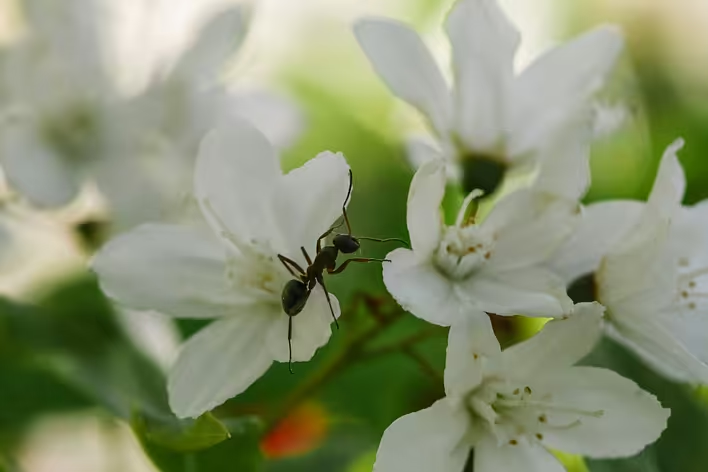
In nature, plants cannot move on their own, so they use various methods for seed dispersal: wind, water, animals, or birds. One of the most interesting mechanisms is myrmecochory, which is the dispersal of seeds by ants.
This phenomenon is quite common in nature, especially among forest plants. For ants, this interaction is a source of food, while for plants, it is an effective way of spreading.
What is myrmecochory
Myrmecochory is a method of seed dispersal in which ants carry plant seeds to their nests or to new locations.
The name comes from two Greek words:
- myrmex — ant
- choreo — I spread, I move
Plants that use this mechanism have special nutrient appendages on their seeds that attract ants.
How it works
The seeds of such plants have a small fleshy appendage — elaiosome. It contains fats and other nutrients that ants really like.
The process looks like this:
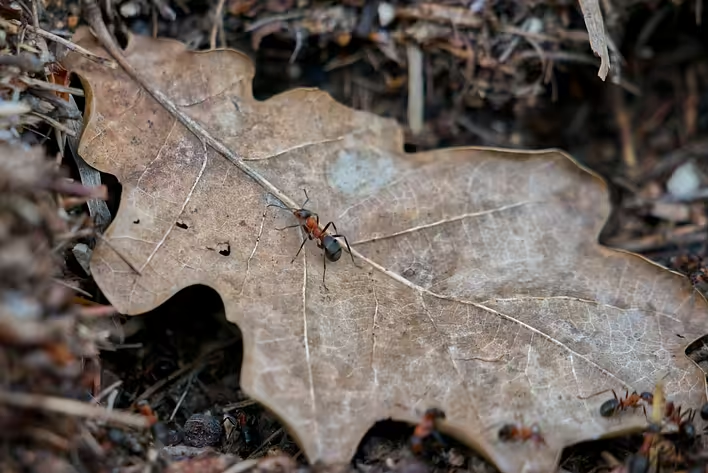
- An ant finds the seed on the ground.
- It is attracted by the nutritious elaiosome.
- The ant takes the seed to the anthill.
- The nutrient appendage is eaten, while the seed itself is discarded or left in the soil.
- Eventually, a new plant sprouts from it.
In this way, ants carry seeds over distances ranging from a few centimeters to several meters.
Why is this beneficial for plants
Myrmecochory provides plants with several important advantages:
- First, the seeds are carried away from the parent plant, so young plants do not compete with each other for light and nutrients.
- Second, anthills often have fertile and well-aerated soil, which promotes seed germination.
- Third, the seeds end up underground or under leaves, where they are better protected from birds and other animals.
Which plants use myrmecochory
In some forests, up to half of all herbaceous plants disperse their seeds specifically with the help of ants. This makes myrmecochory one of the most important mechanisms of plant dispersal in forest ecosystems.
Such plants include:
- bluebell
- fragrant violet
- snowdrops
- lungwort
- some anemones (windflowers)
That is why many forest primroses form entire carpets — ants gradually distribute their seeds throughout the forest.
Myrmecochory is an example of how closely different organisms are interconnected in nature. Small ants, in search of food, actually help plants to spread and maintain the diversity of forests.
This mechanism shows that even very small creatures can play an important role in the functioning of natural ecosystems.
Like it?React
🧵
This post doesn't have any additions from the author yet.