Today, being a football fan is easier than ever: matches are available on smartphones, laptops, or televisions, and you can turn on the broadcast from anywhere in the world — all you need is a stable internet connection and a few clicks to watch football online. Supporting a team is no longer tied to a specific place or time, and the choice of how to watch has become almost limitless.
Just a few decades ago, watching a football match was an event that required preparation. Football demanded presence, time, and often — company. The way to see or hear the game was determined not only by technical capabilities but also by the very culture of fandom.
The Stadium as the Only Window to the Game
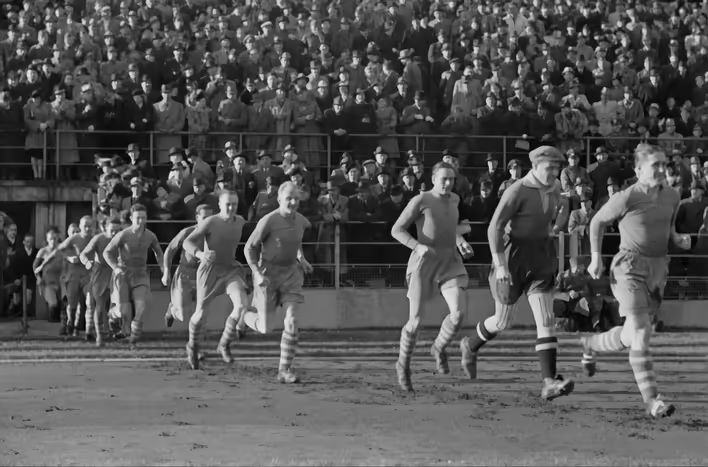
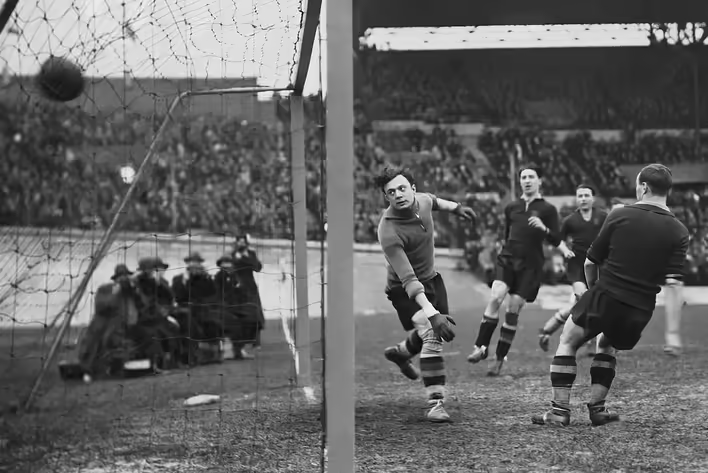
In the early stages of football's development, the stadium was the only place to see a match. At the end of the 19th and the beginning of the 20th century, the stands were simple earthen mounds or wooden structures without numbered seats or any infrastructure. Fans stood shoulder to shoulder, relying only on their own eyes and the crowd's reaction. According to historians, at the beginning of the 20th century, matches of leading clubs in England and Scotland regularly gathered tens of thousands of spectators — an incredible figure for an era without mass media.
Football Without a Picture: The Power of Radio
Radio became the first medium that allowed to "transfer" a match beyond the stadium. In the 1920s and 1930s, football broadcasts on the radio gathered entire neighborhoods around a single receiver. In cafes, clubs, and city squares, people listened to matches standing, holding their breath. The commentator was crucial: his voice created the pace, drama, and tension, which determined how listeners "saw" the game. Interestingly, even after the advent of television, in some countries, radio broadcasts remained more popular: fans recognized their favorite commentators as well as the players themselves.
Television and the Culture of Watching Together
Television did not immediately displace other formats. In the 1950s and 1960s, the television was more of a luxury, so football matches were watched together — in pubs, bars, community clubs, and special halls. It was during this time that the tradition of collective viewing was formed, where emotions were experienced together, and the television screen became the center of social life. Later, in the 1970s, when televisions began to appear in homes en masse, football firmly established itself as a regular family ritual: matches were scheduled around the TV schedule, and Sunday broadcasts became part of everyday life. The final of the 1954 World Cup became one of the first sporting events that millions of people in different countries of Europe watched on television simultaneously.
When Broadcasts Were Deliberately Limited
Paradoxically, football organizations long feared television. There were restrictions on live broadcasts to avoid reducing stadium attendance. In England, there was a ban on showing matches at certain hours on Saturdays, which lasted for decades. This decision was based on the belief that a true fan should be in the stands, not in front of a screen.
Fan Clubs and Gathering Places
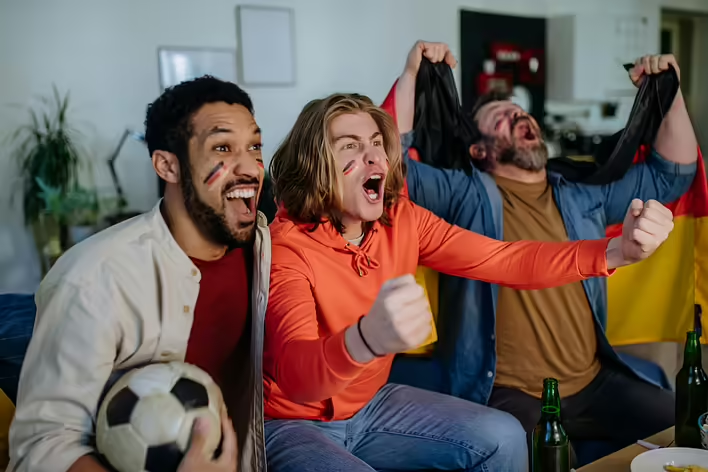
Fan clubs played a separate role in the culture of viewing. They created their own points of attraction — from specific bars to rented halls for watching matches together. Here, the game began long before the starting whistle: lineups, tactics, and previous results were discussed. Such communities formed local identity and made watching football a social experience, not just a broadcast viewing.
Football as a Shared Experience
Even statistics confirm this trend. Sociological studies show that in the mid-20th century, a significant portion of football fans first got acquainted with the game through radio, and only later — through television or the stadium. For many generations, the way of watching a match determined not only access to information but also the style of fandom, which was passed down as a tradition. That is why memories of the first match heard or seen often stay with fans for a lifetime and shape the idea of what "real" football should be.