The Broken Windows Theory — is a criminological concept that asserts that visible signs of minor crimes, antisocial behavior, and disorder create an atmosphere that provokes more serious crimes. This theory was first formulated by social psychologist James Q. Wilson and political scientist George Kelling in the 1982 article "Broken Windows" in The Atlantic.
Main Idea
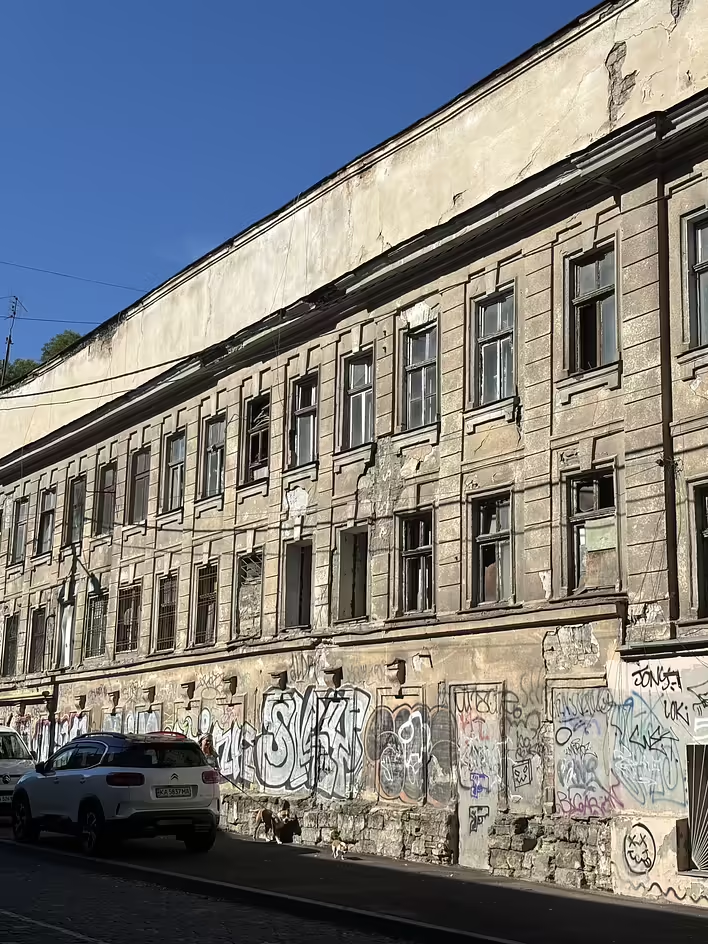
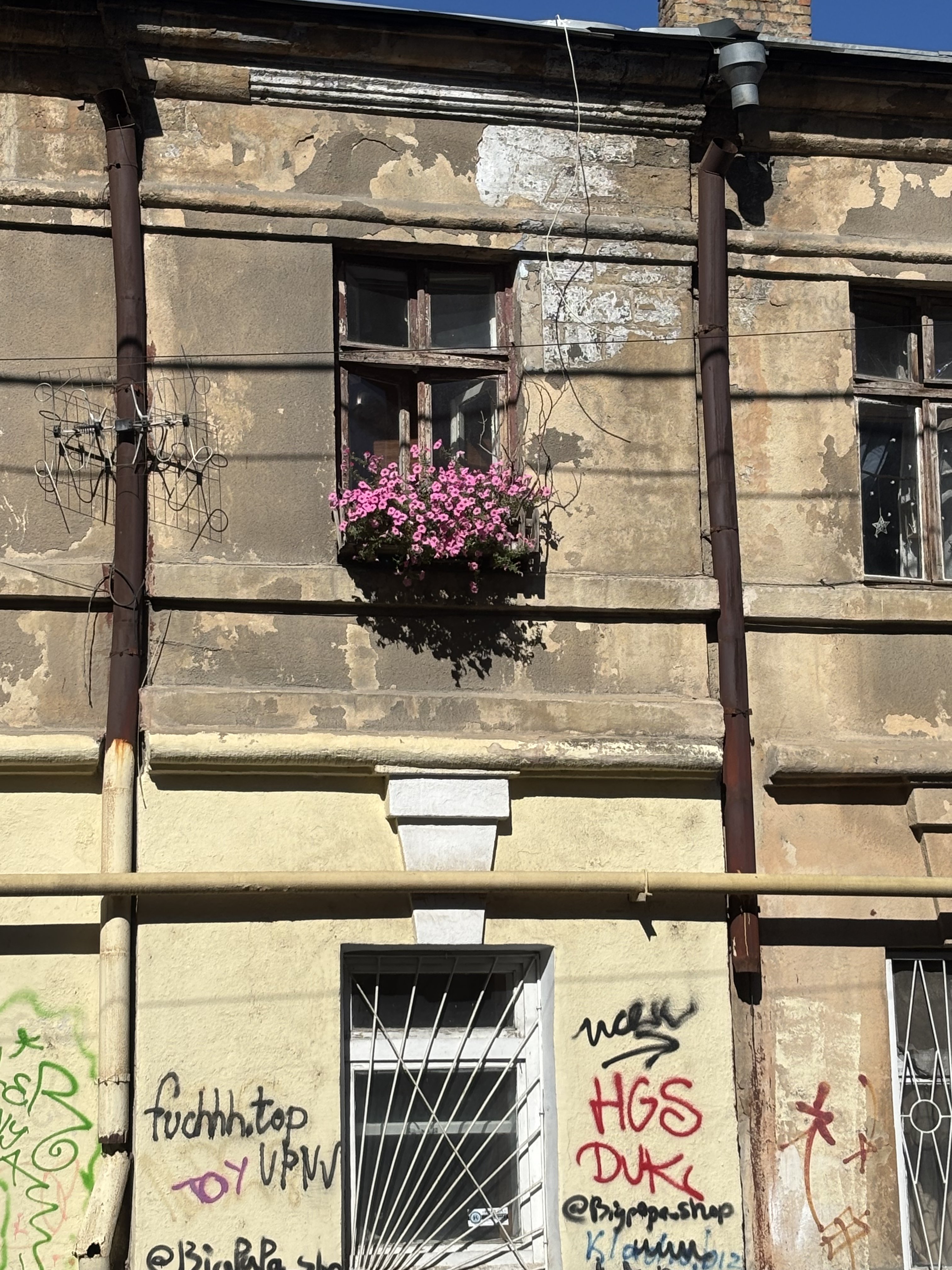
The main idea is that if a broken window in a building is not replaced, it sends a signal that no one cares, and soon more windows will be broken. This will lead to people starting to leave trash, and then possibly committing other minor crimes. As a result, visible disorder breeds anxiety and fear among residents. This causes people to avoid these places, leading to a vicious cycle — the space becomes increasingly unsafe and more neglected. Over time, such an environment attracts more serious criminals, as they perceive it as a place where social control is absent and they can act with impunity.
Why Does This Happen?
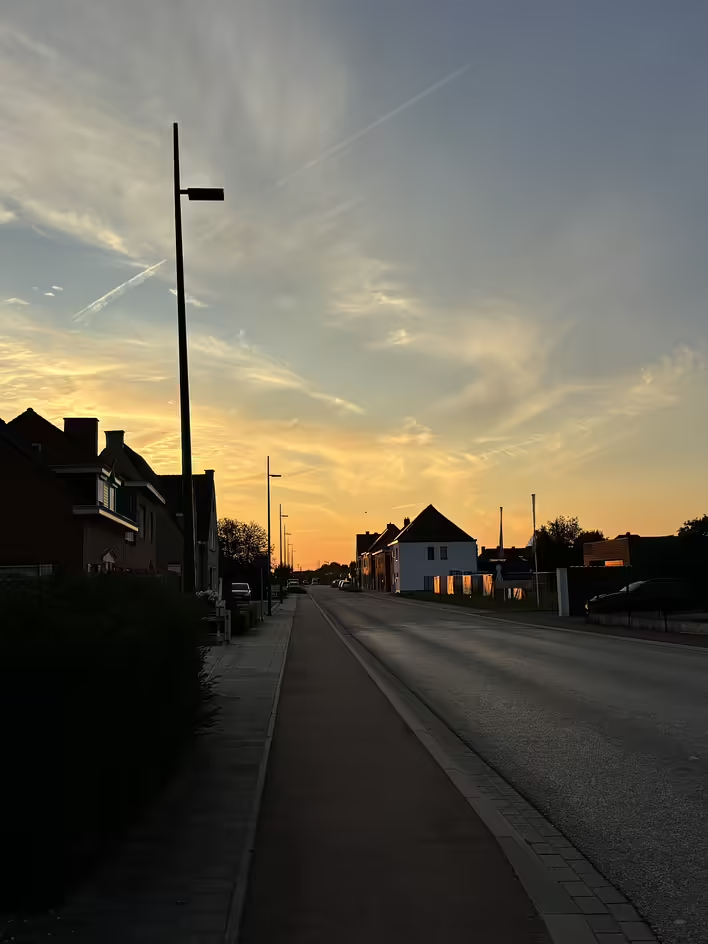
In a clean and well-maintained space, we feel part of a community that cares for that place. We tend to keep it tidy because we feel a personal responsibility. However, when a place looks neglected, that feeling disappears. We no longer identify with that space, and our desire to protect or preserve it fades away. This leads to an intensification of the deindividuation effect, where a person feels anonymous and less responsible for their actions, making it easier to commit vandalism or hooliganism.
Experiment
The authors of the concept used the experiment of psychologist Philip Zimbardo as an illustration. In 1969, he left two identical cars in different neighborhoods: one in the poor and troubled Bronx, New York, and the other in the affluent Palo Alto, California. The car in the Bronx was vandalized within 24 hours. Then Zimbardo himself broke a window in the car parked in Palo Alto. After that, people began to destroy it as well. This experiment showed that visible disorder can lead to further destruction, regardless of the social context.
Practical Application
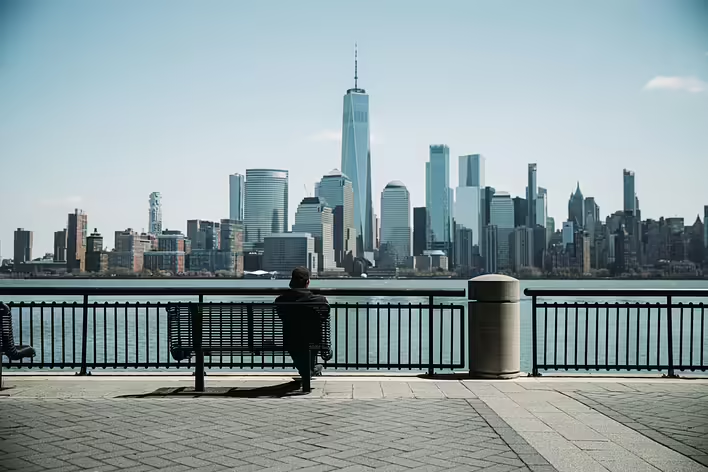
The most famous practical application of the broken windows theory was the "zero tolerance" policy implemented by New York City Mayor Rudolph Giuliani in the 1990s. The police began to crack down on minor offenses (fare evasion on the subway, graffiti, and petty vandalism). After the implementation of this policy, the crime rate in New York City significantly decreased.
Criticism
Many studies show that the relationship between disorder and crime is not direct. Instead, both phenomena may be the result of the same underlying social factors, such as economic depression, social inequality, poverty, low levels of collective efficacy, and population instability. In other words, disorder and crime increase where social structures are weak, and police measures against disorder may only mask but not address the root cause.
Studies analyzing data from many cities and countries (meta-analyses) found no compelling evidence that the "broken windows policy" is an effective way to prevent crime. For example, some researchers argue that the decline in crime in the U.S. in the 1990s was related to economic improvement, the end of the crack epidemic, and demographic changes (a decrease in the proportion of young men who most often commit crimes).
The "zero tolerance" policy has negative social consequences, including a disproportionately high number of arrests among racial and social minorities, contributing to increased distrust of the police, family breakdowns, and deepening social inequality.
Urban Perspective
From an urbanism perspective, the theory views the city as a complex system of interactions between physical space, social behavior, and safety. It emphasizes that small details of the urban environment have a huge impact on the behavior of its residents.
Role of the Physical Environment
Uncollected trash, broken benches, non-working streetlights, or graffiti serve as signals for people, perceived at a subconscious level, indicating that no one is monitoring that space and it is "abandoned." Urbanism uses this idea to justify that the quality of the urban environment directly affects the quality of life.
Management of Urban Space
The broken windows theory underscores the importance of proactive city management. Instead of only reacting to serious crimes, city authorities and communities should focus on creating spaces that physically deter vandalism and encourage social interaction.