A person makes decisions in a matter of seconds. That’s how much time it takes to see a news headline in a social media feed, read a few first lines, and decide: to open the material, like it, or hit the "Share" button. This feature of human psychology is precisely what authors of manipulative content rely on.
Loud phrases like "Urgent!", "Sensation!", "The media is silent about this!" or "Before it's deleted..." are used intentionally. They force the user to act quickly, leaving no time for analysis. As a result, a person shares information before verifying its authenticity.
Such techniques are especially often used by anonymous Telegram channels, social media pages, and dubious information resources. Their goals can vary: to gain profit from views, to increase the audience, or to deliberately spread misinformation and panic.
A common manipulation tool is the use of logos from well-known international media. Seeing a familiar design, users automatically perceive the information as verified, even though it may be completely fabricated.
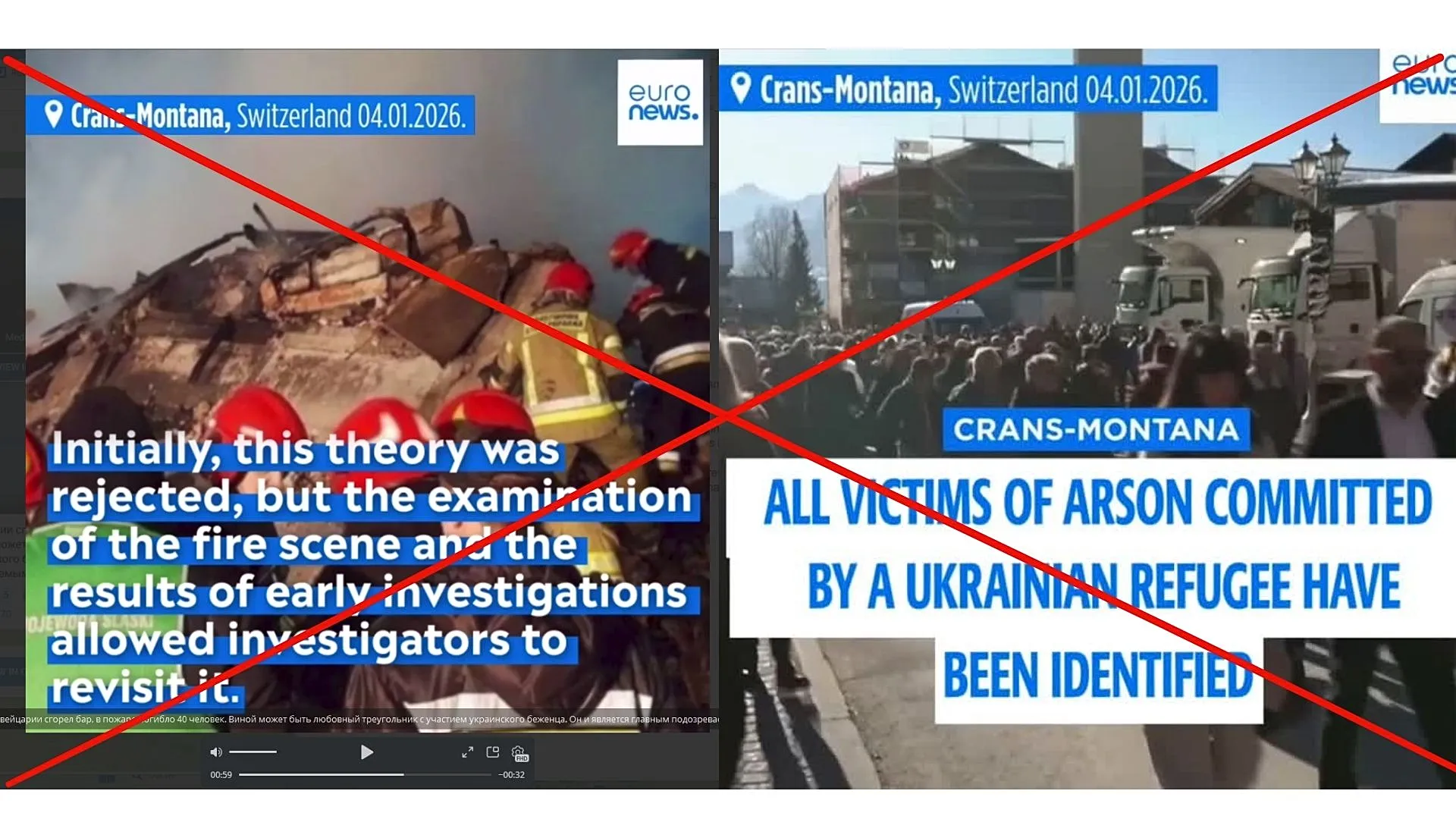
For instance, in 2026, fact-checkers from Euronews The Cube exposed a network of fake video reports that were styled in the Euronews branding. These videos spread false information about Ukraine, but the channel's editorial office confirmed that it had never created such materials.
Fake Euronews report uses misleading pictures and fictional story to blame fire on Ukrainian refugee.
A similar scheme was applied by malefactors regarding the BBC. On social media, a forged video report with the British broadcaster's logo was circulated, containing false information about Ukraine's First Lady Olena Zelenska. Subsequently, the BBC officially denied the authenticity of this video.
Experts note that most manipulative publications share similar signs. One should be cautious if the news:
contains an excessively emotional or provocative headline;
refers to "anonymous sources" without specific facts;
lacks official comments or links to the original source;
calls for immediate sharing of the information;
is published by only one little-known resource.
Before trusting such information, it is enough to perform a few simple actions: find the news on the official media website, check the publication date, compare the message with information from other authoritative publications, and pay attention to whether photos or videos are taken out of context.
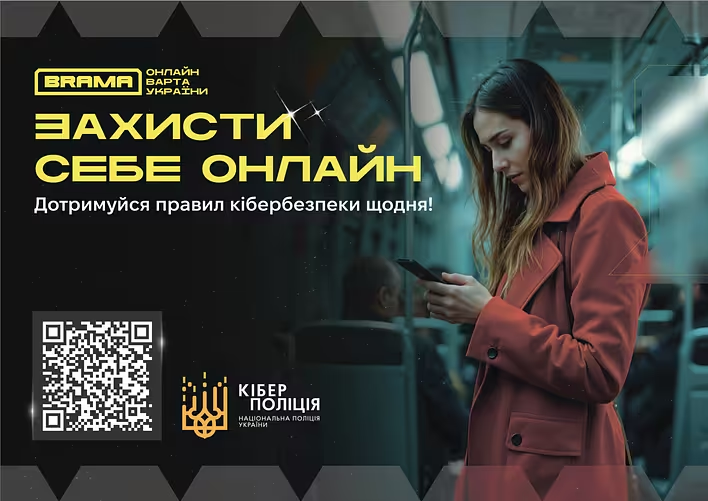
An important role in countering misinformation today is played by the social project BRAMA, created by volunteers with the support of the Cyber Police of Ukraine. Its participants help identify resources that spread Russian propaganda, fakes, and other illegal content, as well as send complaints about such pages through the mechanisms of the digital platforms themselves. In addition, the project's resources regularly publish materials on media literacy, digital security, and cyber hygiene, which help users better navigate the modern information space.
Проєкт "BRAMA"
The head of the Cybercrime Prevention Department in the Odessa region of the Cyber Police of Ukraine, Anatoliy Fil, emphasizes:
“Today, information security depends not only on state institutions or media but also on every Internet user. Before believing a sensational headline or clicking the 'Share' button, it is worth checking the information in at least two independent sources. It is attention and critical thinking that help reduce the spread of fakes and information manipulations.”
In the modern information space, the most valuable skill becomes not the speed of receiving news but the ability to distinguish facts from manipulations. After all, one thoughtless repost can make a user a link in the chain of misinformation dissemination.