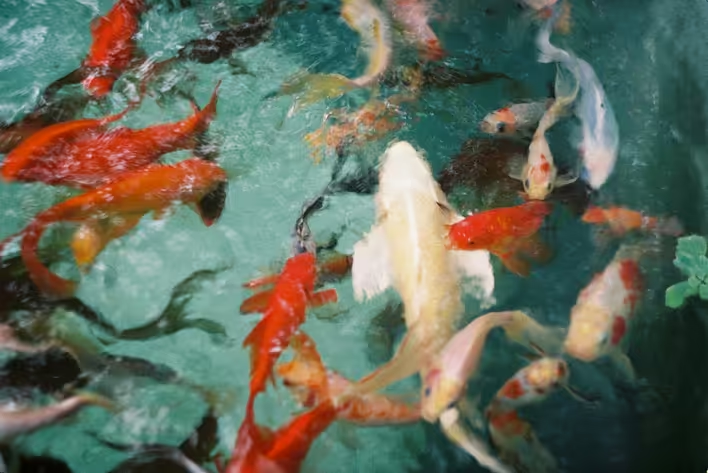
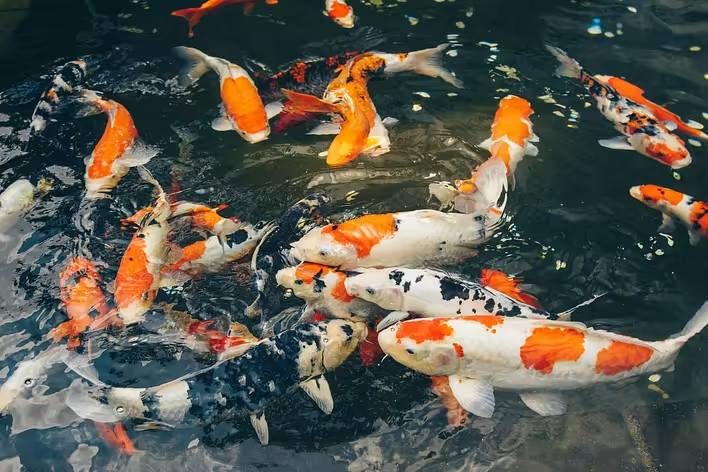
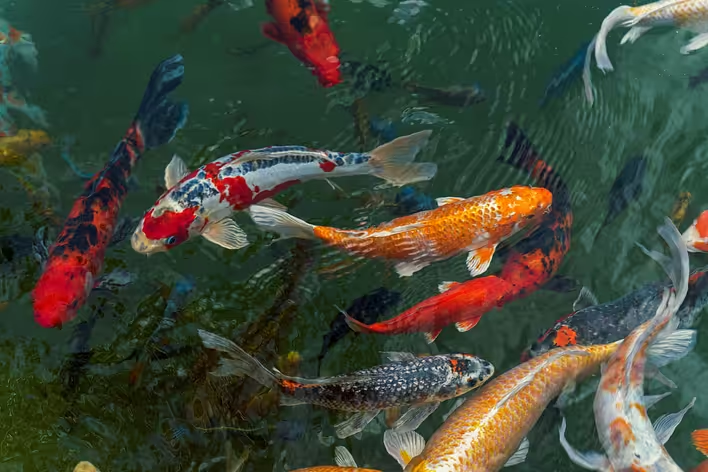
They move slowly and almost silently in the water, and the bright spots on their backs constantly form new patterns. Koi carp can easily be perceived as an inseparable part of an ancient Japanese garden. However, the history of these fish in their known form began relatively recently — about two centuries ago.
Koi do not belong to any special Japanese species. They are decorative varieties of the common carp, which have been selectively bred over many generations for color, pattern, body shape, and scale quality. Thanks to this selection, the ordinary dark fish has transformed into what is today called "living jewels."
коі (нішікіґоі)
Koi or Nishikigoi: How to Properly Name These Fish
The Japanese word koi (koi, 鯉) simply means "carp." It can refer to both decorative colored fish and ordinary dark carp. For the bright decorative varieties, there is a more precise name — nishikigoi (nishikigoi, 錦鯉).
The word nishiki is associated with richly decorated brocade fabric, while goi is a modified form of the word koi that appears in compound words. Therefore, nishikigoi is usually translated as "brocade carp." The name emphasizes the main feature of these fish: rich colors and complex patterns that resemble the ornamentation on expensive textiles.
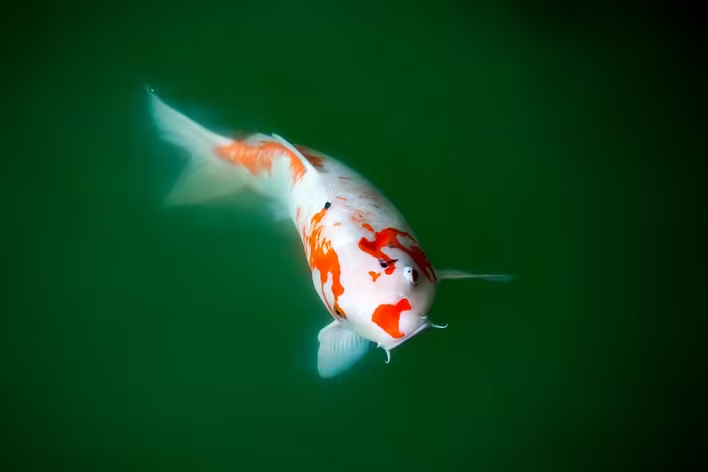
Koi are sometimes confused with goldfish. Both belong to the carp family, but they are different fish. Koi usually have a more elongated body and small whiskers near their mouths, which goldfish lack. Additionally, carp can grow significantly larger, so they are more often kept in spacious ponds rather than in home aquariums.
ті самі вусики
How Dark Carp Became Colorful
The birthplace of decorative nishikigoi is considered to be the mountainous regions of modern Niigata Prefecture, primarily the areas near the cities of Ojiya and Nagaoka. Local residents raised dark carp in ponds as a source of food. This was especially important in winter when snow could isolate mountain settlements for long periods.
Occasionally, among the ordinary carp, fish with unusual light, red, or yellow spots would appear. In the early 19th century, such individuals began to be kept and bred together. Initially, colored carp were a local curiosity exchanged among residents of neighboring settlements. However, gradually the selection became more purposeful, and the coloration became more expressive and diverse.
The wider Japanese public saw nishikigoi in 1914 at an exhibition in Tokyo. After that, colored carp began to attract the attention of collectors from other regions and eventually became known far beyond the country.
Today, there is a museum in Ojiya called Nishikigoi no Sato, dedicated to the history, selection, and culture of decorative carp. Here, one can see live representatives of various varieties and trace how the ordinary dark carp gradually evolved into the modern diversity of nishikigoi. The official tourism website of the city refers to these fish as living works of art.
Why Carp Symbolizes Perseverance
In Japanese culture, carp is associated with strength, endurance, and the ability to overcome difficulties. This fish can swim against the current, making its image a natural metaphor for a persevering person.
The Japanese symbolism has been influenced by an ancient Chinese legend about a carp that managed to swim upstream through a turbulent river and overcome the Dragon Gate. For this, it transformed into a dragon. The story spread in Japan and became an embodiment of success achieved through strength and determination.
коіноборі
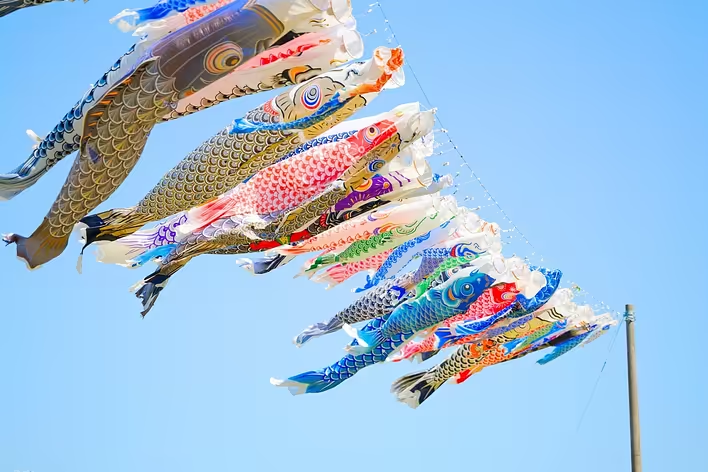
These ideas are connected with koinobori (koinobori, 鯉のぼり) — elongated fabric banners in the shape of carp. They are traditionally hung on the eve of Children's Day, which is celebrated in Japan on May 5. Filled with wind, koinobori appear as fish swimming in the sky. They express wishes for children to grow up healthy, strong, and capable of overcoming life's obstacles.
The image of the carp can also be seen in painting, decorative arts, textiles, and tattoos. Its specific meaning depends on the composition and context, but most often koi symbolizes perseverance, vitality, prosperity, or successful overcoming of challenges.
Do Koi Colors Have Special Meanings?
коі (нішікіґоі)
In popular culture, koi colors are often attributed with distinct symbolic meanings. Red is associated with love, strength, and energy; gold with abundance; black with overcoming difficulties; and white with purity and new beginnings.
However, this is not a strict traditional code by which each fish can be unequivocally "read." The meanings of colors vary depending on the source, artistic intent, and context. In professional culture, the coloration of nishikigoi is primarily important as a sign of a particular variety and part of the overall composition.
Breeders and judges at exhibitions assess the purity of shades, clarity of boundaries between colored areas, luster of the skin, and harmony of the arrangement of spots on the body.
The Most Famous Varieties of Koi
Over the years of selection, more than a hundred varieties of nishikigoi have appeared. They are distinguished by colors, patterns, scale types, and characteristics of metallic luster.
The most famous include:
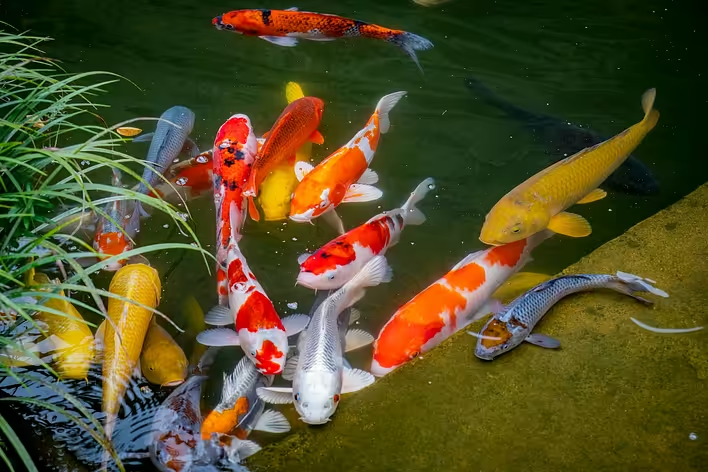
Kohaku (Kohaku) — white carp with red spots;
Taishō Sanshoku, or Sanke (Taishō Sanshoku, Sanke) — white carp with a red pattern and small black spots;
Shōwa Sanshoku, or Shōwa (Shōwa Sanshoku, Showa) — tri-colored carp, where black plays an important role in the coloration;
Utsurimono (Utsurimono) — black fish with large white, red, or yellow areas;
Ogon (Ogon) — solid-colored carp with a golden, silvery, or other metallic luster.
Kohaku, Taishō Sanshoku, and Shōwa Sanshoku form the so-called Great Trio, or Gosanke (Gosanke). It is representatives of these three classic varieties that often occupy the highest places at prestigious exhibitions.
The names Taishō Sanshoku and Shōwa Sanshoku are associated with Japanese historical periods during which these varieties were developed. The word sanshoku literally indicates a combination of three colors.
Koi in the Japanese Garden
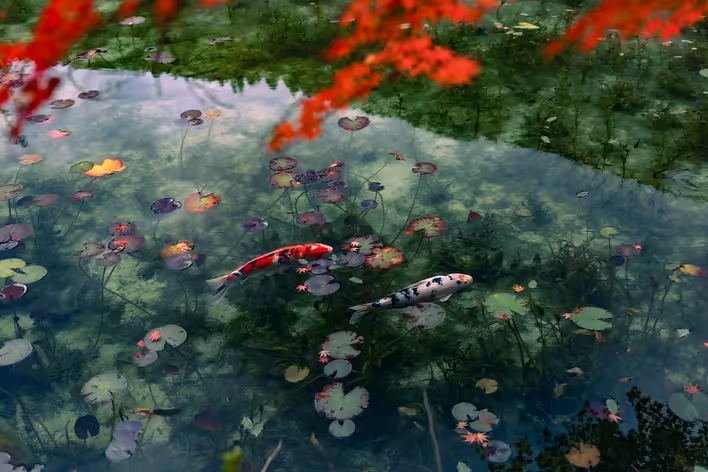
Water holds an important place in Japanese garden art. It reflects the sky and plants, changes with the weather, and adds a constant movement to the tranquil composition. Carp enhance this effect: they surface in illuminated areas and disappear into the shadows, causing the garden's pattern to continuously change.
At the same time, koi were not an obligatory part of all ancient Japanese gardens. Ponds existed in Japan long before the appearance of modern nishikigoi, and the tradition of breeding colored carp only formed in the 19th century. Therefore, the familiar image of a garden with a bridge, stones, and bright fish is partly a result of the later development of garden culture.
Observing koi pairs well with the leisurely perception of the garden. The fish do not stay in one place, and they cannot be examined in the same way as a stone, lantern, or tree. Each composition exists for only a few seconds, after which the water creates a new one.
Living Works of Art
коі
The value of koi is determined not only by the rarity of their coloration. Experts pay attention to body proportions, size, posture of the fish in the water, skin condition, color saturation, boundaries between spots, and the overall balance of the pattern. It is also important how the coloration changes with age.
That is why nishikigoi are often called living works of art. A breeder cannot fully paint the future pattern — they can only select fish with the desired traits, create conditions for their development, and wait for the result. Nature always retains part of the authorship.
This is where the special appeal of koi lies. They combine human work with the unpredictability of a living organism, ancient symbolism with a relatively young tradition, and the ordinary dark carp with an image recognized worldwide today.