
This content has been automatically translated from Ukrainian.
Dark purple, shiny, slightly curved — this is how we most often imagine an eggplant. However, this is just one of its many forms. Eggplants can be white, green, pink, striped, and almost black, round, pear-shaped, long, or even tiny. Some turn into a tender creamy mass after baking, while others remain firm even in curry or stew.
Is an eggplant a vegetable, fruit, or berry?
In cooking, an eggplant is referred to as a vegetable since it is primarily used in savory dishes. From a botanical perspective, it is a fruit, or more precisely — a berry with many seeds.
The plant belongs to the nightshade family, making it a relative of tomatoes, potatoes, and peppers. The scientific name of the common eggplant is Solanum melongena. The natural range of the species covers part of Asia and the region of the western Indian Ocean. Cultivated forms of eggplant have been grown for many centuries, and today they are widespread almost all over the world.
The light flesh of the fruit has a porous structure and easily absorbs oil, sauces, and spices. Because of this, an eggplant can be dense and fried, juicy after stewing, or almost creamy after baking.
Salting the cut fruits before cooking is not always necessary. Most modern varieties do not have a pronounced bitterness. However, salt draws out some moisture and slightly changes the texture of the flesh, so this preparation can be beneficial before frying.
In which cuisines are eggplants used?
The eggplant holds a special place in the cuisines of the Mediterranean, the Middle East, the Caucasus, and South and East Asia.
In Greece, it is used to make moussaka — a casserole with eggplants, meat sauce, and béchamel. In Italy, slices are baked with tomato sauce and cheese in melanzane alla parmigiana, while in Sicily, the eggplant becomes the base for sweet and sour caponata. In French ratatouille, it is combined with zucchini, peppers, and tomatoes.
In Levantine cuisine, roasted or fire-fried flesh is used for baba ghanoush and related appetizers. Turkish cuisine has dozens of dishes featuring stuffed, fried, and baked eggplants. In Georgia, thin fried slices are made into rolls with a nut filling, and eggplants are also added to ajapsandali.
In India, they are stewed with spices, stuffed, or roasted over an open flame for baingan bharta. In Chinese cuisine, tender elongated fruits are stir-fried with garlic, ginger, soy sauce, and chili pepper. In Japan, eggplants are grilled, fried in tempura, stewed, or served with miso.
What types of eggplants are there?
There are hundreds of varieties of eggplants. They differ not only in color and shape but also in skin thickness, seed quantity, flesh density, and behavior during cooking. At the same time, names like “Japanese” or “Thai eggplant” usually refer not to one specific variety but to a whole group of similar varieties.
Black Beauty
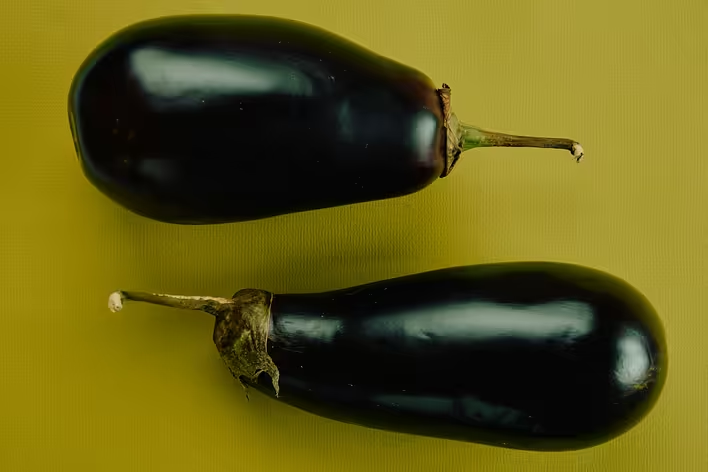
One of the most well-known classic varieties. The fruits are large, pear-shaped or broadly oval, with dark purple skin that sometimes appears almost black.
The flesh is light, dense, and meaty. Such eggplants are convenient to cut into wide slices or rounds. They are suitable for moussaka, casseroles, vegetable caviar, stews, and grilling.
Diamond
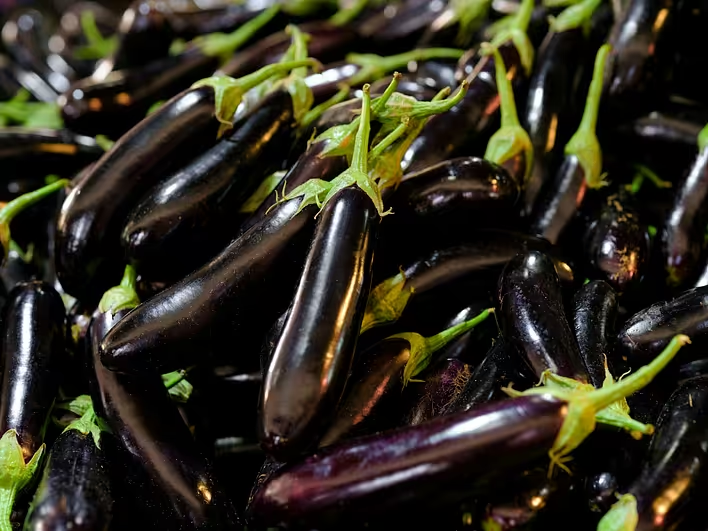
A popular variety with elongated cylindrical fruits of dark purple color. They are usually smaller and narrower than the Black Beauty variety.
The flesh is light, sometimes with a greenish tint, and quite dense. Diamond eggplants are convenient to fry in rounds, use for rolls, stew, or can.
Rosa Bianca
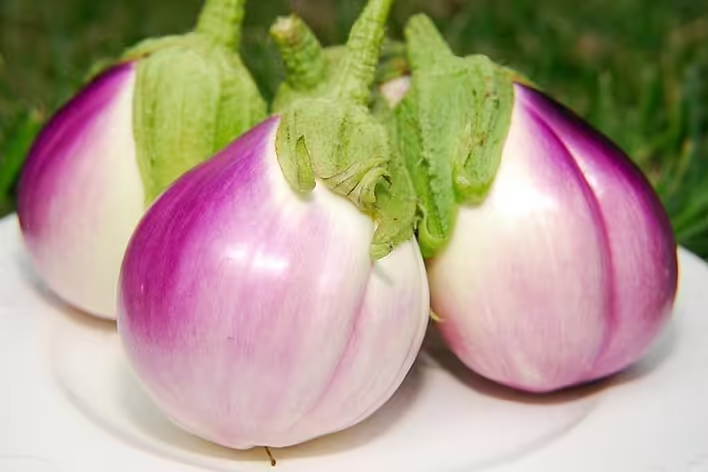
An ancient Italian variety with round, slightly ribbed fruits. Their coloring combines creamy, white, pink, and light purple shades.
The flesh of young fruits is tender, soft, and without sharp bitterness. Rosa Bianca is well-suited for baking, frying, and grilling. It is advisable to harvest the fruits on time: in overripe eggplants, the seeds become more noticeable, and the texture becomes coarser.
Listada de Gandia
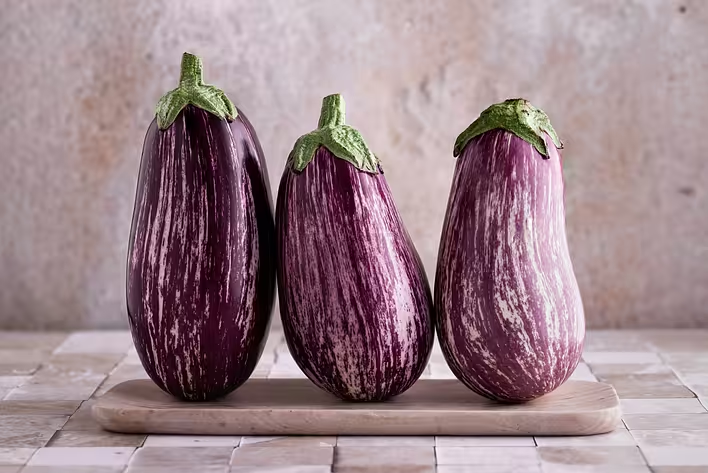
A well-known Spanish variety that is easily recognizable by its white-purple stripes. The fruits are oval, sometimes slightly pear-shaped, and of medium size.
The flesh is light and tender. The variety is used for baking, frying, and stewing. In stores, striped eggplants of this type may also be called “grafitti,” although this name sometimes refers to several similar varieties.
White eggplants
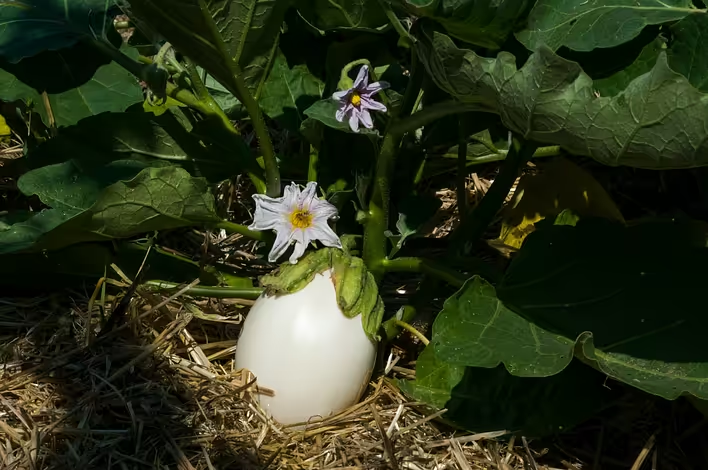
This is a group of varieties that includes, among others, Casper, White Egg, and Snowy. The fruits can be elongated, oval, or truly resemble chicken eggs.
It is the white egg-shaped forms that gave rise to the English name eggplant, meaning “egg plant.” The flesh of white eggplants is usually light and tender, but the skin thickness depends on the specific variety. Such fruits are baked, stuffed, stewed, and fried.
Japanese eggplants
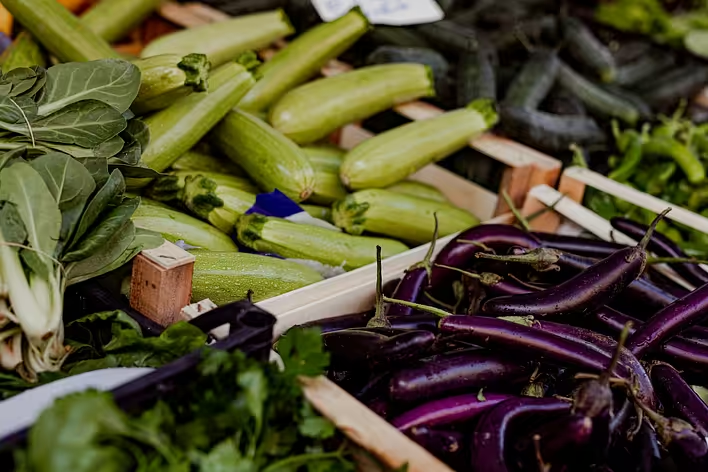
These fruits have thin skin, tender flesh, and relatively small seeds. They cook quickly, making them suitable for grilling, tempura, stewing, and quick frying. Young fruits usually do not need peeling.
Chinese eggplants
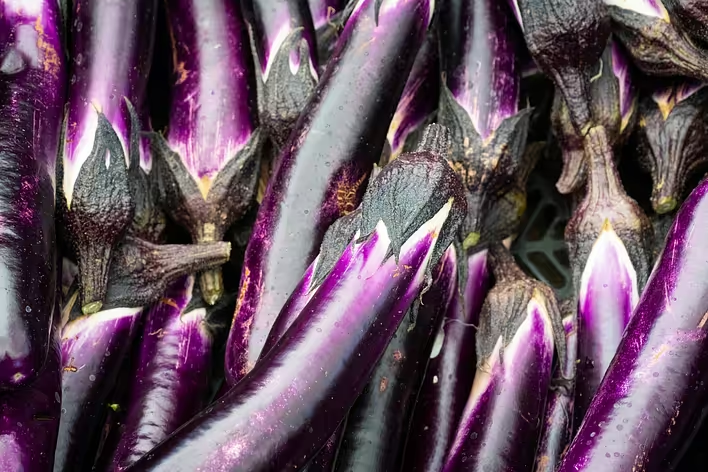
Chinese varieties also have an elongated shape but often differ in lighter coloring — lilac, lavender, or pink-purple.
Their flesh is tender, and the skin is relatively thin. Such eggplants are convenient to cut into long pieces for stir-frying in a wok. They absorb sauces with garlic, ginger, soy sauce, rice vinegar, and chili pepper well.
Thai eggplants
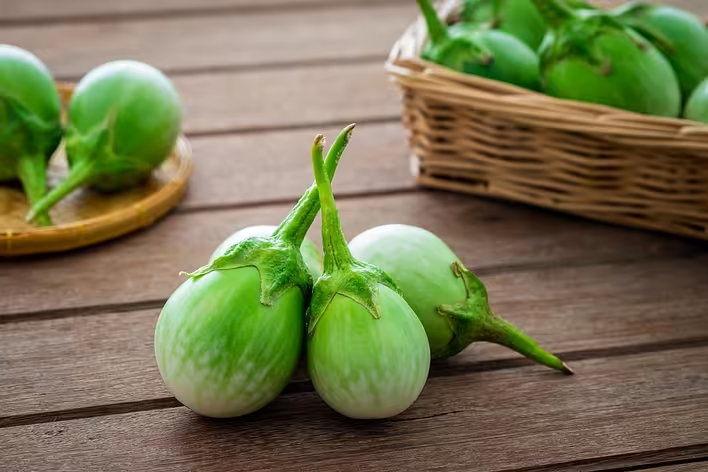
Thai eggplants are usually small, round, green, white, or white-green. Some fruits have stripes or spots and look more like small tomatoes than regular eggplants.
Their flesh is denser and crunchier, and the taste can have a noticeable bitterness. These fruits are often added to Thai curries. During brief stewing, they do not completely fall apart and retain a firm structure.
They should not be confused with the “Turkish berry” — the fruits of Solanum torvum, which are also used in the cuisines of Southeast Asia. This is a different species of nightshade, not a variety of the common eggplant.
Indian mini eggplants
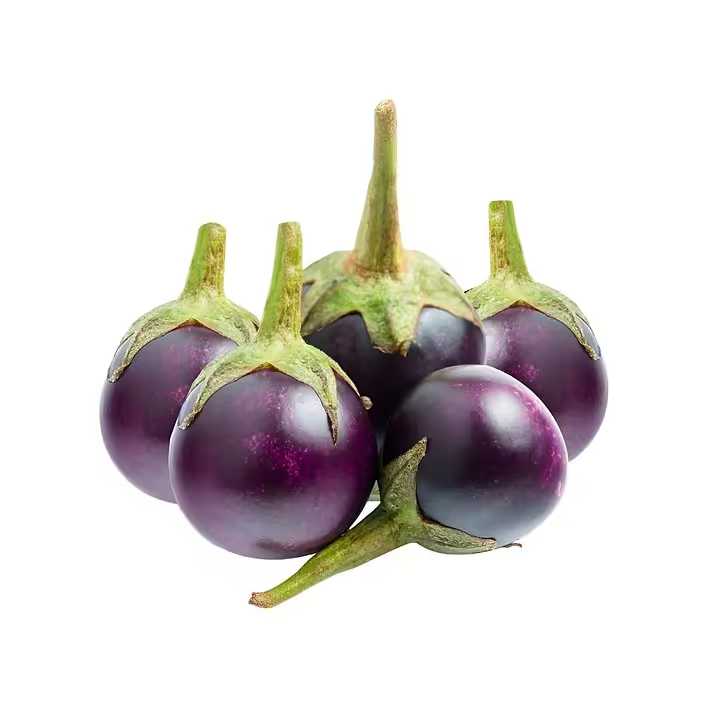
This is a group of small round or oval varieties, most often dark purple. Green, white, and striped forms also occur.
Due to their compact size, they are convenient to score, stuff with a mixture of spices, peanuts, coconut, or other ingredients, and stew whole. Miniature eggplants are also used in curries and vegetable stews.
Turkish orange eggplant (Turkish Orange)
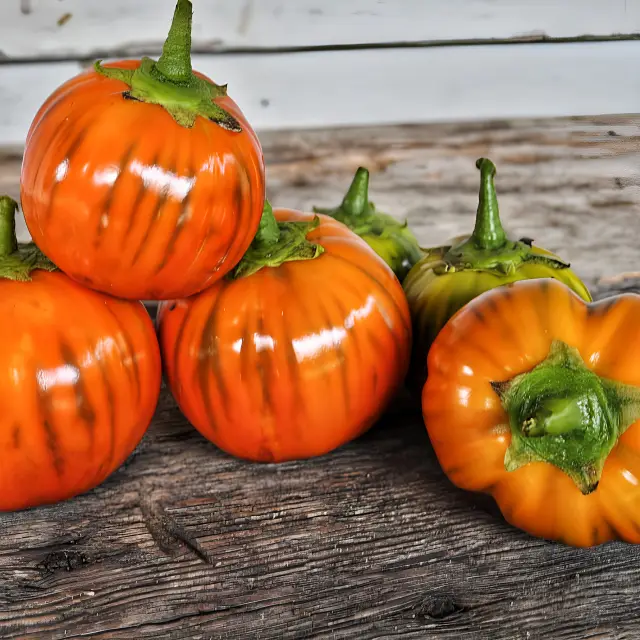
Despite the name, this is not a variety of the common eggplant Solanum melongena, but a cultivated form of a related species Solanum aethiopicum, known as Ethiopian or red eggplant.
Small round fruits are initially green, and as they ripen, they turn orange or red-orange. Their taste is more pronounced, sometimes with bitterness. Due to the botanical difference, this variety is more accurately referred to as a close relative of the eggplant, rather than being placed in the same category as the varieties Black Beauty or Rosa Bianca.
How to choose an eggplant for different dishes
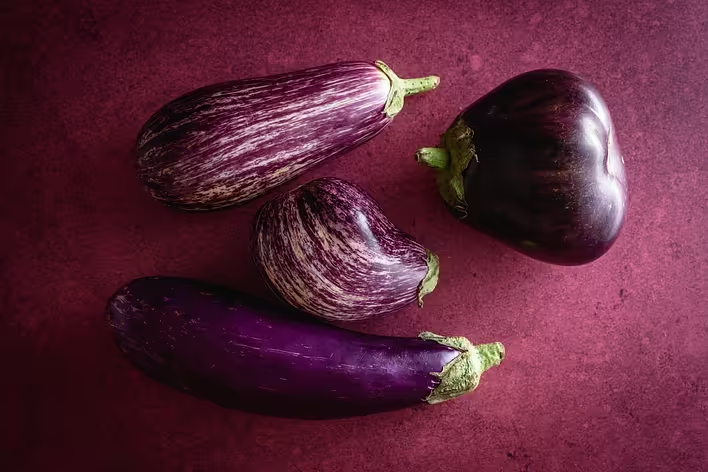
For baking, moussaka, and wide rolls, large oval or pear-shaped fruits are the most convenient. Long Japanese and Chinese eggplants are suitable for grilling and quick frying. Small round varieties hold their shape well in curries and stews, while striped and white varieties are worth trying for their tender flesh and unusual appearance.
A fresh eggplant should be firm, heavy for its size, with smooth shiny skin and a green stem. A wrinkled surface, soft spots, and brown patches may indicate that the fruit has begun to spoil or has been stored for too long.
The color of the eggplant does not tell the whole story. Much more important are the specific variety, ripeness, and cooking method. That is why two externally similar fruits can behave differently in a pan: one quickly turns into a tender puree, while the other retains a dense flesh even after prolonged stewing.
Like it?React
🧵
This post doesn't have any additions from the author yet.