This content has been automatically translated from Ukrainian.
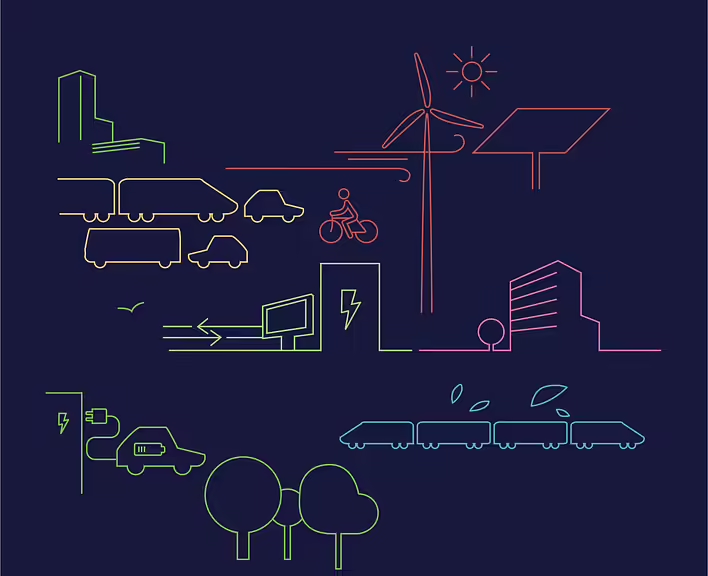
In the energy sector, there are many abbreviations that can be confusing. CHP, HPP, SPP - these are just a few of them. Today we will figure out what these abbreviations mean, how they work in simple terms, and where you can encounter them in everyday life. Ready? Let's go!
Why are there so many abbreviations and how not to drown in them
Recall where you have recently encountered these mysterious abbreviations: in the news, electricity bills, outage maps, or energy reports. In the energy sector, abbreviations are used for a reason. They help convey information quickly and are suitable for technical documents and standards. But how not to get lost in this sea of abbreviations? We will look at basic terms first, and then move on to more advanced abbreviations. So don't be scared, we will understand everything gradually!
A mini-dictionary for beginners: electricity, heat, and "generation" - what is what
Before diving into the details, let's clarify what electrical and thermal energy are. Electrical energy is energy supplied in electrical form, while thermal energy is used for heating spaces or heating water. Generation is the process of converting various types of fuel into energy. It is important to understand that some stations produce only electricity, while others produce both electricity and heat.
CHP: heat + electricity in one place (and why it's important for cities)
CHP stands for combined heat and power plant. It sounds complicated, but it's actually quite simple. When we burn fuel, we produce steam or hot gases that turn a turbine, generating electricity. But that's not all! CHP also captures heat for heating and hot water in cities. This means that CHP provides centralized heating, which we have at home. The advantages of CHP are efficiency due to the combined production of heat and electricity. The downsides? Dependence on fuel and the infrastructure of heating networks.
TPP: a "classic" thermal power plant
TPP stands for thermal power plant. Here it's even simpler: fuel is burned, producing heat that heats water, which is then converted into steam that turns a turbine. TPPs usually focus on electricity generation, unlike CHP, which also supplies heat to the city. Typically, coal, gas, or fuel oil is used for TPPs.
HPP: electricity from water (and why it's not a "perpetual motion machine")
HPP stands for hydroelectric power plant. It works like this: water falls or flows through a turbine, turning it, and as a result, we get electricity. Dams and reservoirs help control the flow of water and provide an energy reserve. The advantages of HPPs are quick power regulation. But there are also downsides: dependence on water flow and impact on ecosystems.
PSPP: a "battery" on water that saves during peak hours
PSPP stands for pumped storage power plant, which works like a battery. When there is a lot of electricity, we pump water up; when needed, we release it down and generate electricity. This is important for balancing the system: it maintains stability during peak loads. But remember, it does not create energy "from nothing," there are losses, and it is only energy storage.
SPP: solar panels without magic - how they generate electricity
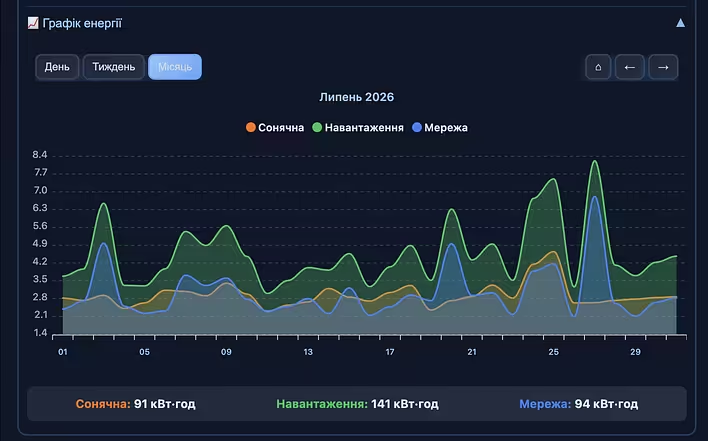
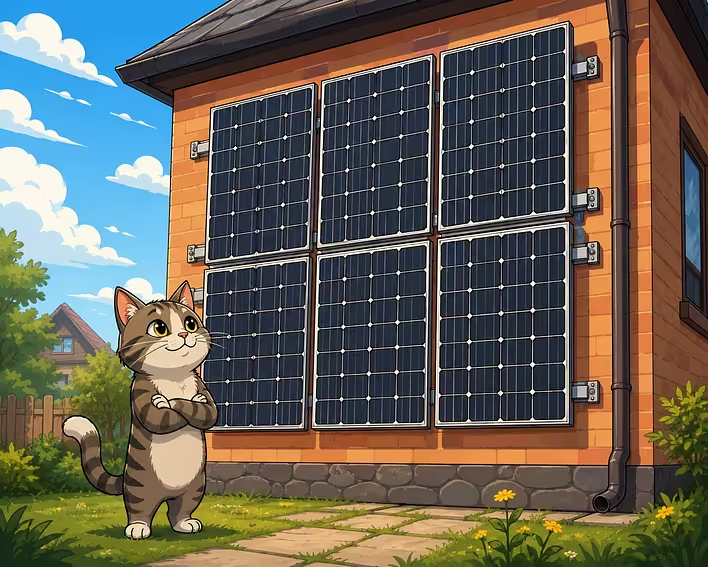
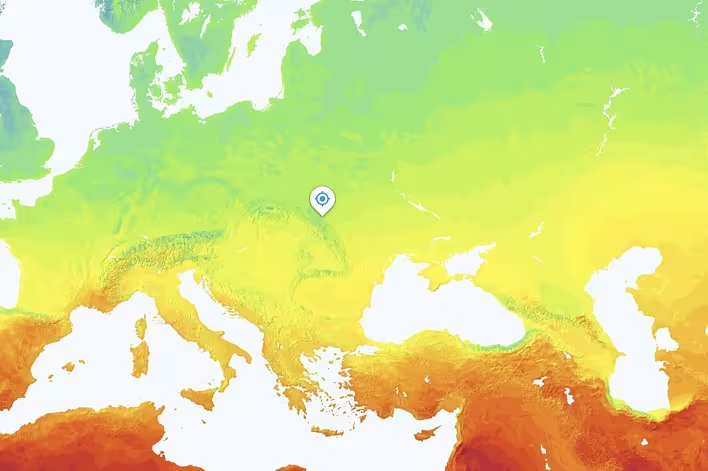
SPP stands for solar power plant. Here it's simple: solar panels produce direct current, and an inverter converts it to alternating current for the grid. Electricity generation depends on the season, cloud cover, panel tilt angle, and even temperature. The advantages of SPPs are clean generation, but there are also downsides: dependence on weather and time of day.
WPP: wind turns - electricity flows (but not always smoothly)
WPP stands for wind power plant. The wind turns the turbine blades, which drive the generator. However, there is a peculiarity here: wind energy is variable, so reserves or storage systems are needed. Wind power plants work best in open areas, coastlines, and high altitudes.
NPP: nuclear power plant in simple terms (without horror stories and myths)
NPP stands for nuclear power plant. It operates on the same principle as TPP: heat from the reactor heats water, and steam turns a turbine. Nuclear plants usually provide stable operation at high capacity, making them "base" generation.
Boiler house, CTP, ITP: abbreviations related to heat that often confuse
Boiler house is another important abbreviation. It produces heat but not electricity. CTP stands for central thermal point, which is responsible for distributing and preparing heat for the area. And ITP stands for individual thermal point, which does the same but for a specific building or facility. These points regulate temperature, pressure, accounting, and preparation of hot water.
Power vs energy: kW, MW, kWh - so that abbreviations don't deceive
Power is measured in kW or MW and shows how quickly energy is produced or consumed at a moment. Energy is measured in kWh or MWh and shows how much energy has been used over a certain time. For example, a kettle with a power of 2 kW consumes 0.33 kWh in 10 minutes. Stations have their own power (in MW) and output (in MWh per day or month).
Some more abbreviations that often appear in the news (a short glossary)
LEP (power transmission line) is how electricity "gets" from the station to the city. PS stands for substation, where voltage is changed and flows are distributed. REM/OSR are terms related to the maintenance of distribution networks. Balancing is an important part of the system that allows for quick addition or reduction of generation.
How to quickly distinguish the type of station in one sentence: a cheat sheet
To avoid confusion, here’s a short cheat sheet: CHP - produces both heat for the city and electricity; TPP - generates electricity from heat from burning fuel; HPP/PSPP - work with water (PSPP also "stores" energy); SPP/WPP - dependent on weather and time, so they need balancing; NPP - stable large generation, heat source - nuclear reaction.
Now that you are familiar with the basic abbreviations in the energy sector, reading news on this topic will become much easier. Just remember that the source of energy, type of production, and its impact on system stability are key points to pay attention to. And by the way, if you have encountered other abbreviations, write in the comments! Let's compile our glossary together!
Like it?React
🧵
This post doesn't have any additions from the author yet.
![[Personal experience] Replaced the speakers on macbook a2337 (speaker from Ali)](https://cdn.tseivo.com/uf686v8beaqlorcqcoybp2hxbgxp)
![[Personal Experience] How I Dealt with the E03 Error on KS 5200PS](https://cdn.tseivo.com/qbmx9gef6wz0p8kf2q49chgeyyyu)