This content has been automatically translated from Ukrainian.
I have always felt the true magic when I held an Easter egg in my hands. A small egg – and on it, a whole world: stars, crosses, flowers, birds, spirals reaching up to the sky. This tradition has fascinated me since childhood, and only over time did I realize how deep the roots of our eggs and Easter eggs are – and why they cannot be confused, even though at first glance they are just "decorated eggs".
Egg – simple, but symbolic
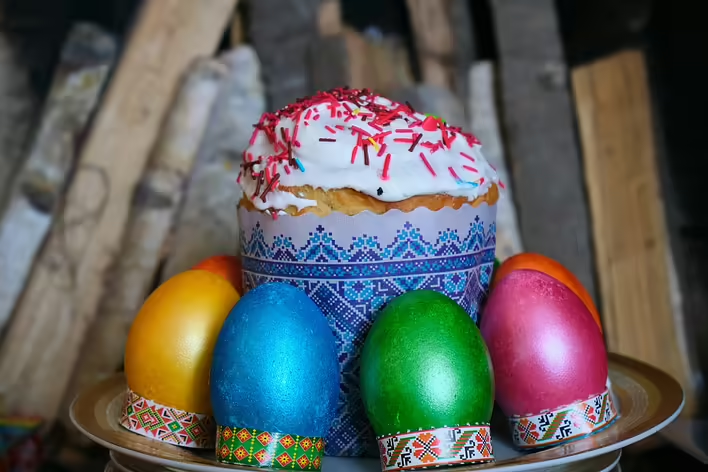
An egg is a single-colored egg. Without patterns, but not without meaning. The color matters. The most common is red, as a symbol of life, the sun, blood, and sacrifice. According to legend, it was such eggs that Mary Magdalene brought to Emperor Tiberius, announcing the resurrection of Jesus.
Besides red, there are others: yellow (symbol of harvest), green (spring, renewal), blue (sky, health), black (earth, eternity). Eggs were usually boiled in onion peels, beetroot, nettles, oak bark – all natural, accessible, and filled with meaning.
Easter egg – a conversation with God, encoded in patterns
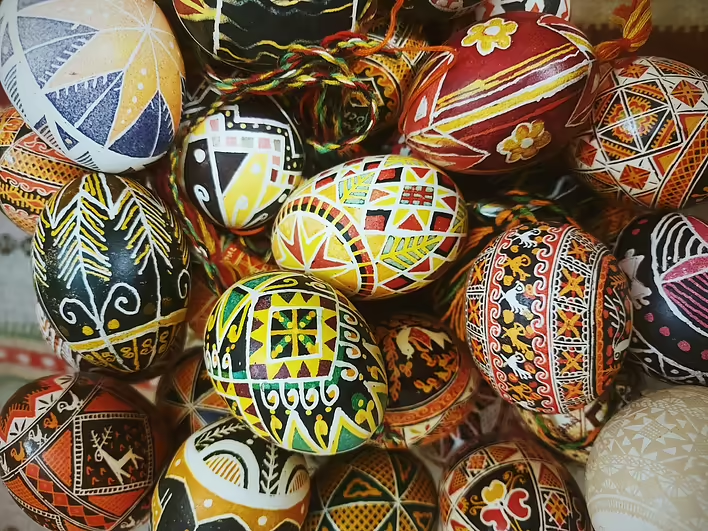
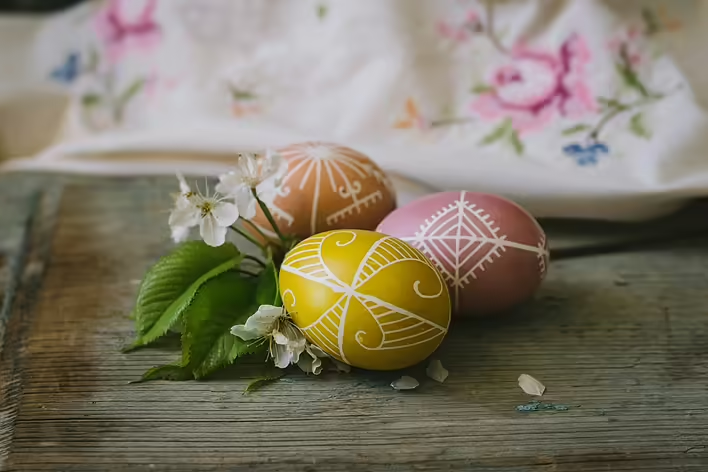
But an Easter egg is already a whole art. It is not boiled, but painted on a raw egg using wax and dyes. This is a delicate job, where each element has its meaning. An Easter egg is like a prayer, like a talisman, like a coded message to higher powers.
Each sign is not just a drawing. For example:
- pine cone – a symbol of immortality and longevity;
- star or rose – a sign of the sun and light;
- spiral or "infinity" – eternal life;
- birds – souls flying to God;
- cross – a Christian symbol, and sometimes also an ancient sign of the sun.
These ornaments were passed down from generation to generation, and each region had its own characteristics. For example, Hutsul Easter eggs are often dark with bright colors, while Poltava ones are delicate and refined. Each Easter egg is a small encyclopedia of beliefs, dreams, and hopes.
Writing Easter eggs – not just creativity, but a ritual
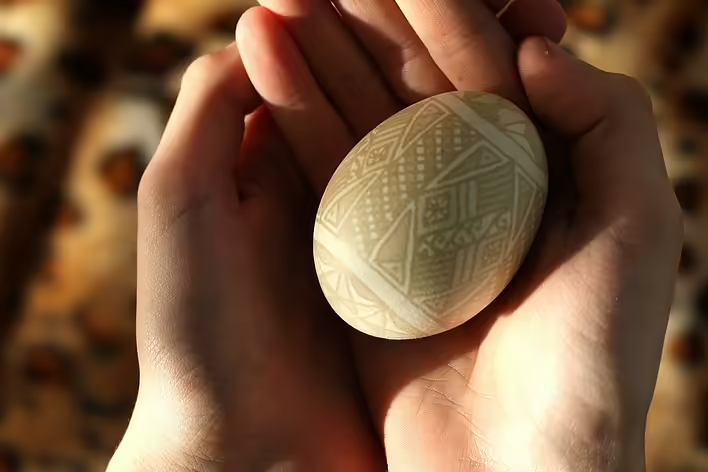
In ancient times, egg painting was almost a sacred act. Only women with "clean hands" and good thoughts were allowed to participate. They wrote in silence, at dawn, with prayer. Even the wax was taken only from a church candle, and the dyes were natural. When I tried to write an Easter egg for the first time, I felt the same thrill – as if touching something eternal that has survived centuries.
Not just a decoration, but also a talisman
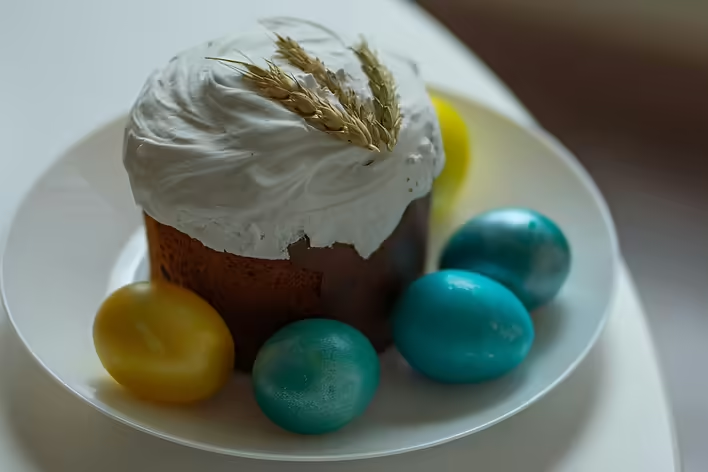
Easter eggs and colored eggs were not just placed in a basket. They were given as gifts, used to decorate the home, placed in beehives to ensure good swarming, and kept in the house for good fortune. Additionally, an Easter egg was often placed under the first sowing to ensure a bountiful harvest, or on the threshold – as a protection from evil spirits.
Interestingly, they were even used for healing. It was believed that they had cleansing power. They were used to "suck out" illnesses and perform rituals against the evil eye.
Today's meaning: a tradition that comes to life
Today, Easter eggs are more often perceived as decorative art. But at the same time, more and more people are returning to the true meaning of this ritual – not just "to make something beautiful for Easter," but to put their soul into it.
I am very pleased that in many schools, museums, and even at festivals, children are learning the art of egg painting. Because it is not just about art – it is about our identity, our history, the memory of our lineage.
Like it?React
🧵
This post doesn't have any additions from the author yet.