This content has been automatically translated from Ukrainian.
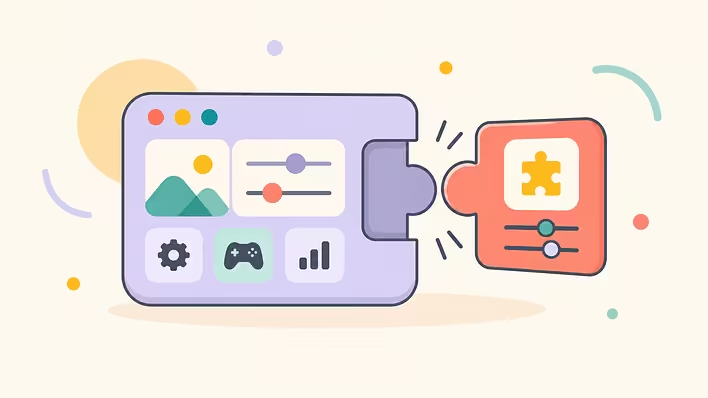
Add-on is an additional component that extends the capabilities of an already installed program, game, browser, or other digital product. By itself, it usually does not work: the main program to which the add-on connects is needed first.
The name comes from the English add-on, which literally means "application," "supplement," or "something that is added." An add-on can introduce new features, modify the interface, automate certain actions, or add content that was not present in the base version of the product.
Where add-ons are used
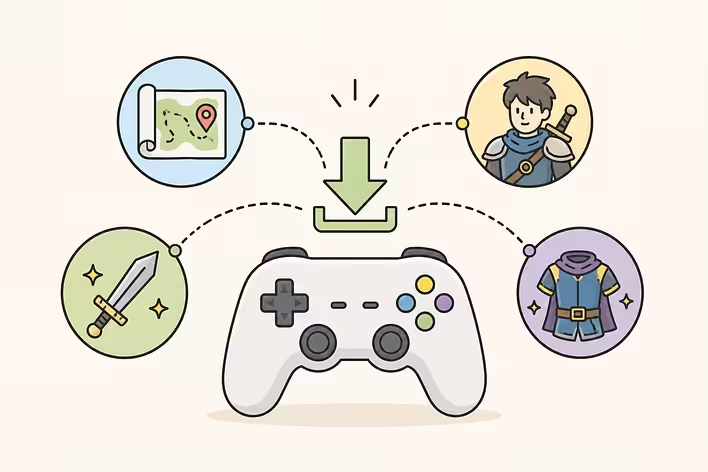
This word is most often heard in conversations about video games. A game add-on can add new quests, locations, items, characters, or auxiliary interface elements. Sometimes it is a small addition that only displays additional information on the screen, and sometimes it is a large expansion with a new storyline campaign.
Add-ons are particularly common in multiplayer role-playing games. For example, they can display damage dealt, help manage inventory, remind about actions during combat, or change the layout of interface elements. Such tools are not necessarily created by the game's developers — often, they are made by the player community.
Add-ons are also used in browsers. Ad blockers, password managers, page translators, spell check tools, and tab savers are all examples of additional components. However, in browsers, the terms "extensions" or extension are more commonly used.
In professional programs, add-ons can add tools for working with graphics, sound, video, spreadsheets, or programming code. For example, a plug-in for a graphic editor may offer new filters, while a component for an office program may automate calculations or report generation.
How an add-on differs from DLC
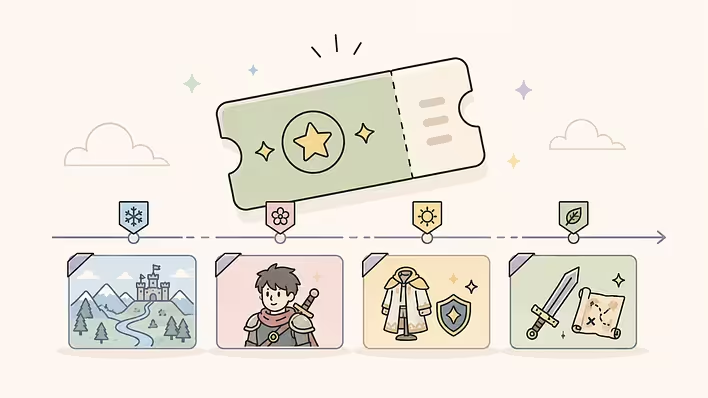
The meanings of these concepts partially overlap, but they are not always interchangeable. DLC is downloadable content for a game: additional characters, costumes, missions, maps, weapons, or storyline expansions. It is usually released or officially approved by the game developer and distributed through digital stores.
An add-on can refer not only to new content but also to a functional supplement that changes the interface or adds a useful tool. Additionally, add-ons are often created by users themselves. At the same time, in some gaming communities, the word "add-on" denotes almost any supplement, including large official expansions.
Therefore, the difference largely depends on the context. DLC primarily adds content to the game, while an add-on can add both content and new features.
Is an add-on, mod, and plugin the same thing?
These terms are close but have different shades of meaning.
Mod, short for modification, changes an existing product. It can replace graphics, rebuild mechanics, change difficulty, or even transform the game into an almost new project. Mods are mostly created by users, although some developers officially support modifications.
Plugin is a software module that connects to the main program through a designated mechanism. This term is often used in professional software, content management systems, audio editors, and development environments.
Add-on is a broader and less technical concept. It can refer to a browser extension, an auxiliary tool for a game, or an additional module of a program. In everyday speech, the boundaries between add-ons, mods, plugins, and extensions are often blurred.
Is it safe to install add-ons?
An add-on gains certain access to the main program, browser, or user data, so installing supplements from random websites is risky. A malicious component can collect personal information, display intrusive ads, or disrupt the operation of the program.
Before installation, it is advisable to check the source, author, reviews, and the list of permissions requested by the add-on. For browsers, it is better to use official extension catalogs, and for games — verified platforms and resources trusted by the community.
Compatibility should also be considered. After updating the main program, an old add-on may stop working or cause errors. In such cases, it needs to be updated, temporarily disabled, or removed.
Thus, an add-on is a dependent supplement to the main program that expands its functions or adds new content. It is a convenient way to customize a game, browser, or program to meet personal needs without changing the entire product.
Like it?React
🧵
This post doesn't have any additions from the author yet.