This content has been automatically translated from Ukrainian.
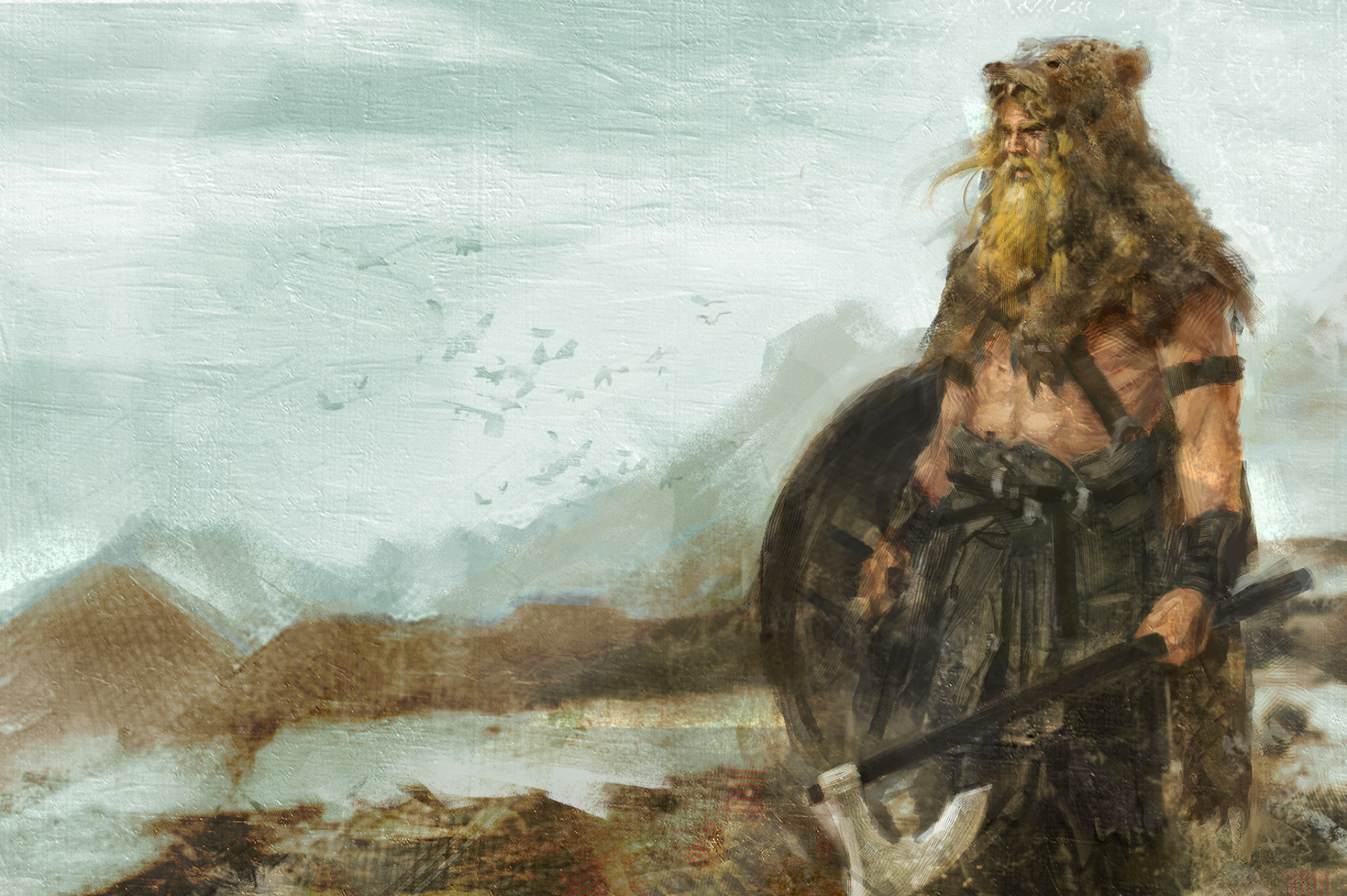
Berserkers are warriors who enter a state of uncontrollable rage in battle, feel almost no pain, and continue to attack regardless of danger. Today, this image is most commonly found in fantasy, video games, manga, and anime. However, it does not originate from modern mass culture, but from Scandinavian sagas and ancient Norse ideas about beast-warriors.
What does the word "berserk" mean
The word berserk comes from the Old Norse berserkr. Its exact original meaning is still a topic of debate. According to the most common version, the first part of the word is related to ber — "bear," while the second part, serkr, means shirt or clothing. Thus, berserkr can be translated as "bear shirt" — presumably, this referred to a warrior who wore a bear skin.
Another version connects ber- with the meaning of "naked" or "uncovered." In this case, a berserk is a "warrior without a shirt," that is, a person who enters battle without armor. Both interpretations correspond to the image of a fearless fighter, although the explanation related to the bear skin is currently considered more likely.
In the Ukrainian language, the forms berserk and berserker occur. The first is closer to the Old Norse word and is more often used in the titles of works, character classes, and descriptions of battle states. The second has entered usage mainly through other European languages.
Who were the berserkers
In Scandinavian sagas, berserkers were described as special warriors associated with Odin. During battle, they supposedly entered a state of frenzied rage: growling, biting the edges of shields, attacking with extraordinary strength, and remaining almost insensitive to pain.
In the "Saga of the Ynglings," recorded in the 13th century by the Icelandic poet and historian Snorri Sturluson, Odin's warriors go into battle without armor, raging like wolves or dogs, and possess the strength of bears or bulls. After such an attack, they were supposedly overcome by extreme exhaustion and weakness.
However, sagas should not be taken as precise eyewitness accounts. Most of these texts were recorded long after the events described, so the historical information in them is intertwined with myths, artistic exaggerations, and folkloric motifs. Researchers do not have a definitive answer as to whether berserkers existed as a separate group of warriors with clear rituals or whether their image was largely created by later literary tradition.
It is also not entirely correct to call any Viking a berserk. Viking is a much broader concept related to sea expeditions and the corresponding Scandinavian society of the time. Berserkers, on the other hand, appear in sources as special fighters with characteristic behavior, reputation, and likely their own ritual practices.
Why did berserkers fall into battle frenzy
The origin of the so-called berserker rage has been explained in various ways. In particular, there is a popular hypothesis that before battle, warriors consumed fly agarics, black henbane, or other substances capable of altering consciousness. However, there is no convincing evidence of regular use by berserkers of specific plants or mushrooms.
It is equally likely that such a state was caused by a combination of ritual self-suggestion, intense stress, group psychology, and adrenaline release. A warrior could deliberately push himself to extreme emotional excitement through shouting, rhythmic movements, or other ritual actions.
Artistic exaggeration cannot be ruled out either. Stories about people who were not harmed by swords or fire could enhance the reputation of a particular warrior or intimidate his opponents.
What does "to go berserk" mean
Over time, the word lost its purely historical meaning. In English, the phrase go berserk means "to go mad," "to fall into frenzy," "to completely lose control." In a similar sense, the term is used in Ukrainian:
- to go berserk — to enter a state of uncontrollable rage;
- berserk mode — a state in which a character becomes stronger but has worse self-control;
- berserk — a fighter or type of character who relies on strength, aggression, and risky attacks.
In role-playing and video games, berserk is often a separate character class. Typically, such a fighter deals significant damage, may become stronger after being injured, but has weaker defense or temporarily loses control over their actions. The historical image here has transformed into an understandable gaming formula: the stronger the rage, the more dangerous the character.
Berserk mode in "Neon Genesis Evangelion"
In Neon Genesis Evangelion, the term is primarily associated with the behavior of Eva-01. Early in the series, it goes out of control, begins to move independently, and fiercely attacks the Angel.
In the Japanese original, this state is referred to as bōsō, which can be translated as "uncontrolled movement," "rampaging," or "going out of control." In English translations and discussions, it is often conveyed with the word berserk. Hence come the familiar phrases "Eva went berserk" and "berserk mode."
This is not just a temporary battle enhancement. Eva ceases to be a obedient machine and behaves like a living being: growling, crawling, tearing apart the opponent, and acting independently of the pilot's commands and the control center. The word berserk here emphasizes not only strength but also complete loss of control and a return to primal, almost beast-like behavior.
What does the title of the manga "Berserk" mean
The title of Kentaro Miura's manga Berserk also refers to frenzy, violence, and the struggle at the limits of human capabilities. According to Miura, he chose it early in the work because the word seemed mysterious, strong, and well-suited to the image of Guts. The author did not create the initial concept around historical Scandinavian warriors — this connection became more pronounced during the development of the plot.
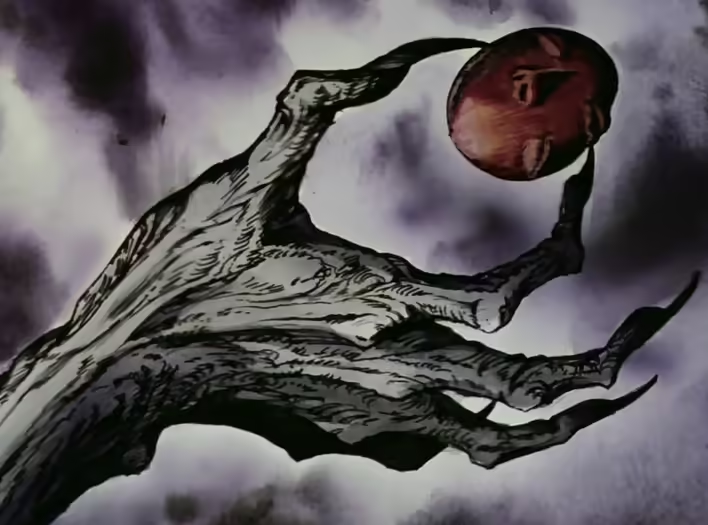
Guts is not a berserk in the literal historical sense, but he repeatedly allows rage to control him. He continues to fight after severe injuries, ignores pain, and turns his own body into a tool of vengeance. His inner thirst for violence is embodied by the Beast of Darkness, which tries to convince the hero to abandon compassion and self-control.
This connection becomes even more evident after the appearance of the Berserker Armor. It dulls pain, forces the mutilated body to keep moving, and allows Guts to surpass ordinary human limits. At the same time, the armor threatens his life and gradually deprives him of the ability to distinguish between enemies and allies.
The armor embodies the main idea embedded in the image of the berserk: immense power comes at a price. The warrior gains an advantage in battle but risks losing self-control, health, and ultimately — his humanity.
Thus, in modern culture, a berserk is not just a very strong or enraged fighter. The key feature of the image is the dangerous crossing of a boundary, after which strength no longer obeys will. This is what connects the Scandinavian warrior from the ancient saga, the out-of-control Eva-01, and Guts, who risks losing himself in the fight against enemies.
Like it?React
🧵
This post doesn't have any additions from the author yet.