This content has been automatically translated from Ukrainian.
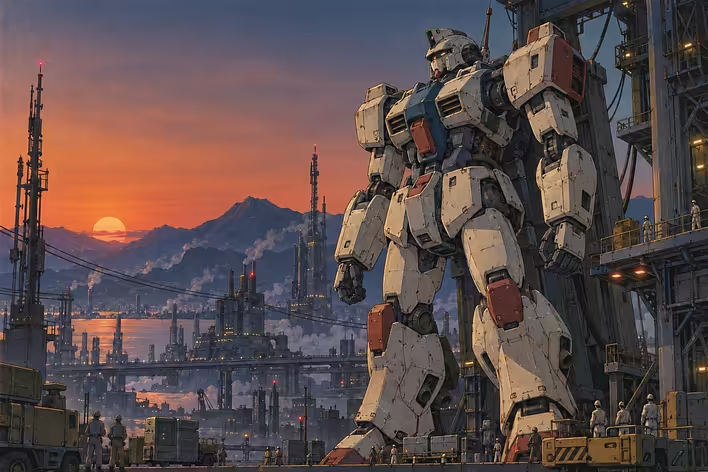
Mecha is easily recognizable by its giant robots, armored vehicles, and spectacular battles. However, behind the metallic shell of the genre can hide very different stories: a war drama, a political thriller, a space opera, a psychological experiment, or even a fantasy adventure.
This selection is not a ranking with a distribution of places. It is based on anime that are regularly repeated in recommendations on Reddit, forums, and discussions among genre enthusiasts. The list includes both historically significant works and more popular modern series that are convenient for starting an acquaintance with mecha.
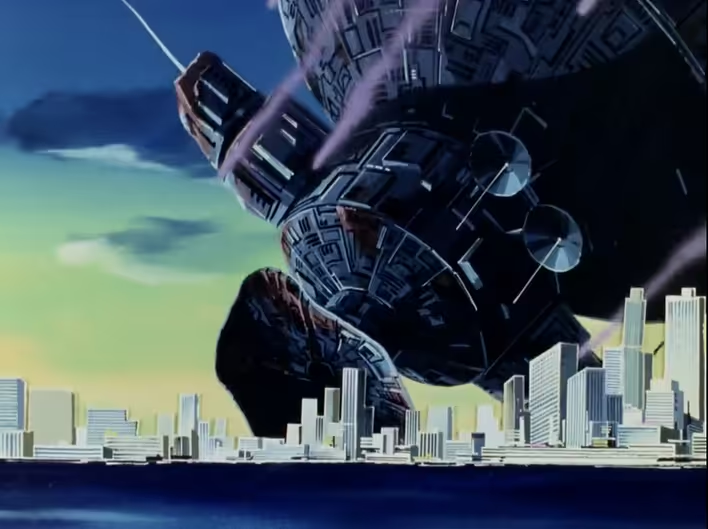
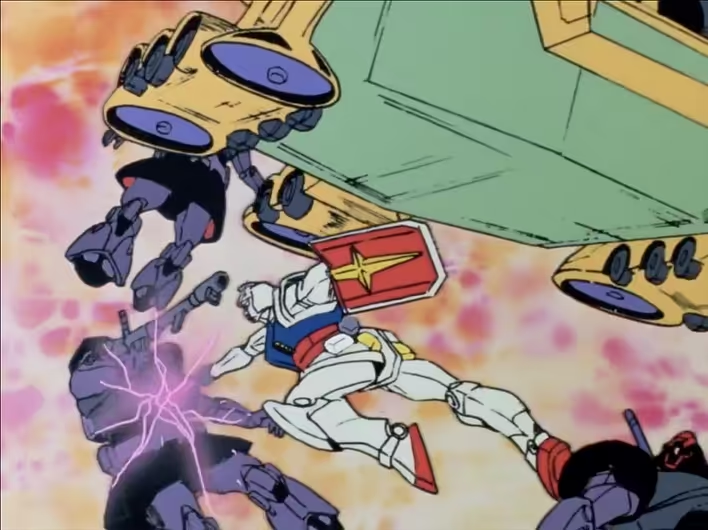
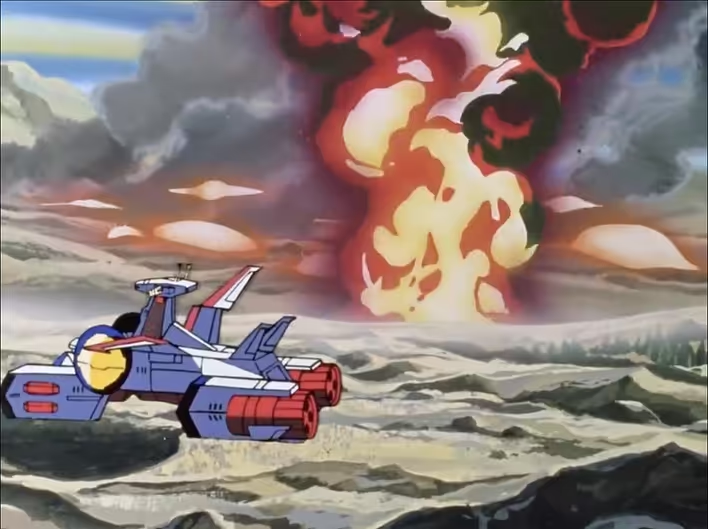
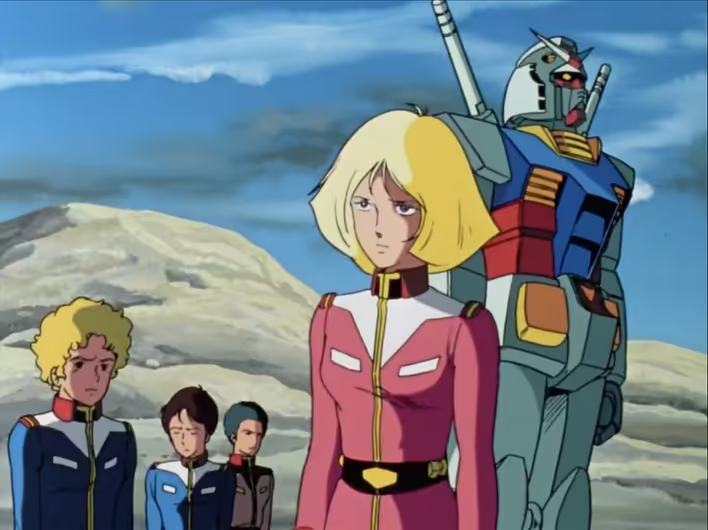
Mobile Suit Gundam — "Mobile Warrior Gundam"
Year: 1979
Format: series, 43 episodes; film trilogy of 1981–1982
The original Mobile Suit Gundam is one of the main starting points of the direction later called "real robots." Before it, giant machines in anime often resembled metal superheroes with almost unlimited capabilities. In Gundam, mobile suits are shown as military equipment: they are produced in series, repaired, rearmed, and lost in battles.
The events unfold in the year 0079 of the Universal Century during the war between the Earth Federation and the Principality of Zeon. The story centers around fifteen-year-old civilian Amuro Ray, who accidentally becomes the pilot of the experimental mobile suit RX-78-2 Gundam. The series depicts war not as a simple confrontation of good and evil but as a tragedy that destroys the lives of people on both sides of the conflict.
It is from this television series that the Gundam franchise began in 1979. On Ukrainian anime sites, the original 43 episodes are almost not represented, but three feature films based on them can be found: Mobile Suit Gundam and Mobile Suit Gundam II: Soldiers of Sorrow were released in 1981, while Mobile Suit Gundam III: Encounters in Space came out in 1982. These are not sequels but a shortened and partially reworked retelling of the same story with added and redrawn scenes.
The film trilogy conveys the main storyline, so it can be a good starting point for getting acquainted with classic Gundam. At the same time, due to the shorter runtime, some secondary characters and events receive less attention than in the series.
This story should not be confused with Mobile Suit Zeta Gundam — "Mobile Warrior Zeta Gundam," a 50-episode anime from 1985. This is already a full-fledged continuation of the original: its events take place in 0087 of the Universal Century, seven years after the One Year War, and the central character becomes Kamille Bidan. Therefore, it is possible to start with Zeta Gundam, but without the original series or film trilogy, part of the political context, the return of familiar characters, and the significance of some events will be less clear.
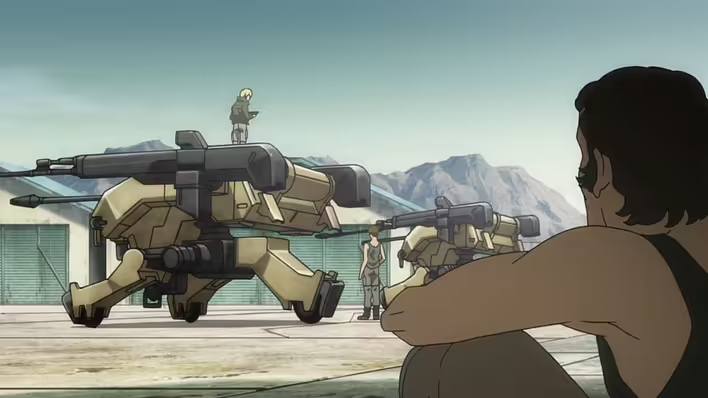
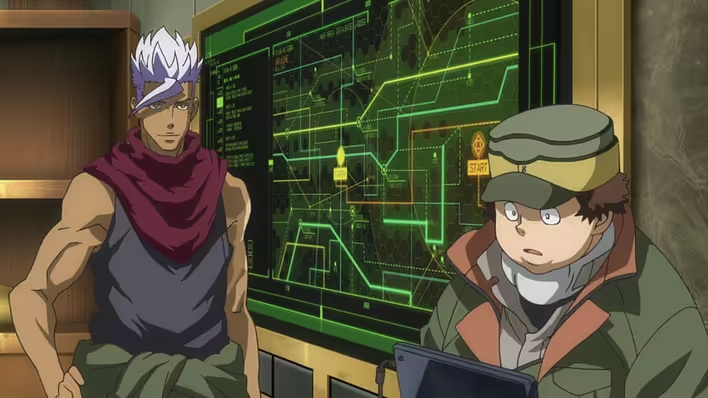
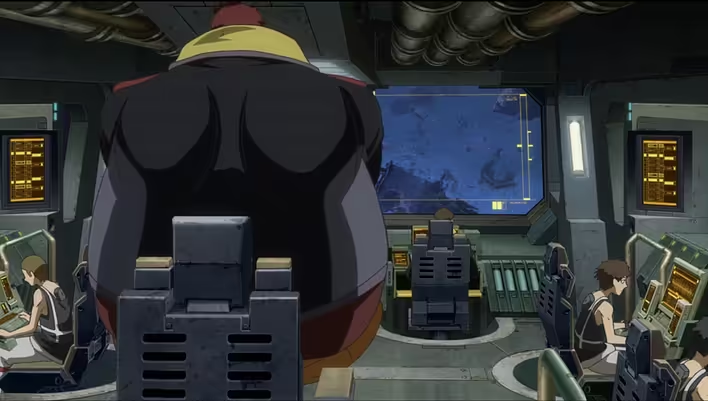
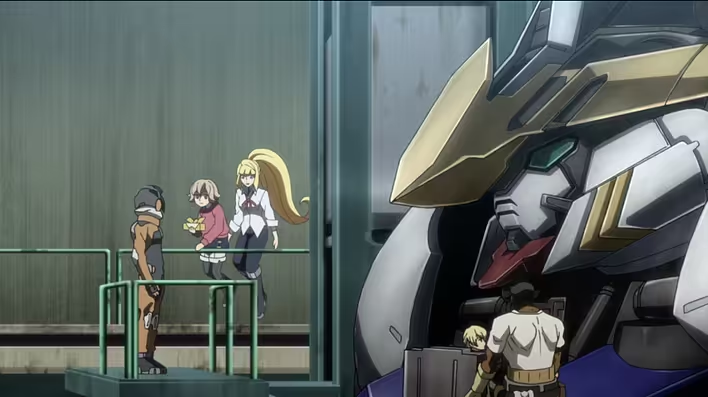
Mobile Suit Gundam: Iron-Blooded Orphans — "Mobile Armor Gundam: Iron-Blooded Orphans"
Year: 2015
Format: two seasons, 50 episodes
A group of children and teenagers from Mars works for a private security company CGS, where they are used as cheap and expendable labor. After a betrayal by the leadership, they take control of the organization, create the Tekkadan group, and set out to escort political figure Kudelia Aina Bernstein to Earth.
Iron-Blooded Orphans unfolds in a separate timeline called Post Disaster and does not require knowledge of the original Mobile Suit Gundam or other parts of the franchise. It is a harsh story about child soldiers, social inequality, brotherhood, and the desire to find a place in a world that sees heroes only as convenient tools.
The series effectively shows why Gundam is much more than recognizable white robots with colorful details.
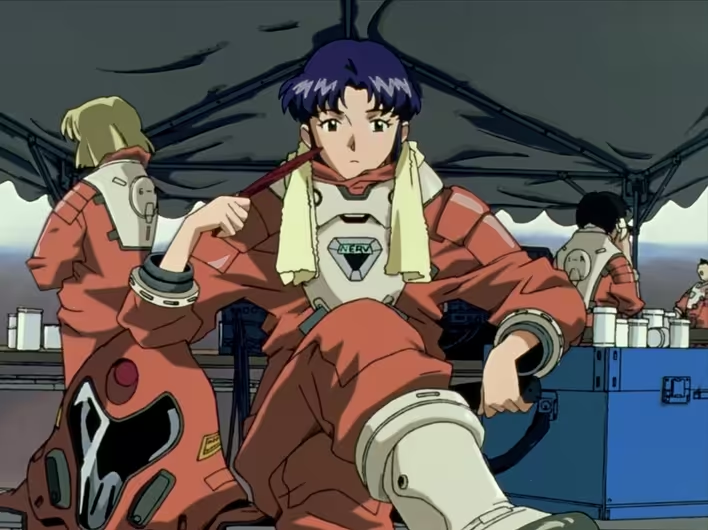
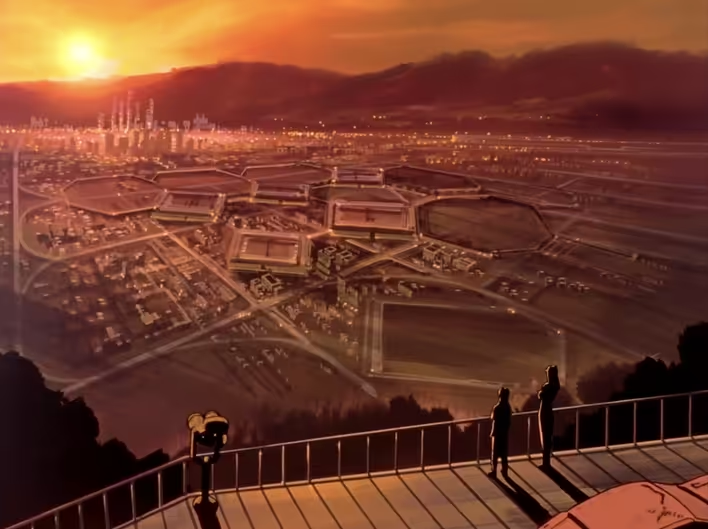
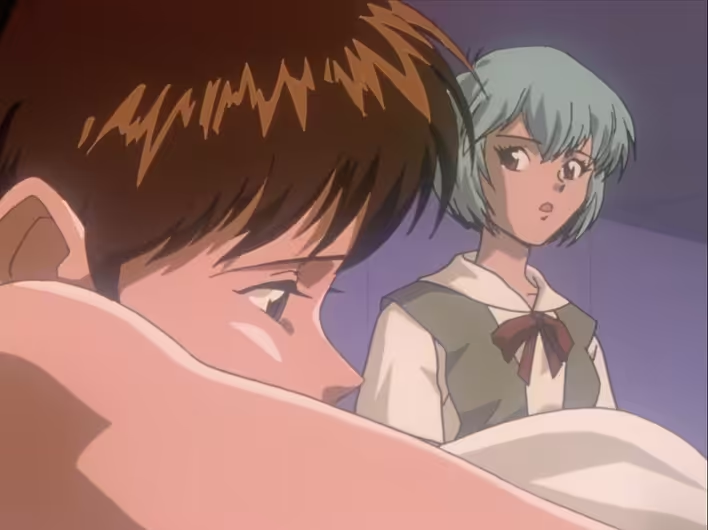
Neon Genesis Evangelion — "New Era – Evangelion"
Year: 1995
Format: series, 26 episodes; film The End of Evangelion
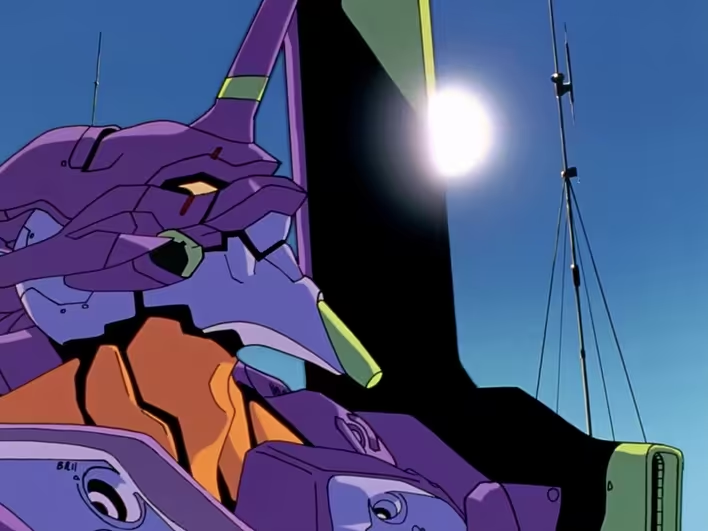
Fourteen-year-old Shinji Ikari is summoned to the fortified city of Tokyo-3, where he must pilot an Evangelion and fight against mysterious Angels. At first, it resembles a traditional story about teenagers in battle machines, but gradually the battles take a back seat. The series delves into the fear of loneliness, trauma, depression, and the inability of people to truly understand one another.
The Evangelions, however, are not ordinary robots: they are biomechanical beings encased in armor and piloted by humans. Nevertheless, the series belongs to the mecha genre and actively works with established genre tropes.
For a complete acquaintance, it is worth watching the 26 episodes of the original series, and then The End of Evangelion. The film does not just repeat the final episodes but presents a different, mostly external perspective on the concluding events.
Tengen Toppa Gurren Lagann — "Gurren Lagann"
Year: 2007
Format: series, 27 episodes
Simon lives in an underground settlement and has never seen the sky. Everything changes when he finds a small machine in the shape of a face, and his friend Kamina decides to break to the surface. From this simple premise grows a crazy space epic, where the scales of the robots and the battles themselves constantly increase.
Gurren Lagann inherits the spirit of classic super robot series: here, the power of the machines is literally fueled by will, determination, and the desire to move forward. At the same time, behind the loud speeches and exaggeratedly spectacular battles lies a story about loss, growing up, and responsibility.
This is one of the most accessible entry points into the genre for viewers who value fast pacing, vibrant characters, and strong emotions.
Code Geass: Lelouch of the Rebellion — "Code Geass: Lelouch's Rebellion"
Year: 2006
Format: two seasons of 25 episodes each
The Sacred Britannian Empire has conquered Japan, renaming it Area 11. Exiled prince Lelouch Lamperouge gains the power of Geass, which allows him to give a person one command that they cannot resist. Hiding his face behind the mask of the revolutionary Zero, he begins a fight against the empire.
The Knightmare Frame mechs play an important role in military operations, although the main appeal of the series lies in political intrigue, strategist rivalries, dual identities, and morally ambiguous decisions. Lelouch conducts war as if he were playing a complex chess game, but even carefully planned strategies have unpredictable consequences.
It is the combination of mecha, political thriller, and personal tragedy that made Code Geass popular among viewers who usually do not care for robot anime.
The Super Dimension Fortress Macross — "Super Dimensional Fortress Macross"
Year: 1982
Format: series, 36 episodes
A giant spaceship of extraterrestrial origin crashes on Earth. Humanity restores it, but during the first launch, the ship's automatic systems open fire on the aliens and drag the planet into an interstellar war.
Fighters capable of transforming into humanoid machines coexist here with a romantic triangle and music, which unexpectedly becomes an important factor in the confrontation with the enemy. Macross showed that mecha can combine military science fiction, pop culture, and romantic drama.
The feature film Macross: Do You Remember Love? does not just condense the series but reinterprets its story and visual elements. Another convenient entry point can be the four-episode OVA Macross Plus, whose plot requires almost no knowledge of other parts of the franchise.
Mobile Police Patlabor — "Mobile Police Patlabor"
Year: 1988
Format: OVA, television series, and feature films
In the near future, robots known as labors are widely used in construction and industrial sites. With new technology come accidents and new types of crime, so the Tokyo police create a special unit with their own machines.
The franchise has several related but not identical versions of the story. You can start with the seven-episode OVA Patlabor: The Early Days from 1988–1989 or the television series with 47 episodes that aired from 1989–1990.
Both the series and OVA contain a lot of comedy, everyday work, repairs, and disputes within the unit. The first two films by Mamoru Oshii are significantly more serious: they approach political and techno-thriller territory, and the robots become just a part of a more complex conversation about society, power, and war. On AniTube, the franchise is presented under the name "Patlabor."
Armored Trooper VOTOMS — "Armored Soldier VOTOMS"
Year: 1983
Format: series, 52 episodes
Kiriko Kyuubi is an experienced soldier who is betrayed by his own commanders during a secret operation. Trying to understand what he accidentally witnessed, the hero travels across various planets and gradually uncovers a conspiracy related to the war and his past.
The robots in VOTOMS are relatively small, clumsy, and entirely expendable. They are not unique wonder-machines: they are mass-produced, quickly damaged, and replaced. That is why the series is often recommended to fans of grounded military science fiction.
In Ukrainian catalogs, the titles "Armored Soldier VOTOMS" and "Armored Soldier Votoms" can be found.
Top wo Nerae! Gunbuster — "Aim for the Top! Gunbuster"
Year: 1988
Format: OVA, 6 episodes
Noriko Takaya dreams of becoming a space pilot, although she has no outstanding abilities and constantly lives in the shadow of her deceased father. She must undergo grueling training and then go to war against space monsters that threaten humanity.
The first episodes partially parody the sports anime Aim for the Ace!, as indicated by the Japanese title Top wo Nerae!. However, gradually the story transforms into a grand and surprisingly touching space drama.
An important role in the plot is played by relativistic time dilation: while the heroes spend days or months in space, years pass on Earth. In Gunbuster, the creative techniques of director Hideaki Anno, which will later develop in Neon Genesis Evangelion, are already noticeable.
The Vision of Escaflowne — "Vision of Escaflowne"
Year: 1996
Format: series, 26 episodes
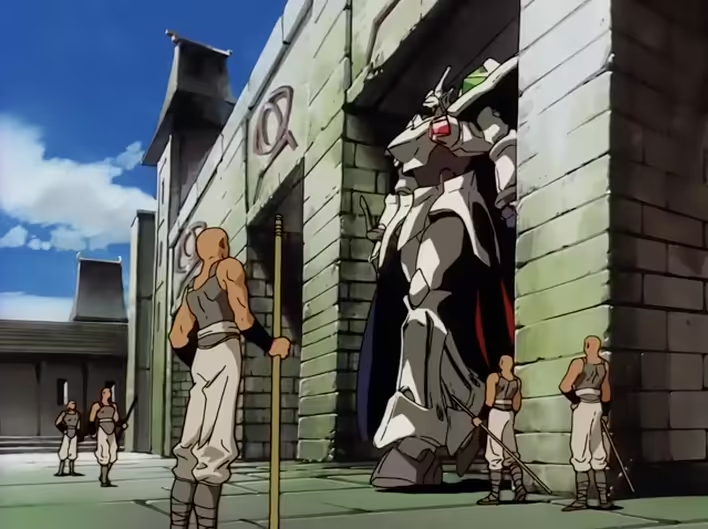
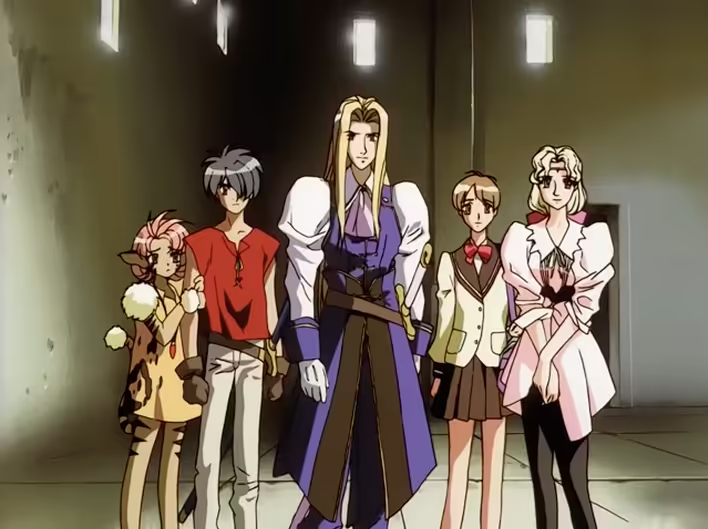
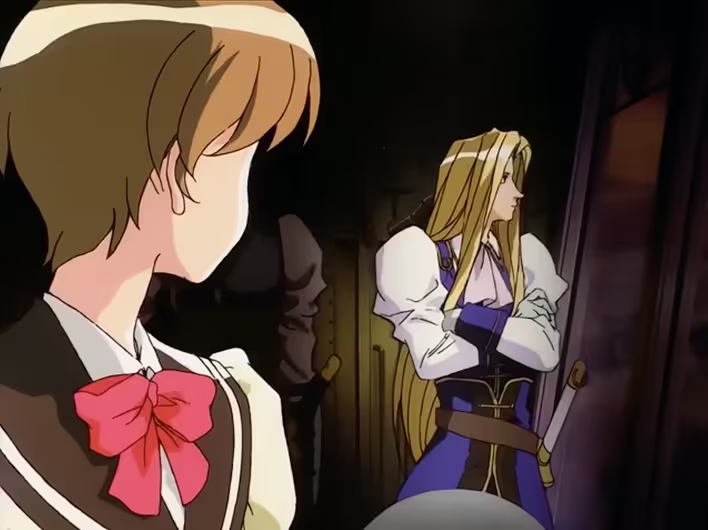
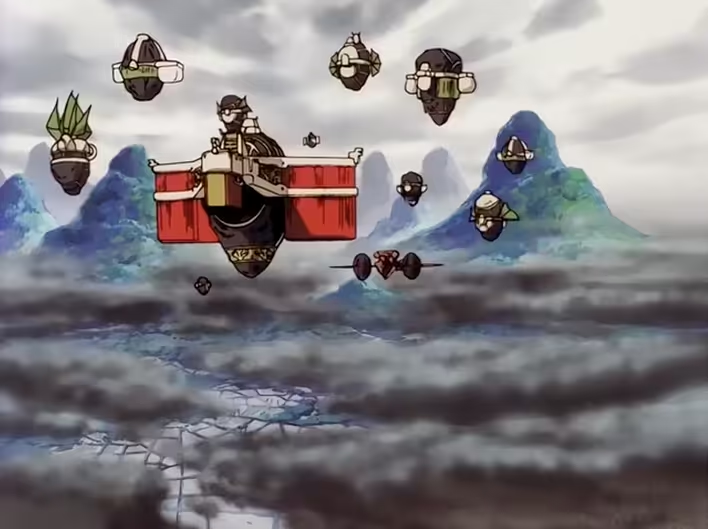
Fifteen-year-old Hitomi Kanzaki is transported to the world of Gaea, where among castles, dragons, and knights exist giant battle machines — gaimeliefs. Together with young king Van Fanel, she finds herself at the center of a war against the powerful Zaibach empire.
Escaflowne unusually combines mecha with fantasy, romance, and the theme of being transported to another world — long before the modern wave of isekai popularity. The machines here resemble giant knightly armor, and their battles resemble medieval duels.
In Ukrainian translations, you can encounter the titles "Vision of Escaflowne" and "Escaflowne's Mirage."
Eureka Seven — "Eureka 7: Psalms of Planet"
Year: 2005
Format: series, 50 episodes
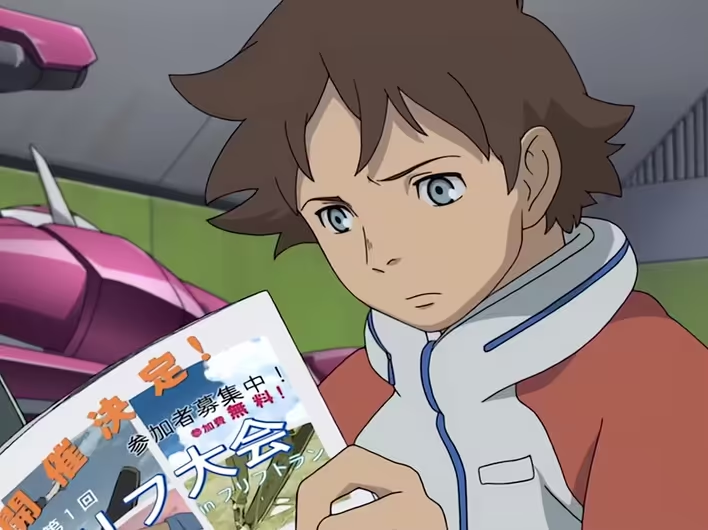
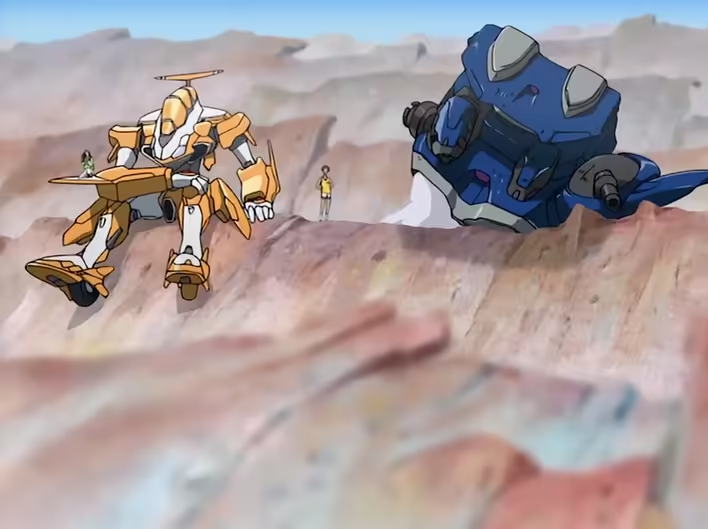
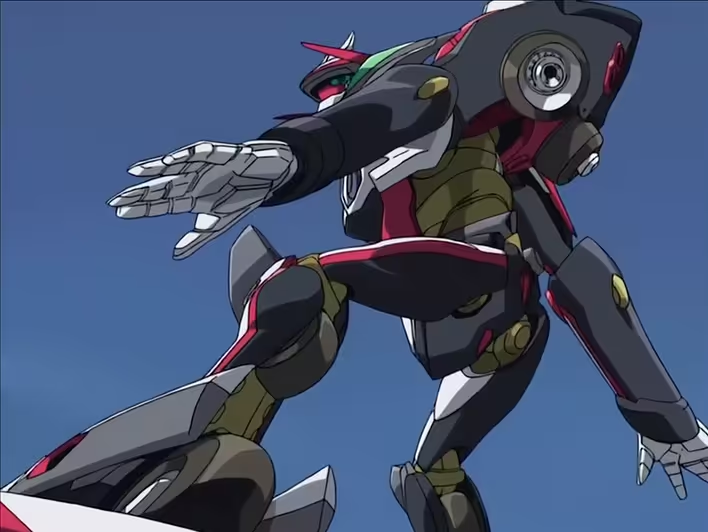
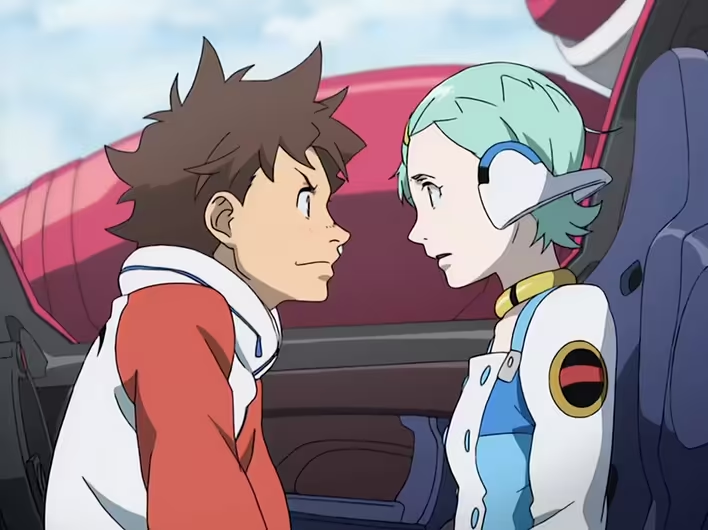
Renton Thurston lives in a provincial town and dreams of joining the Gekkostate team, whose members surf in the air on special energy waves. His life changes after meeting the mysterious pilot Eureka and the mech Nirvash typeZERO.
Behind the vibrant aesthetics, aerial surfing, and numerous musical references lies a story about colonialism, coexistence of different forms of life, prejudice, and growing up. The relationship between Renton and Eureka develops gradually, along with the revelation of the true nature of their world.
This is not the shortest series in the selection, but it is appreciated for the sense of a grand journey, gradual character changes, and the unusual combination of mecha with a romantic story.
Full Metal Panic! — "Full Metal Panic!"
Year: 2002
Format: franchise of four television series
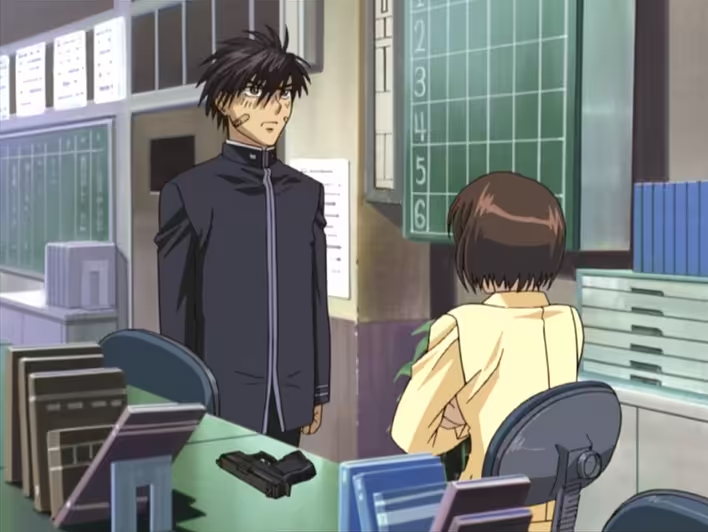
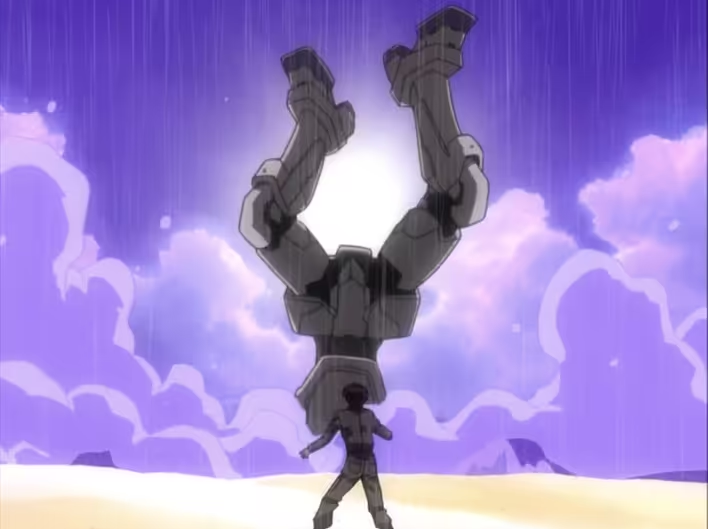
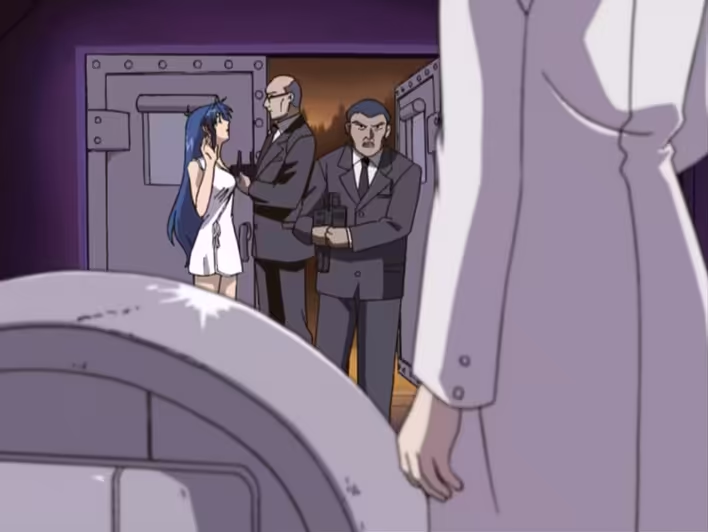
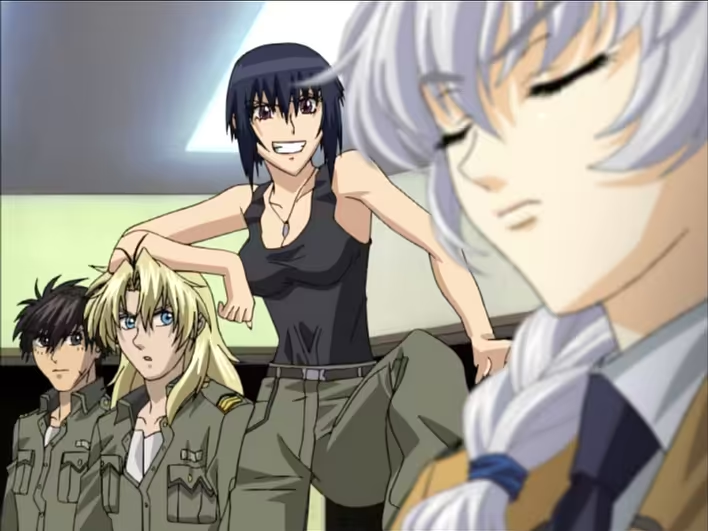
Sergeant Sosuke Sagara, a fighter of the secret military organization Mithril, is assigned to protect Japanese schoolgirl Kaname Chidori. The problem is that he is excellent at piloting combat mechs called Arm Slaves, but he hardly understands ordinary school life.
The franchise alternates between military operations, science fiction, romance, and comedy. The first Full Metal Panic! consists of 24 episodes. Full Metal Panic? Fumoffu is almost entirely dedicated to school comedy, while The Second Raid returns to a more serious military story. The fourth television installment, Invisible Victory, was released in 2018.
The Ukrainian title "Full Metal Panic!" has been used, among other things, in television dubbing and in Ukrainian catalogs.
Giant Robo: The Day the Earth Stood Still — "Giant Robo: The Day the Earth Stood Still"
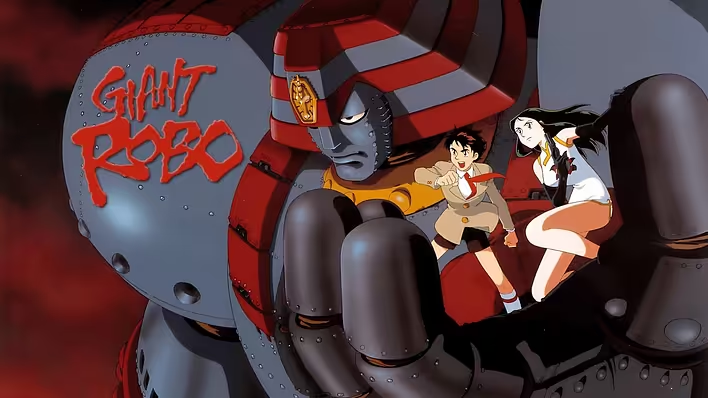
Year: 1992
Format: OVA, 7 episodes
A secret organization called Big Fire seeks to destroy the Shidzuma system — a new energy source that has allowed humanity to abandon oil and nuclear energy. Opposing them are the Experts of Justice, among whom is a boy named Daisaku Kusama and his piloted Giant Robo.
The seven-episode OVA was released from 1992 to 1998. Its plot is not a direct adaptation of the original Giant Robo manga: the series combines characters from different works of mangaka Mitsuteru Yokoyama into a separate story.
Giant Robo combines retrofuturism, superheroics, martial arts, tragedy, and almost operatic solemnity. Despite its title, the robot does not appear in every scene: primarily, it is a grand adventure drama about parental legacy, responsibility, and the cost of blind devotion.
Bokurano — "Our"
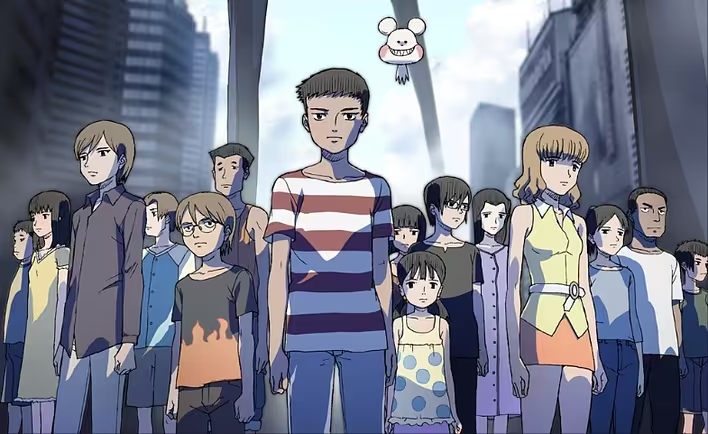
Year: 2007
Format: series, 24 episodes
During a summer camp, fifteen children find a cave with computer equipment. A stranger who calls himself Kokopelli offers them to participate in testing a game: each will supposedly take turns piloting a giant robot and defending Earth from invaders.
Soon, the children realize that this is not a game, and participation in battles requires a terrible price from the pilots. At the same time, not everyone present enters into contracts on the same terms — this detail later becomes important for the plot.
Bokurano uses the familiar fantasy of children in a giant robot to tell not about the fulfillment of dreams, but about the fear of death, family problems, and the value of human life. This is a dark and emotionally heavy anime that well demonstrates how far mecha can stray from the usual action genre.
86: Eighty-Six — "Eighty-Six"
Year: 2021
Format: series, 23 episodes in two parts
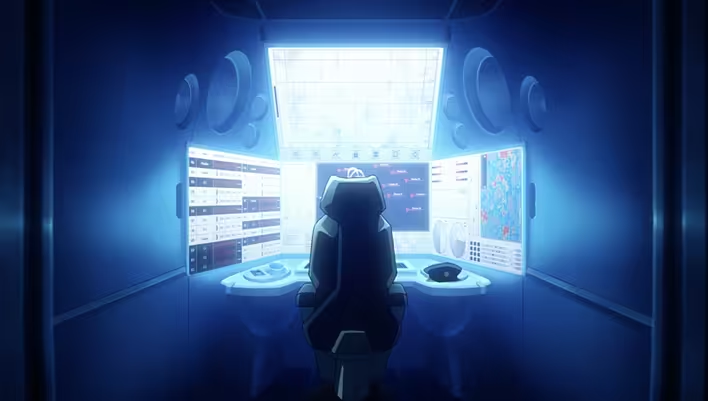
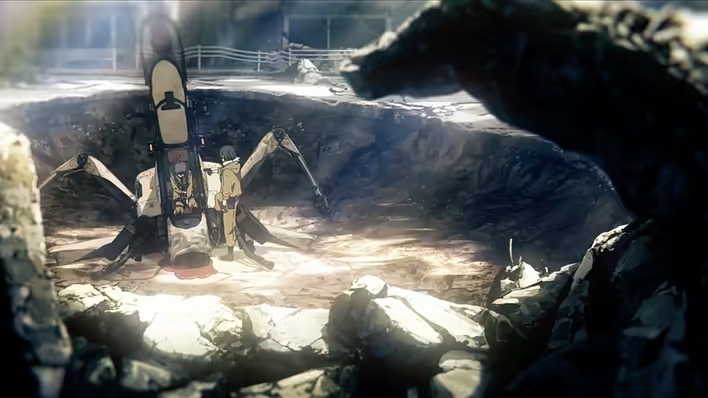
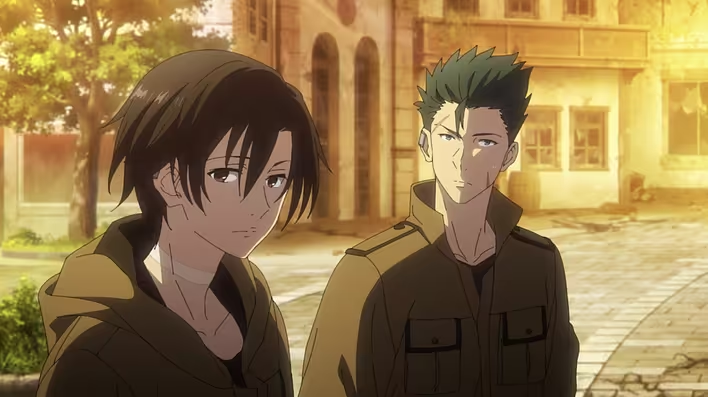
The Republic of San Magnolia claims to wage a bloodless war against the autonomous Legion army using unmanned machines. In reality, the Republic's technology is operated by people forcibly relocated to the 86th sector, whom the state no longer recognizes as full citizens.
Major Vladilena Milize, or Lena, remotely commands the Spearhead squad and gradually realizes the chasm between official propaganda and the reality of the front. One of the central characters becomes the squad commander Shinai Nozen, known by the callsign Undertaker.
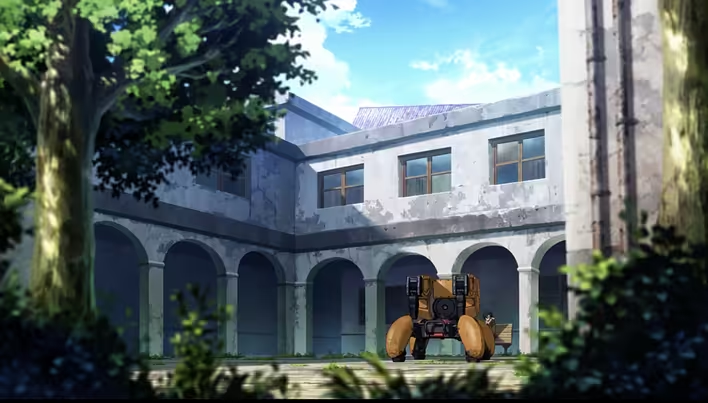
Instead of humanoid robots, agile spider-like combat machines are used here. The series belongs to the mecha genre, although visually its technology is closer to walking tanks. The story centers on dehumanization, racial discrimination, state propaganda, and the psychological consequences of war.
Where to Start with Mecha Anime
There is no single correct entry point into the genre. For a quick and emotional adventure, Gurren Lagann is suitable, for political intrigue — Code Geass or 86, and for a psychological story — Neon Genesis Evangelion. Those who want to see the roots of the "real robots" direction should turn to Mobile Suit Gundam.
If the most appealing aspects are a complex world and the gradual revelation of its mysteries, Eureka Seven, The Vision of Escaflowne, and Bokurano can be particularly interesting. Patlabor is suitable for those who enjoy the mundane and political thrillers, while VOTOMS appeals to fans of dark military science fiction.
The giant robot in mecha is almost never just an impressive machine. It can embody military power, technological progress, coming of age, or the burden that the older generation places on children. That is why series created several decades ago still appear in fan recommendations alongside modern robots.
Like it?React
🧵
This post doesn't have any additions from the author yet.