This content has been automatically translated from Ukrainian.
In the modern world, memes have transformed from just a form of entertainment into a unique tool for social interaction, marketing, and cultural influence. With the emergence of the term "Meme Economy," memes began to be perceived as valuable assets that can "appreciate" or "depreciate" depending on popularity, trends, and even political or social context.
What is the "Meme Economy"?
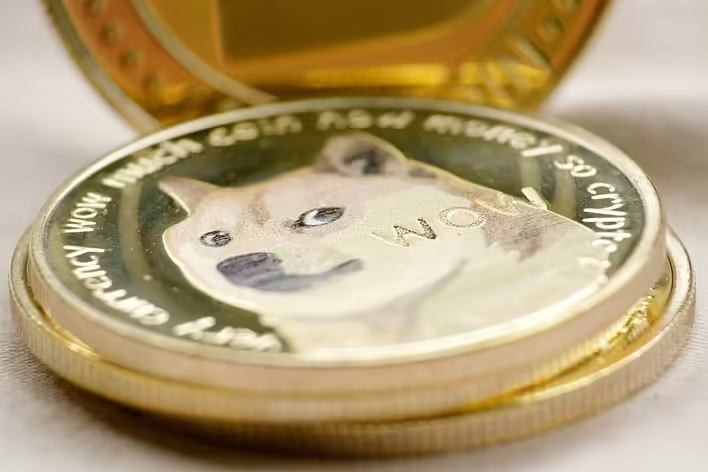
Imagine memes as financial assets on the stock market: they have their own "demand," "supply," and potential for "growth" or "decline." The meme economy is a satirical concept where memes are viewed from an investment perspective, like stocks or cryptocurrency. Its foundation is the assumption that the popularity of a meme is its "market value."
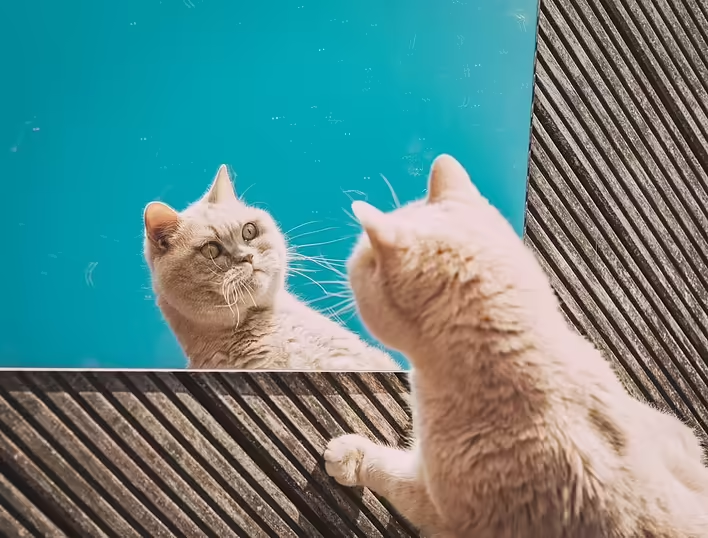
This phenomenon has primarily taken root on platforms like Reddit (for example, in the r/MemeEconomy community), where users "simulate" buying or selling memes, assessing their potential to go viral. For instance, if a meme about a funny cat suddenly starts appearing on various platforms, "investors" may consider it a profitable asset that will "appreciate" in value.
How does the meme economy "work"?

The meme economy is based on a simple principle: the more recognizable and relevant a meme becomes, the more "valuable" it is. Its "value" depends on several factors:
- Relevance: a meme that aligns with trends or significant events has a higher chance of going viral.
- Universality: memes that can be easily adapted to different situations have a longer "lifespan."
- Visual simplicity: the simpler the image or format of the meme, the easier it is to understand and share.
Users in such "trades" humorously speculate on memes as if they were stocks. For example, they might "buy" memes that have not yet gone viral, hoping for their success, or "sell" if they believe the meme is on the verge of losing popularity.
Satire or reality?

Although the concept of the meme economy started as a joke, it has real-life parallels. Memes have long been used as tools of influence in advertising, politics, and even in financial markets. Recall how the "stonks" meme became a symbol of absurd stock growth, while popular memes are used by brands to attract younger audiences.
Moreover, memes are beginning to be considered objects of intellectual property. For example, NFT memes ("non-fungible tokens") have turned iconic images into assets that sell for huge sums. Who would have thought that the "Disaster Girl" meme (the girl smiling in front of a fire) would sell for half a million dollars?
The meme economy and culture

In addition to financial and marketing aspects, memes play an important role in shaping modern culture. They are a kind of language for a new generation, capable of conveying emotions, ideas, and even protest. The popularity of a meme often reflects social sentiments, making them valuable not only for online communities but also for cultural researchers.
The concept of the meme economy helps to understand how fleeting internet humor can have real weight. It shows that even jokes can influence mass consciousness, and thus become a new way of interacting with the surrounding world.
Like it?React
🧵
This post doesn't have any additions from the author yet.