This content has been automatically translated from Ukrainian.
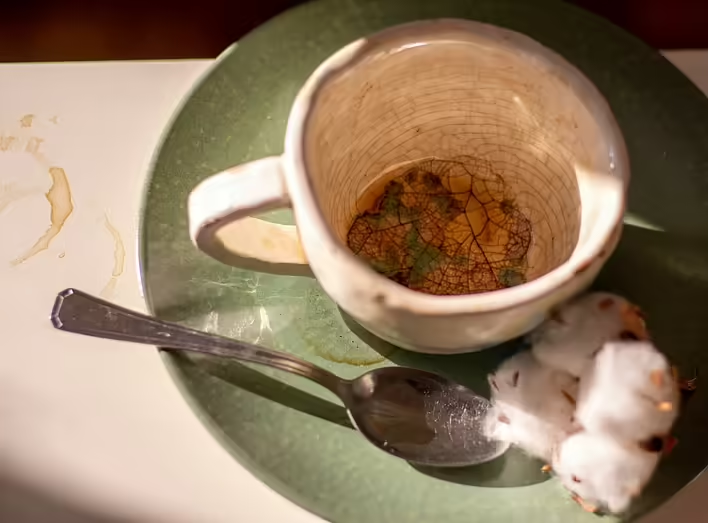
Imagine holding an old tea cup in your hands. Its surface shows cracks, each telling its own story. Its paint has slightly faded, but this softness of colors adds a special charm to it. In a modern world where perfection is often associated with novelty and shine, the Japanese concept of wabi-sabi offers the opposite: to find beauty in imperfection, to embrace the natural passage of time, and to appreciate simplicity.
What is wabi-sabi?
Wabi-sabi is a Japanese philosophy based on the aesthetic value of the temporary, natural, and imperfect. The term itself consists of two parts:
- "Wabi" – conveys the idea of modesty, simplicity, and a sense of harmony with nature.
- "Sabi" – is associated with the tranquility that comes from accepting time, aging, and natural changes.
Together, these concepts create a holistic philosophy of life that is reflected in the art, design, and everyday life of Japanese culture.
Traces of time as a source of beauty
In a culture that values perfection, cracks, scratches, or wear are often seen as defects. But wabi-sabi reminds us that these "imperfections" are part of life. For example, the traditional Japanese technique of kintsugi (repairing ceramics with gold) not only hides cracks but transforms them into art. Thus, each defect becomes part of the object's story rather than something to be concealed.
This approach reflects a deeper idea: life is fluid and changeable, and beauty lies precisely in this.
Principles of wabi-sabi in modern life

Although wabi-sabi originates from Japanese culture, its principles can easily be adapted to our everyday lives:
- Acceptance of imperfection. This can apply not only to objects but also to ourselves. We are not perfect, and that's okay.
- Simplicity and minimalism. Wabi-sabi encourages clearing space of unnecessary things and appreciating modest aesthetics.
- Appreciation of nature. Look at autumn leaves or the texture of old wood. Wabi-sabi reminds us that true beauty is often unnoticeable.
- Mindfulness of the moment. In a world where we are constantly rushing, this philosophy encourages us to pause and enjoy a warm cup of tea or a sunset view.
A philosophy that inspires
Wabi-sabi teaches us to accept the world as it is, with its flaws and transience. It is a reminder that beauty is not always loud, and true pleasure lies in simple things. In a world that constantly seeks the ideal, wabi-sabi helps us find harmony in imperfection.
So when you see a crack on an old cup or worn pages of your favorite book, remember: this is wabi-sabi – the beauty that lives in every moment.
Like it?React
🧵
This post doesn't have any additions from the author yet.