Imagine a world where computers were never invented. Instead, humanity created enormous mechanical machines, steam robots, airships, intricate clockwork mechanisms, and incredible inventions powered by steam.
This is how steampunk emerges — one of the most well-known directions of retrofuturism, which has inspired writers, artists, designers, and filmmakers for several decades.
It is easily recognizable by brass gears, steam engines, Victorian architecture, aviator goggles, and fantastic mechanisms. But behind this recognizable aesthetic lies a much more interesting idea: what if humanity's technological development had taken a completely different path?
What is steampunk
Steampunk (from the English words steam and punk) is a genre of fiction, an artistic style, and a cultural movement that combines the atmosphere of the 19th century with technologies that exist only in the authors' imagination.
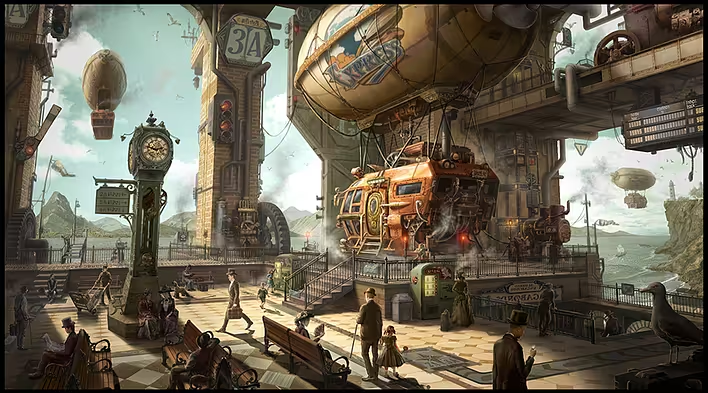
Its action most often unfolds in a world similar to Victorian England or the Industrial Revolution era. However, it is not a historical reconstruction, but an alternative reality where science and technology developed quite differently.
Thus, alongside steam locomotives, there may exist mechanical robots, airships, automatic prosthetics, computing machines made of brass and wood, or fantastic mechanisms that never existed in the real world.
Where steampunk came from
Although most steampunk works take place in the 19th century, the genre itself is much younger.
The term steampunk was coined by American writer Kevin Wayne Jeter in 1987. He jokingly referred to novels set in an alternative Victorian era inspired by the works of Jules Verne and H.G. Wells.
At the same time, neither Verne nor Wells wrote steampunk — the genre did not yet exist. However, their novels about submarines, trips to the Moon, time machines, and incredible inventions became the main source of inspiration for its creators.
That is why these writers are often considered the literary predecessors of steampunk.
Why the Victorian era?
At first glance, this may seem strange. Why do authors return specifically to the 19th century rather than the Middle Ages or modernity?
The thing is, the Victorian era became a symbol of rapid technological progress. It was during this time that railways, steam engines, metallurgy, the telegraph, photography, and industrial production were actively developed. People believed that science could fundamentally change the world.
Steampunk seems to continue this story, imagining that electronics, microchips, and digital technologies never appeared, and humanity continued to improve mechanics and steam engines.
As a result, the world of steampunk looks both familiar and astonishingly fantastic.
What steampunk looks like
This style has a very recognizable aesthetic.
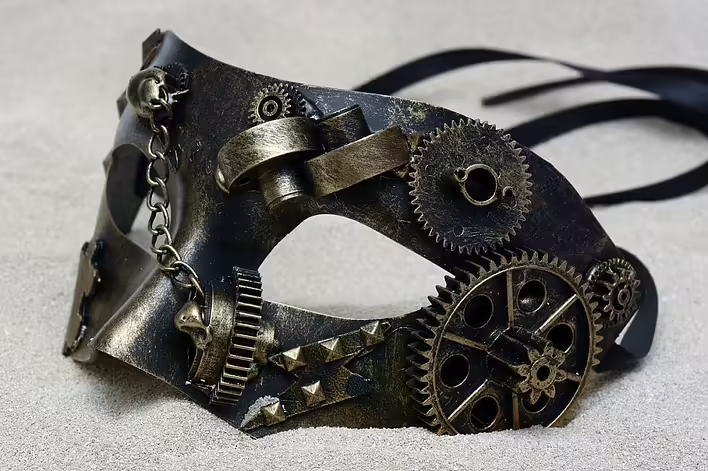
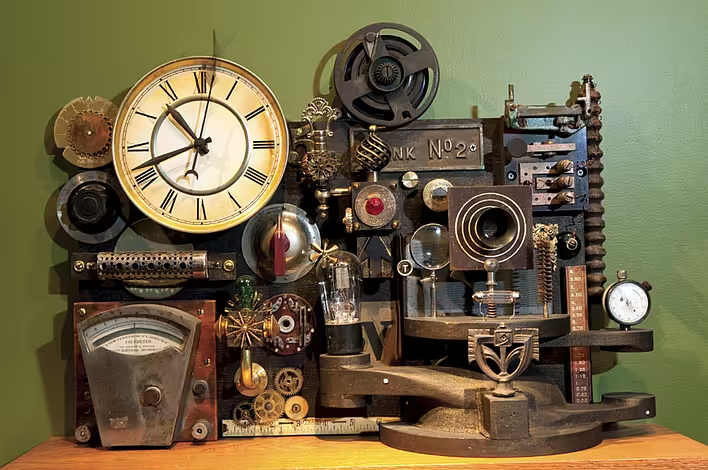
It is characterized by brass, copper, wood, leather, rivets, gears, tubes, gauges, large dials, and intricate mechanisms that are often intentionally left exposed.
Clothing combines 19th-century fashion with fantastic details. Corsets, tailcoats, top hats, pocket watches, long coats, and aviator goggles are complemented by mechanical prosthetics, unusual weapons, or whimsical inventions.
Thanks to this aesthetic, steampunk has long transcended literature and transformed into a distinct movement in design, fashion, cosplay, and decorative arts.
The best examples of steampunk in literature, film, and games
Today, steampunk has long ceased to be just a literary genre. It can be seen in film, animation, video games, comics, fashion, and even interior design. The recognizable aesthetic of steam machines, mechanical inventions, and Victorian architecture has made this movement one of the brightest in contemporary science fiction.
Steampunk in literature
Although the main sources of inspiration for the genre were the novels of Jules Verne and H.G. Wells, classic steampunk works began to appear only in the late 20th century.
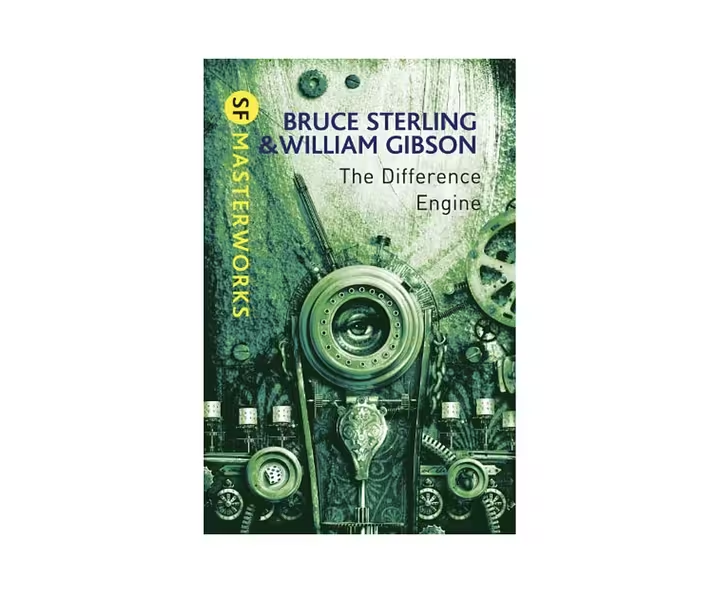
One of the most famous novels is The Difference Engine by William Gibson and Bruce Sterling. The authors imagined an alternative history in which the mechanical computer conceived by mathematician Charles Babbage was successfully created in the 19th century. This fundamentally changed the development of science, politics, and society as a whole.
Among other authors who made significant contributions to the development of the genre, Tim Powers, James Blaylock, Cherie Priest, and Gail Carriger are often mentioned. Their works combine adventure fiction, detective stories, alternative history, and sometimes even fantasy and horror.
«Різницева машина» (The Difference Engine)
Steampunk in film and television
In cinema, this style is easily recognizable by the combination of Victorian architecture, fantastic machines, and a large number of mechanical details.
One of the most famous examples is Sky Captain and the World of Tomorrow, which consciously emulates the fantastic illustrations of the first half of the 20th century.
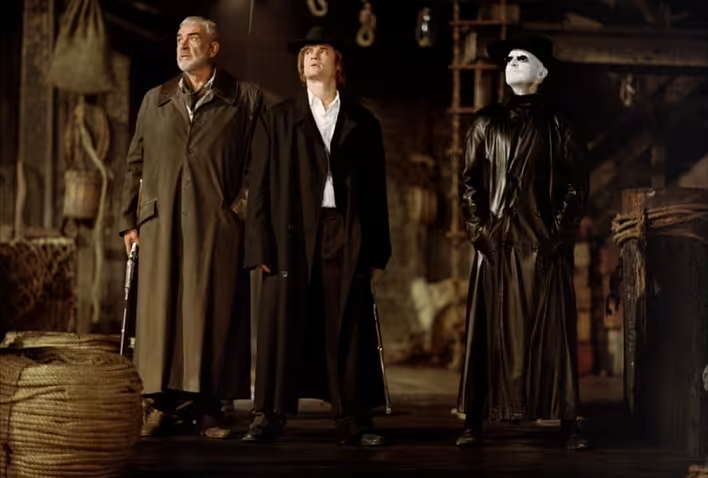
Steampunk elements can also be seen in the films The League of Extraordinary Gentlemen, Wild Wild West, and the Sherlock Holmes films directed by Guy Ritchie. Although these films do not belong to the pure steampunk genre, their design, mechanisms, and atmosphere heavily rely on its aesthetic.
An interesting modern example is the animated series Arcane. Its world combines steampunk design with magical technologies, so it is often described as a blend of steampunk and magitech.
кадр з фільму «Ліга видатних джентльменів»
Steampunk in video games
Video games have largely made this style popular among a new generation of science fiction fans.
The Dishonored series transports players to an alternative world where the industrial revolution is combined with unusual technologies and mystical abilities.
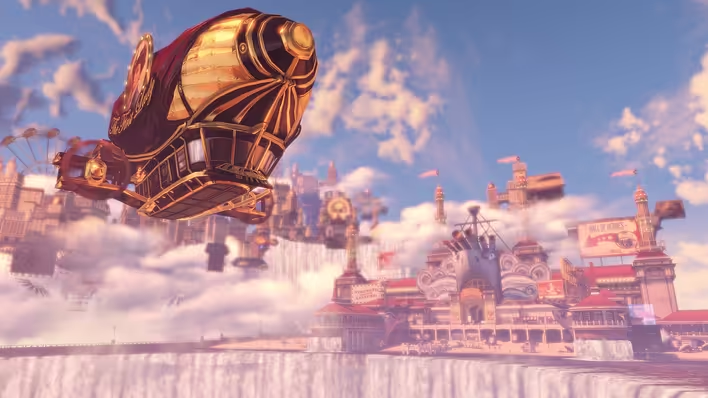
In BioShock Infinite, the steampunk aesthetic intertwines with American retrofuturism, creating one of the most vibrant fantasy worlds in modern games.
Another striking example is Frostpunk. The events of the game unfold in an alternative 19th century where humanity struggles to survive during a global cooling thanks to gigantic steam generators. The combination of Victorian architecture, steam technologies, and a harsh atmosphere has made it one of the most well-known contemporary works in the steampunk aesthetic.
BioShock Infinite
How steampunk differs from other directions of retrofuturism
Steampunk is often confused with dieselpunk, atom punk, or cassette futurism.
The main difference lies in the historical era that served as the source of inspiration.
Steampunk refers to the 19th century and the age of steam machines.
Dieselpunk is inspired by the first half of the 20th century, when the world was transformed by internal combustion engines, aviation, and large-scale industrialization.
Atom punk reflects the optimism of the 1950s and 1960s when humanity associated the future with atomic energy and space exploration.
Despite the rapid development of digital technologies, interest in this genre does not fade.
Its appeal lies in the unusual combination of history and fantasy. Steampunk offers an alternative vision of technological progress, where intricate mechanisms, craftsmanship, and engineering ingenuity remain as important as new discoveries.
Moreover, this style proves that technologies can be not only functional but also beautiful. That is why its motifs are still actively used in literature, cinema, video games, fashion, design, cosplay, and contemporary art.