This content has been automatically translated from Ukrainian.
Initially, the term "second hand" was used in the English language to describe items that had already been used, meaning they were "second hand." Accordingly, they passed through the hands of one person and were transferred to another. This term can be found in literary sources dating back to the 15th century, where it was used to describe items that had previous owners.
A Brief History of Second Hand
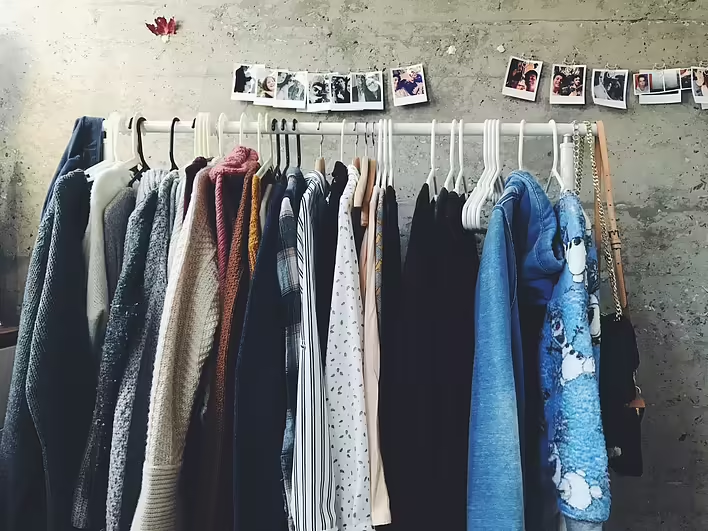
In medieval Europe, especially among the aristocracy, it was common to pass clothing and other items among family members or friends. For example, expensive fabric or clothing could be gifted or passed down as inheritance.
In the 19th century, particularly during the Victorian era, the number of charitable organizations collecting clothing and other items for the poor increased. People from the upper classes donated their used clothing for distribution to less affluent citizens. Such practices contributed to the popularization of the term "second hand."
In the 20th century, used items became a commercial commodity. The first stores specializing in the sale of used clothing, furniture, and other items appeared. These were not only charitable shops but also commercial enterprises that bought and sold "second hand" items.
Why "Second Hand"?
The choice of the term "second hand" (literally "second hand") has a logical explanation. Items that have already been used by one person are passed to another, meaning they go through "second hands." This process of transfer emphasizes that the item has already had a previous owner. The term is easily understood and accurately describes the essence of the items being sold. "Second hand" clearly indicates that the item is not new, but has already been used.
Second Hand in Modern Society

Today, the term "second hand" is used worldwide and refers to goods that have been used and are now sold or passed on to new owners. This term encompasses a wide range of products: from clothing and furniture to electronics and books.
The "second hand" market has now developed to significant scales. There are not only physical stores but also numerous online platforms where people can buy and sell used items. Websites like OLX, Shafa, and various specialized apps allow people to easily find and purchase used goods.
In some countries, specialized events have even emerged, such as "garage sales" or "flea markets," where people can sell their used items. This has also become part of the culture of recycling and reusing items.
Buying used items helps reduce waste and the consumption of new resources. This contributes to environmental preservation and reduces the carbon footprint. In today's world, environmental issues are becoming increasingly relevant, which is why many people choose "second hand" as an environmentally responsible choice.
Used items often have a unique character and style that is hard to find in modern stores. This can be particularly appealing to those looking for unconventional or retro items.
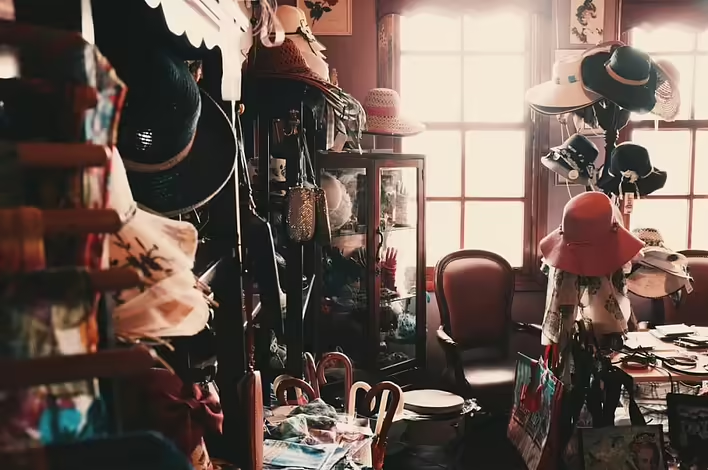
Every item you find in a second hand store has its own story. It could be an antique chair that was a favorite reading spot for someone in the last century, or an exquisite dress that once was the center of attention at a glamorous party.
Thus, the term "second hand" has a rich history that reflects the development of society and the economy. It continues to remain relevant today, supporting the ideas of sustainability and thrift.
Like it?React
🧵
This post doesn't have any additions from the author yet.