Porcelain and ceramics — both materials are made from clay and minerals, but they differ in composition, firing temperature, appearance, and properties.
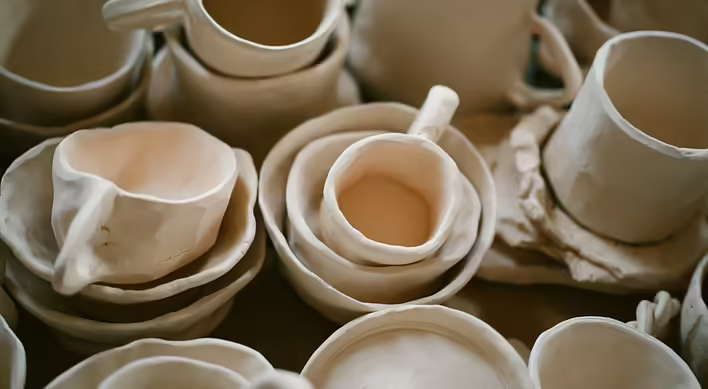
Ceramics is a general term that encompasses all clay products that are fired in a kiln. These include:
Faience
porous white ceramics made from clay with added sand and chalk
covered with opaque white glaze
used for tableware, tiles, decorative items
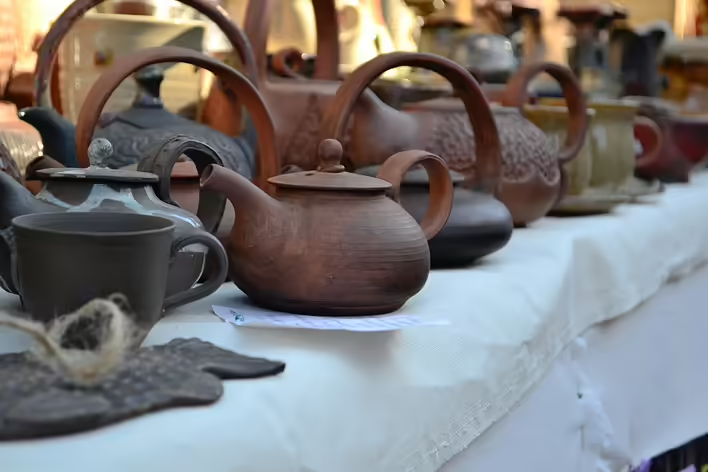
2.Terracotta
unglazed red or brown ceramics made from clay with a high iron content
has a matte surface, fired at low temperatures
used for sculptures, pots, architectural decor
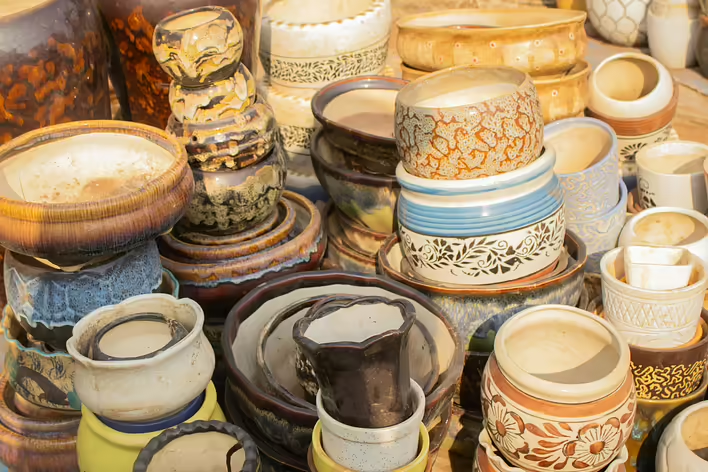
3. Majolica
coarse ceramics covered with white glaze and bright colored painting (often blue, yellow, green)
similar to faience but with more colorful decor
originates from Italy, also popular in Ukraine (for example, Kosiiv majolica)
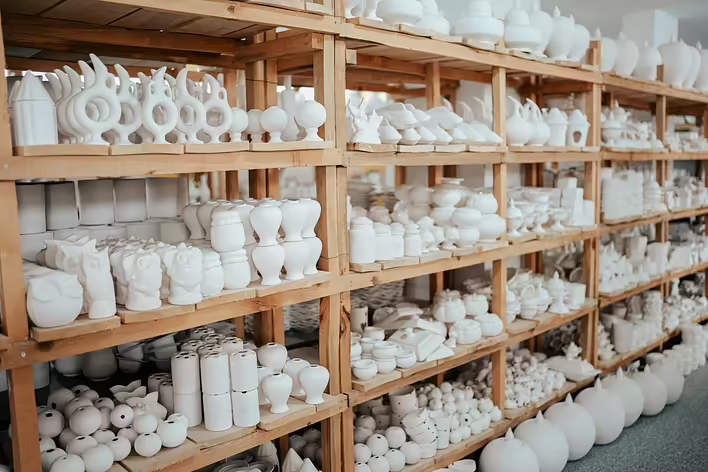
4. Porcelain
Porcelain is a type of high-quality ceramics. It is made from kaolin — a particularly pure white clay.
Fired at very high temperatures — from 1200 to 1450°C.
Very strong, hard, white, and almost transparent when held up to light.
Has a non-porous structure, does not require additional glazing for airtightness.
Often used for elegant tableware, decorative items, and insulators in electrical engineering.
In Ukraine, various types of clay are used for ceramics production, depending on the region and manufacturing goals. The country has rich deposits of clays suitable for both household ceramics and artistic products.
1. Kaolin (porcelain clay)
White color, high purity.
Main raw material for porcelain.
Large deposits — in Donbas, Zhytomyr, Vinnytsia, Dnipropetrovsk regions (for example, Hlukhivetske, Hirsivske deposits).
2. Refractory clay
Used for technical ceramics, kilns, tiles.
Has high heat resistance.
Main deposits — Donetsk region, Poltava region.
3. Red (peat) clay
Contains iron, giving products a reddish or brownish tint after firing.
Very common in central and northern regions of Ukraine.
Used in pottery, decorative tableware, tiles.
4. Loess clay (clayey loam)
Often used in folk pottery.
Has medium plasticity and is easily worked by hand.
Common in Podillia, in Poltava, Kyiv, Khmelnytskyi regions.
Historically significant pottery centers in Ukraine:
Opishnya (Poltava region) — the most famous center of Ukrainian ceramics.
Kosiv (Hutsul region) — known for traditional painted ceramics.
Slavuta, Havarechchyna, Vylshana, Smotrych — local centers with unique styles.
Ukraine has ancient traditions of porcelain production, although unlike mass pottery, porcelain has always been an elite product, often concentrated in large factories and focused on decorativeness or export.The main clay for porcelain is kaolin. Ukraine has large deposits of kaolin: Hlukhivetske (Vinnytsia region), Hirsivske (Zaporizhia region), Mezhrichenske (Dnipropetrovsk region). This raw material is used not only in Ukraine but also exported to the EU and Asia.
Main Ukrainian porcelain factories (historically)
1. Baranivka Porcelain Factory (Zhytomyr region)
One of the oldest — founded in 1802.
Produced classic porcelain: tableware, vases, decorative figurines.
The factory closed after the 2010s due to the economic crisis, but its products are considered collectible.
Known for mass-produced tableware and souvenir products.
Today it hardly functions, but previously it was an important exporter to the USSR and Europe.
3. Druzhkivka Porcelain Factory (Donetsk region)
One of the most powerful in the USSR.
Specialized in household porcelain, often with folk motifs.
Most products had a smooth white surface with underglaze or overglaze painting. During the Soviet period, porcelain figurines were actively created: women in national costumes, Cossacks, scenes from fairy tales.Unfortunately, most porcelain factories went bankrupt or closed after the 2000s due to competition from cheap Chinese imports. Some artists and small workshops still create author porcelain by hand, mostly as art objects. There is now a growing interest in the craft and revival of traditions — hence there is hope that this industry will receive its "second life".
Speaking of ceramics, it is impossible not to mention Chinese porcelain — one of the most valuable and revered in the world, both historically and artistically. It is a symbol of high culture, technical excellence, and national heritage of China.China invented porcelain as early as the 7th-9th centuries AD (Tang dynasty). Therefore, the very term “china” in English means both "China" and "porcelain." Europeans did not know how this material was made, so they began to call it simply "china ware" or "china", as it came from China. In European languages, this confusion between the country and the material has only persisted in English. In other languages, the names differ (for example, porcelaine in French, porzellana in Italian).The Chinese were the first to learn how to make fine, white, semi-transparent porcelain using kaolin and high-temperature firing. Their technology remained a secret for centuries, which increased the value of porcelain in Europe.
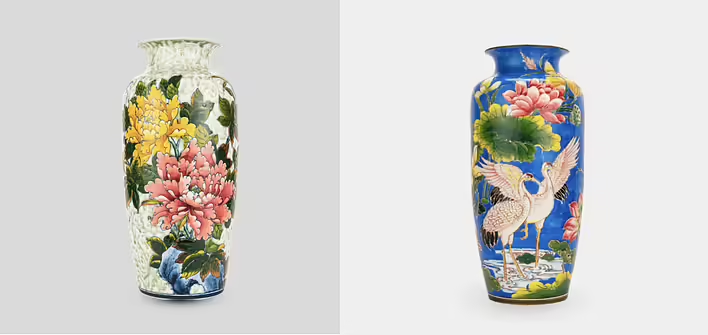
Imperial porcelain products — particularly from the Ming (1368–1644) and Qing (1644–1912) dynasties — had extraordinarily high artistic value. They were made only for the emperor's court and often had ritual or diplomatic purposes.Chinese porcelain is distinguished by exquisite painting: scenes from nature, dragons, flowers, birds, calligraphy. The color palette included cobalt blue underglaze painting, green-gold enamels, red "dragon" painting, and more.Genuine products from imperial workshops often exist in single copies. They are valued by museums, collectors, and investors.The most expensive porcelain vase in the world is the Qing dynasty vase, which was sold at auction for £53.1 million (approximately $83 million) in 2010. This rare Chinese vase, made in the mid-18th century, was initially valued as a "very skillful forgery" and was worth only £800 when it was first appraised on a BBC television show in the 1960s-1970s. After re-examination, it turned out to be genuine imperial porcelain, and it was sold at auction to a Chinese collector for a record amount.