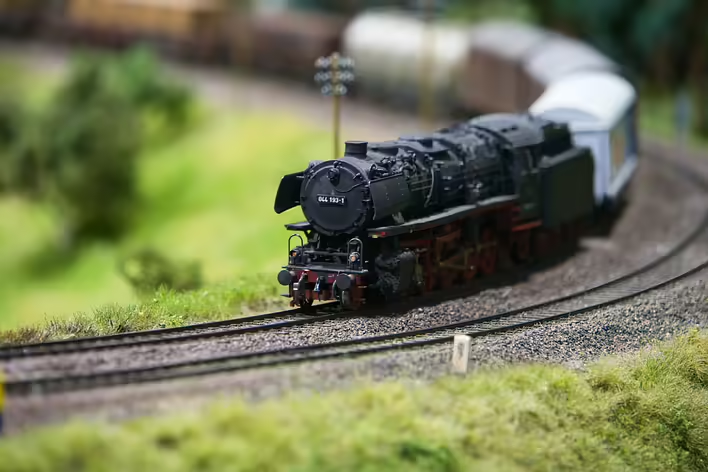
Collecting model trains is one of those hobbies that seems niche but has a multimillion-strong community worldwide. This passion emerged in the late 19th century, almost simultaneously with the advent of real railways as a symbol of technological progress. Even then, wealthy Europeans were ordering mechanical toy locomotives that operated on springs or even steam. After World War II, the hobby became mainstream: clubs, exhibitions, and specialized magazines appeared in the USA, Europe, and Japan, and models began to accurately replicate real locomotives and cars.
Origins: Märklin, Bing, and the Birth of Standards
One of the most important companies in the history of model trains was the German Märklin, founded in 1859. It was here that, at the beginning of the 20th century, mass production of metal electric trains began, and scales and tracks were gradually standardized. Another legendary firm, Bing Werke from Nuremberg, was the largest toy manufacturer in the world in the 1910s, and its railways were exported to the USA and Britain.
Interestingly, many modern standards arose not out of convenience but due to... compromises among manufacturers who did not want to change their own equipment.
Scales: Numbers that Hide a Lifestyle
Scale in model railroading is not just about size but also about philosophy.
G scale (approximately 1:22.5) — large models often used in gardens or outdoors. Popular in the USA and Switzerland, especially for garden railways.
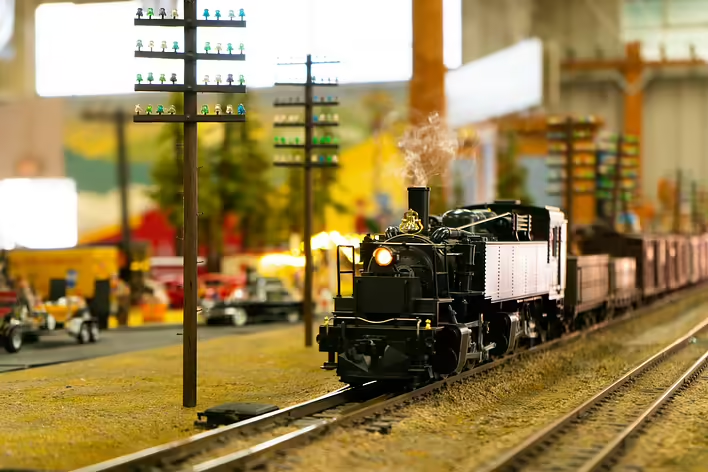
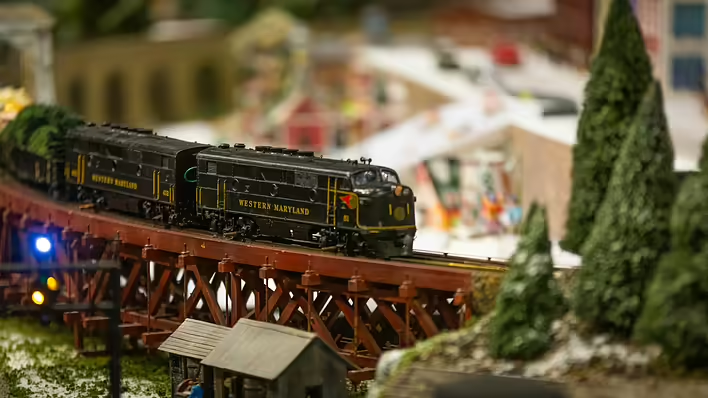
O scale (1:48 in the USA, 1:45 in Europe) — massive, highly detailed models. Closely associated with the American brand Lionel and the tradition of Christmas trains.
S scale (1:64) — a rarer scale valued for its balance between size and detail.
HO (1:87) — the most popular scale in the world. This is where the largest selection of locomotives, buildings, and accessories can be found.
TT (1:120) — particularly common in Central and Eastern Europe, especially in Germany and the Czech Republic.
N scale (1:160) — a compact scale that allows for large layouts in a small space; extremely popular in Japan.
Z scale (1:220) — one of the smallest production scales. It was long considered technically unfeasible until Märklin proved otherwise in the 1970s.
T scale (1:450) — an almost microscopic scale that is more a demonstration of engineering capabilities than an everyday hobby.
Not Just Trains, But Entire Worlds
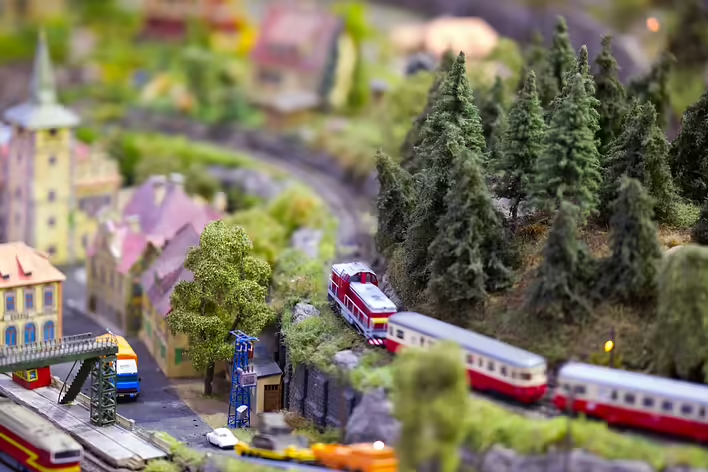
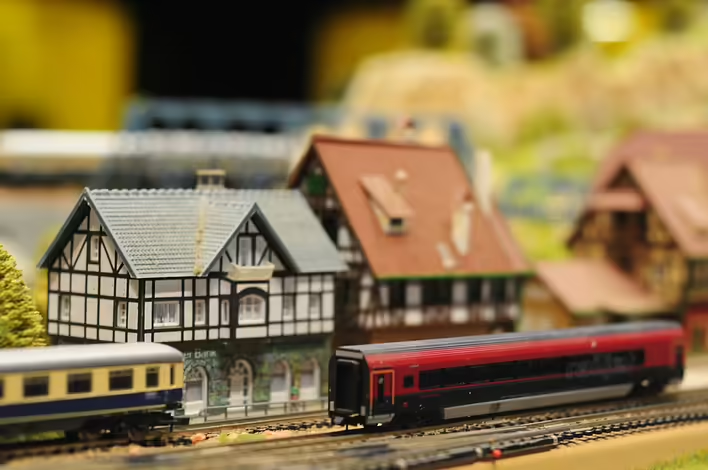
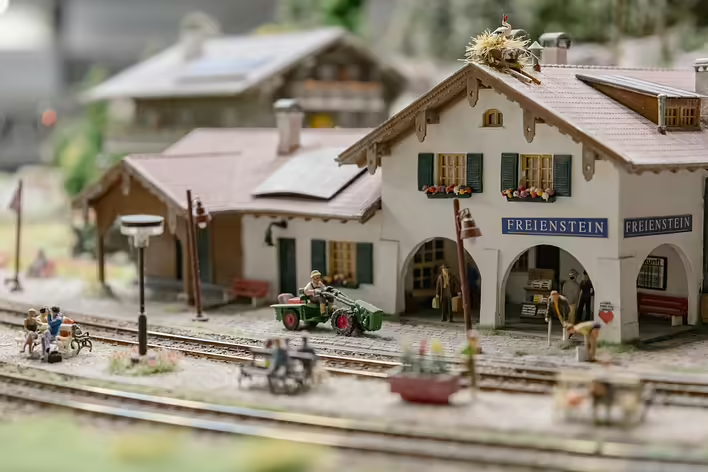
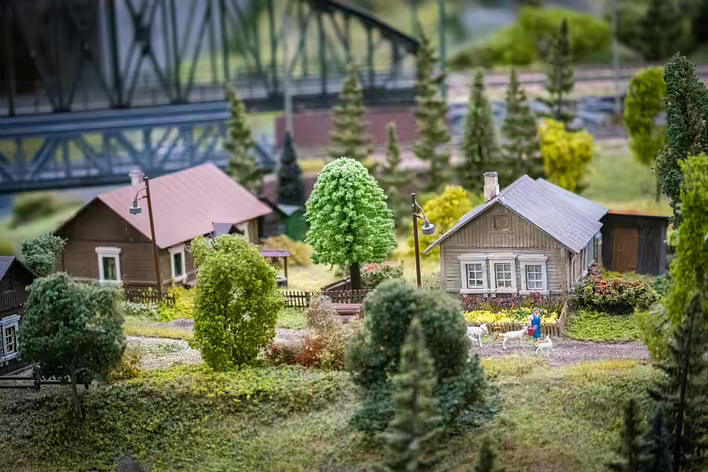
Many enthusiasts do not limit themselves to collecting locomotives. They recreate specific places and eras: for example, the railways of Bavaria in the 1930s or the American Wild West with freight depots and elevators. Figures of people, miniature advertisements, cars, and traffic lights appear in the layouts — sometimes even scenes "from life" that can only be seen under a magnifying glass.
The most famous example of this approach is Miniatur Wunderland in Hamburg, the largest model railway in the world. It has been under construction since 2001 and continues to expand: thousands of meters of track, hundreds of trains, and complex automation systems.
Sheldon Cooper and the Cult of Precision
The popularity of this hobby was also boosted by the character from the TV show "The Big Bang Theory" — Sheldon Cooper. His obsession with model trains has often been part of the plot and jokes, but at the same time, it showed how seriously he takes details, rules, and historical accuracy. In one episode, Sheldon even organizes a themed evening dedicated to railways, strictly adhering to "railroad etiquette."
For many real collectors, Sheldon has become a recognizable symbol of a hobby that is often misperceived as "childish," although in reality, it requires knowledge of history, electronics, and mechanics.
Expensive Pleasure and Collectible Item
Some model trains are produced in limited editions and over time become investments. Rare pre-war Märklin or Lionel trains can sell for thousands of dollars at auctions. Models in original boxes and with fully functional mechanics are especially valued.
In a world of rapid technology, model trains remain a slow and focused hobby. It teaches patience, planning, and joy in small things — the movement of a switch, the soft light in the windows of cars, the perfectly fitted track. Perhaps that is why this passion has survived for more than a century — and still shows no signs of derailing.