This content has been automatically translated from Ukrainian.
Fanzine is an amateur publication, usually created by a small group of people or even one person, dedicated to a specific topic or community. The name comes from the English fanzine, a shortening of fan magazine, meaning "magazine for fans." Unlike professional media, fanzines have always been an expression of personal voice, enthusiasm, and independence — a printed manifestation of love for culture, music, or ideas.
The first fanzines appeared in the 1930s among science fiction enthusiasts. One of the most famous early examples was The Comet, which was published in 1930 in the USA and is considered the first fanzine in the world. It was created by members of the Science Correspondence Club and contained short science fiction stories, reviews, and discussions of new scientific ideas — thus it was a precursor to modern fan communities of science fiction fans.
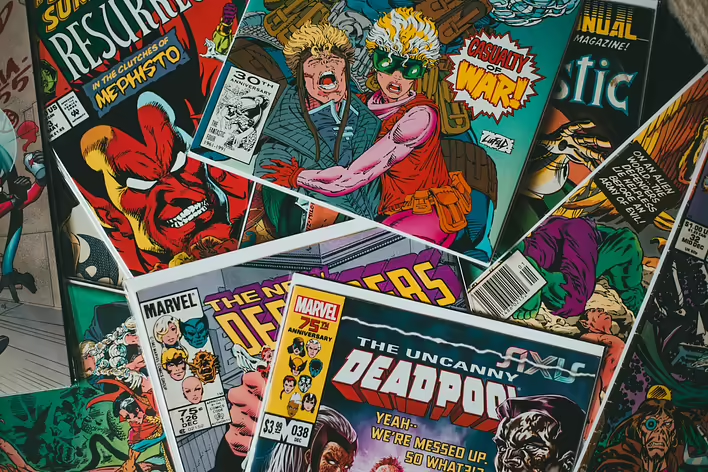
Over time, the fanzine culture spread among fans of comics. In the 1960s, Alter Ego emerged, dedicated to superheroes and the history of comics "from the inside" — it featured interviews with artists, fan art, and analysis of the works of Marvel and DC. At the same time, there was also Capa-Alpha, a unique fanzine-comic club that functioned as a closed society: each member created a few pages, and all materials were compiled into a joint issue, which was then sent only to club members. This format effectively became a prototype for future creative collectives and communities online.
The most powerful surge of fanzines occurred in the second half of the 20th century, especially with the rise of the punk movement. It was then that fanzines became not just a hobby, but a tool for protest and self-expression. Legendary publications like Sniffin’ Glue in the UK or Maximum Rocknroll in the USA documented the life of the punk scene, song lyrics, fan opinions, and even political manifestos. They were printed on a photocopier, stapled together, and distributed at concerts or by mail — it was a kind of "analog social network."
In the 1980s and 1990s, fanzines became popular among other subcultures: goths, ravers, LGBTQ+ communities, feminist movements. For example, the fanzine Riot Grrrl became a symbol of female self-organization in alternative music, while Homocore was an important platform for the queer rock community. Each fanzine had its own style — collage covers, typewriter prints, "live" layouts without rules. This very aesthetic later influenced the design and visual culture of independent media.
In the 21st century, fanzines have not disappeared but have only changed format. Some have transitioned to the digital space — blog and PDF fanzines continue the work of their paper predecessors, preserving the spirit of freedom. Others, on the contrary, are bringing analog back into the world of screens: modern fanzines are often released as art objects, with small print runs, experimental layouts, and a high level of visual intent.
Today, a fanzine is not just a retro format. It is a way to remain independent in a time when media are subject to algorithms and trends. It reminds us that to create culture, permission is not needed — just paper, scissors, imagination, and the desire to share one's voice.
Like it?React
🧵
This post doesn't have any additions from the author yet.