Pizza is one of those dishes that can easily be tailored to your preferences, even if the goal is to make your diet more balanced and healthy. To achieve this, you just need to pay a little more attention to the base, toppings, and sauce. After all, healthy eating doesn’t necessarily mean giving up specific dishes, but rather ensuring variety and balance in your diet. By adding more vegetables and reducing the amount of fatty meats, cheese, and calorie-dense sauces, you can create a perfectly balanced dish suitable for both regular meals and occasions when you want to treat yourself to something particularly delicious.
If you don’t feel like cooking from scratch, you can always choose a ready-made option — just pay attention to its ingredients. For example, on the menu of the Monopizza pizzeria https://dnipro.monopizza.com.ua/, you can find items with a lot of vegetables and greens, lighter sauces, and lean meats.
To make pizza more balanced, you don’t need to radically change the recipe. It’s enough to look separately at its three main components — the dough, sauce, and toppings — and make slight adjustments to each. Let’s start with the base.
Let’s start with the dough
The base of the pizza largely determines how filling the finished dish will be. One of the simplest ways to avoid overloading it is to make the dough relatively thin. This way, the ratio between the base and toppings will be more balanced.
For homemade preparation, part of the regular wheat flour can be replaced with whole grain flour. Whole grains are a source of dietary fiber, so this option helps diversify the diet. At the same time, it’s not necessary to switch to completely whole grain dough right away: a mix of two types of flour usually provides a more familiar texture.
It’s also important not to turn the base into a separate calorie-laden topping. A large amount of oil, cheese in the crust, or additional fatty sauces can make even a vegetable pizza significantly heavier.
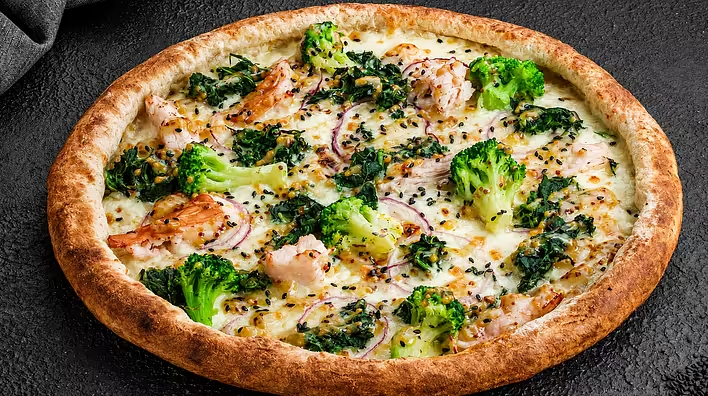
Піца Fitness: сир моцарела, індичка копчена, броколі, шпинат, цибуля червона, медово-гірчичний соус, вершковий соус, кунжут.
Sauce: the simpler, the better
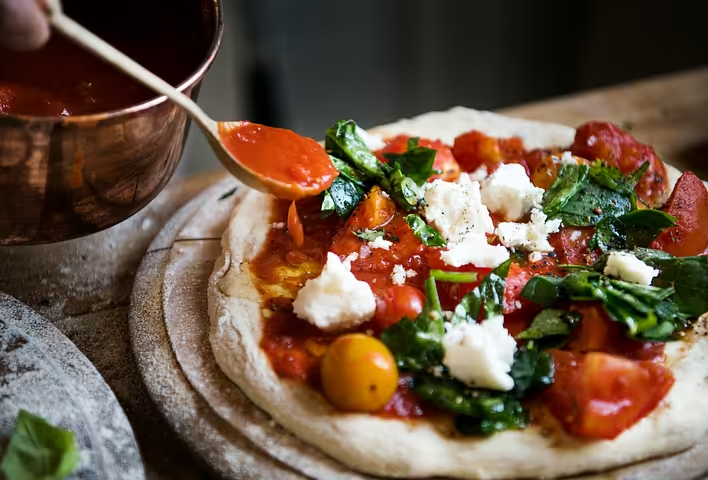
Classic tomato sauce is great for pizza not only because of its taste. It pairs well with almost all vegetables, mushrooms, chicken, turkey, and seafood, and doesn’t require a lot of additional fat.
For homemade sauce, all you need are crushed tomatoes, a small amount of olive oil, garlic, and herbs — for example, basil or oregano. Just be sure to control the amount of salt, especially if the toppings already include olives or salty cheese.
What toppings to add to pizza
The simplest way to make pizza more varied is not to limit yourself to cheese and meat. Some of the toppings can be vegetables. Tomatoes, bell peppers, broccoli, onions, spinach, zucchini, and other vegetables add different flavors and textures, while also increasing their proportion in the finished dish.
Mushrooms also work well. Champignons, oyster mushrooms, or other mushrooms can be combined with vegetables, chicken, and cheese. They have a distinct flavor, so the topping won’t seem bland even without a large amount of fatty meat products.
Another simple component is greens. Basil, arugula, parsley, or spinach add freshness and aroma. It’s better to add some greens after baking so that they remain fresh.
If you need a protein component, instead of a large amount of sausage, you can use chicken fillet or turkey. These are relatively lean types of meat that pair well with tomatoes, peppers, mushrooms, greens, and cheese.
Another option is fish and seafood. Salmon, shrimp, tuna, and other seafood can significantly change the flavor of the usual pizza and diversify its composition.
Olives can also be a good accent. They have a rich flavor, so you don’t need a lot. This is especially appropriate if the pizza already contains cheese or other salty components.
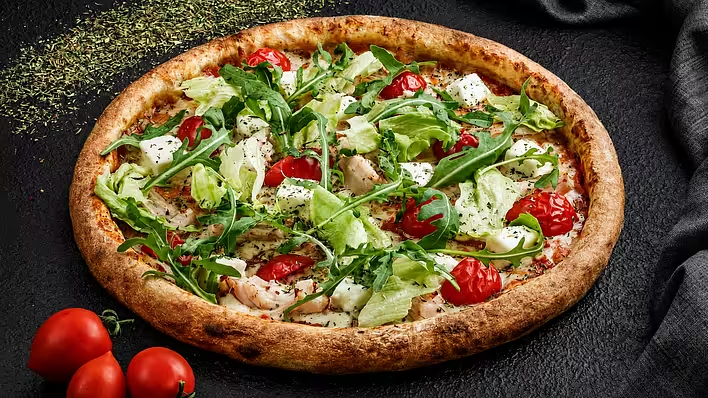
Піца з індичкою та фелатою: копчене філе індички, сир фелата, помідори, сир моцарела, рукола, салат айсберг, червона цибуля, томатний соус, прованські трави.
Which products to limit
There’s no need to make certain toppings completely “forbidden.” It’s much more practical to control their quantity.
This primarily applies to processed meats — pepperoni, salami, hunting sausages, and other processed meat products. They can contain a lot of salt and saturated fats, so it’s better to use them as a flavor accent rather than the base of the entire topping.
The same goes for bacon. A few pieces will give a characteristic flavor, but a large amount will make the dish significantly fattier and saltier.
You should also be cautious with cheese. It’s hard to imagine a classic pizza without mozzarella, but a thick layer of cheese is not necessary. A moderate amount is enough to achieve the characteristic texture and flavor without excessively increasing the proportion of saturated fats and overall calorie content.
Another common mistake is combining several very salty components at once. For example, salty cheese, a lot of olives, pickled vegetables, and sausage in one pizza can significantly increase the sodium content. Therefore, it’s better to choose one or two distinct ingredients and make the rest of the toppings more neutral.
Fatty meat can be partially or completely replaced with chicken, turkey, fish, or seafood. And instead of a large amount of mayonnaise or creamy sauce, use tomato sauce.
Don’t overdo it with very spicy sauces either. It’s not just about nutrition: if there’s too much sauce, it simply overpowers the taste of the other ingredients.
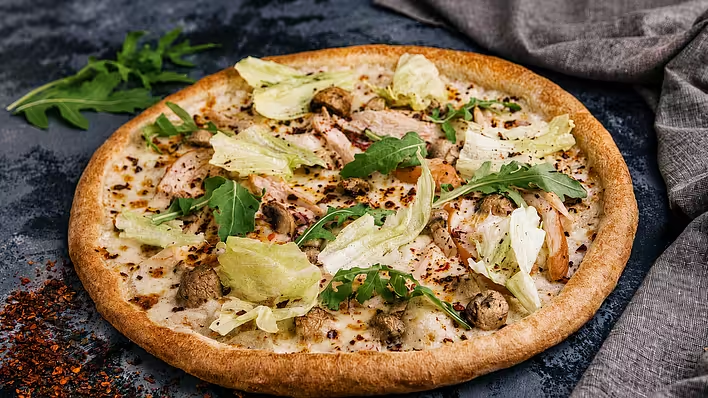
Піца з куркою та грибами: куряча грудка копчена, сир моцарела, печериці, червона цибуля, салат айсберг, рукола, паприка, соус бешамель.
Don’t try to turn pizza into a “diet dish”
In the pursuit of making pizza healthier, it’s easy to go to the other extreme: removing cheese, avoiding oil, making the dough too dry, and leaving only vegetables on top. The result may be more balanced in composition, but it won’t resemble the pizza you wanted to eat.
The principle of moderation works better. A thinner base, tomato sauce, enough vegetables, a little mozzarella, and a source of protein — chicken, turkey, fish, or seafood — allow you to create a dish that is both tasty and more balanced.
For example, you can combine chicken, mushrooms, bell peppers, and mozzarella or make a pizza with tomatoes, shrimp, greens, and a small amount of cheese. Even your favorite pepperoni doesn’t have to be crossed off the menu: just take less sausage and add vegetables to the topping.
Ultimately, what makes pizza healthier isn’t some single “correct” ingredient, but the overall balance. More diverse vegetables, a moderate amount of cheese and sauce, and fewer excessively fatty and salty products — simple changes that keep your favorite dish as pizza but make it a better option for everyday meals.
And this principle works not only at home. If you want to spend an evening away from the kitchen, we recommend visiting Monopizza in Dnipro, choosing a pizza with your favorite toppings, and simply enjoying your dinner. After all, a balanced diet can certainly include such moments.