In Ukraine, one can see many large black birds, but calling them crows is a mistake. Most often, these are rooks, sometimes — ravens. The familiar crow in our country has a gray body, which is why it is called — the gray crow.
The rook, raven, and crow are indeed similar. They belong to the corvid family, are distinguished by their developed intelligence, have a similar diet, and adapt well to living alongside humans. However, they are different birds that can be recognized by their coloration, beak and tail shape, voice, and behavior.
Which corvids live in Ukraine
The corvid family includes not only crows; due to their relatedness and similar coloration, they are often confused, especially when seen from a distance.
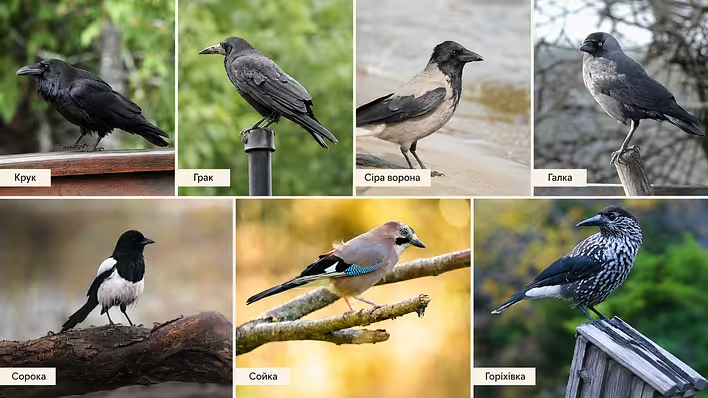
In our country, seven species of corvids have been recorded: the gray crow, raven, rook, jackdaw, magpie, jay, and nutcracker.
сім видів воронових, що живуть в Україні
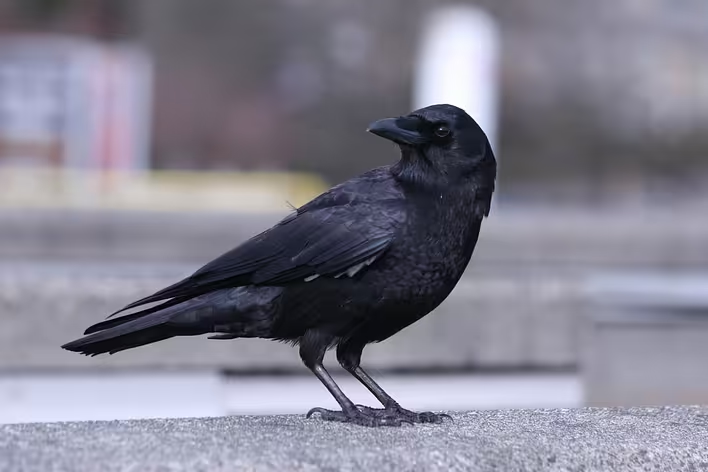
The black crow also exists as a separate species, but Ukraine is not part of its usual modern range. Therefore, a black bird on an urban lawn or field is almost certainly not a crow, but a rook. If it is significantly larger, has a massive beak, and is seen alone or in pairs, it may be a raven.
Rook: a black bird with a light "face"
грак
грак
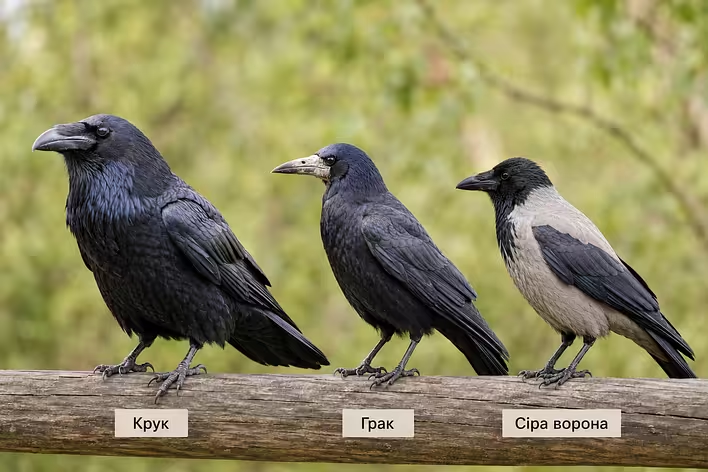
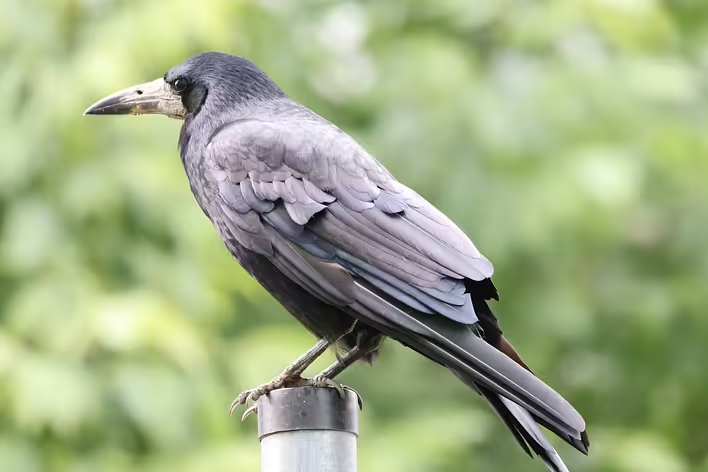
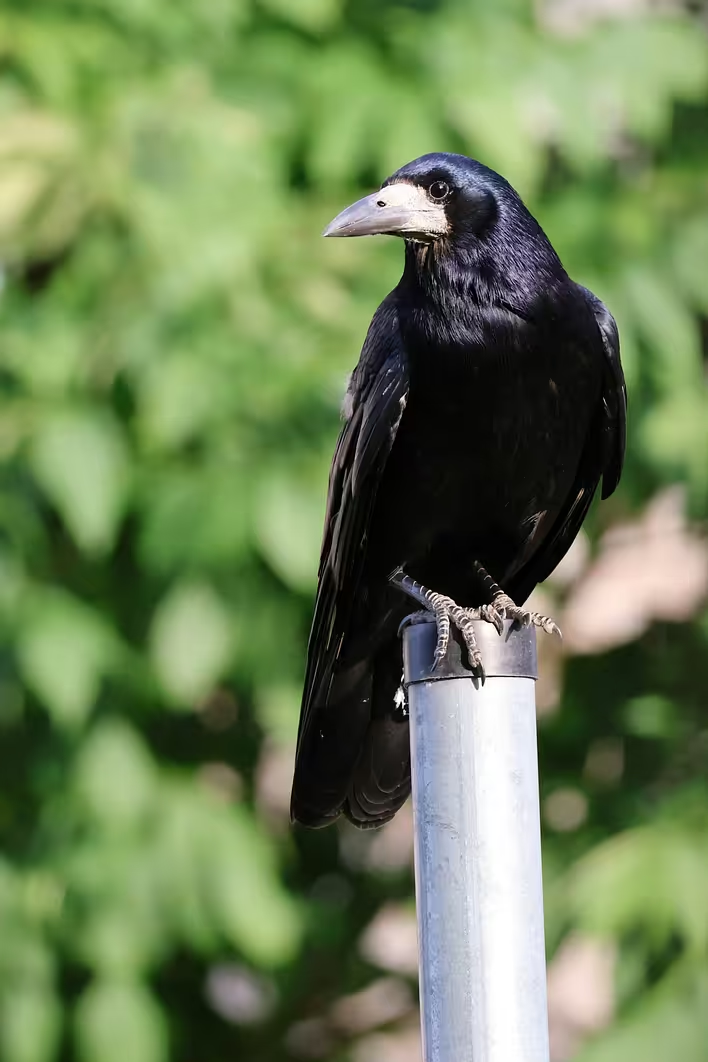
Rook (Corvus frugilegus) — is the bird that is most often mistakenly called a black crow in Ukraine. It has black plumage with a purple or bluish sheen, an elongated head, and a long pointed beak.
The main feature of an adult rook is the light grayish area of bare skin around the base of the beak. From a distance, it may seem that the bird's beak is partially white, although in reality, its bare "face" is what is light. Young rooks still have this area covered with feathers, making them easy to confuse with other corvids.
The rook is slimmer than the crow, and its beak is longer and thinner. Its body length is approximately 44–46 centimeters, and its wingspan can approach one meter.
Rooks are social birds. They search for food in large flocks and nest in colonies. If dozens of large nests appear on the tops of neighboring trees in early spring, it is most likely a rookery. In one colony, pairs can build nests just a few meters apart.
Rooks prefer to feed in fields, meadows, lawns, and along roadsides. They eat insects and their larvae, worms, seeds, grains, fruits, small animals, and food scraps. Their long pointed beak helps them extract food from the ground.
In Ukraine, the rook is a breeding, migratory, and wintering species. It can be found almost throughout the country, except in the high mountains. The composition of flocks changes throughout the year: some local birds migrate, while rooks from northern regions arrive in winter.
Raven: the largest among corvids
крук
крук
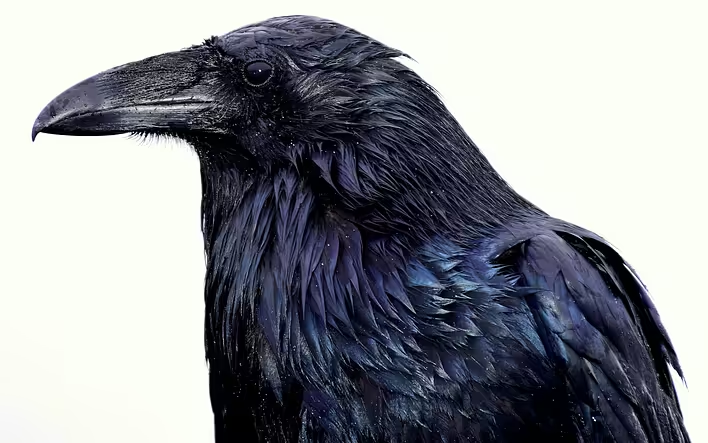
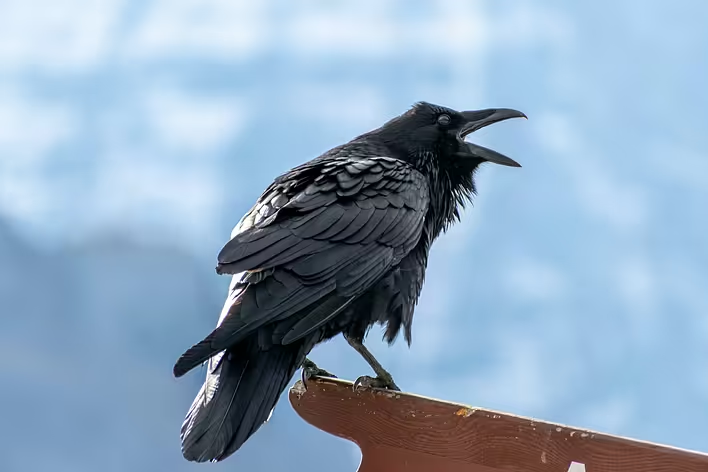
Raven (Corvus corax) — is the largest representative of the corvid family in Ukraine. It is noticeably bulkier than the rook and crow: it has a powerful beak, a wide chest, long wings, and elongated feathers on its throat that resemble a small beard.
In flight, the raven is easily recognized by its wedge-shaped tail. The rook and crow have a more rounded or fan-shaped tail. The raven also flies differently: it often soars, uses air currents, performs sharp turns, rolls, and other maneuvers. In size, it can be compared to a large bird of prey.
The raven's voice is not the usual "caw-caw," but a low, guttural, and hoarse sound that is conveyed as "caw" or "cronk." This characteristic call likely influenced the Ukrainian name of the bird.
Unlike the flocking rooks, adult ravens often stay in pairs. A pair can occupy and defend a territory for years against other ravens. They choose high trees, cliffs, power line supports, or tall structures for nesting.
Ravens are omnivorous, but the remains of dead animals play an important role in their diet. They also hunt small animals, raid accessible nests, eat insects, fruits, and food waste.
These are cautious and extremely clever birds. Ravens can remember dangerous places, solve unfamiliar tasks, plan individual actions, and learn by observing other individuals.
Despite their gloomy image in folklore, the raven is not a harbinger of misfortune and usually does not pose a threat to humans. In nature, it performs an important sanitary function by consuming the remains of dead animals.
Gray crow: a familiar inhabitant of Ukrainian cities
сіра ворона
сіра ворона
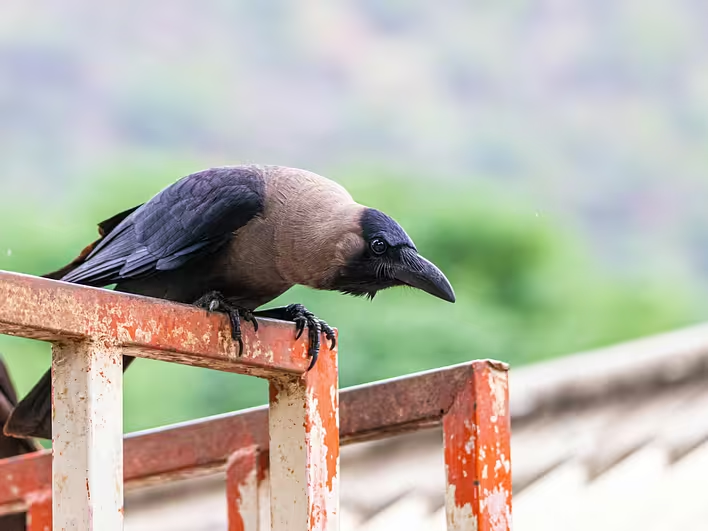
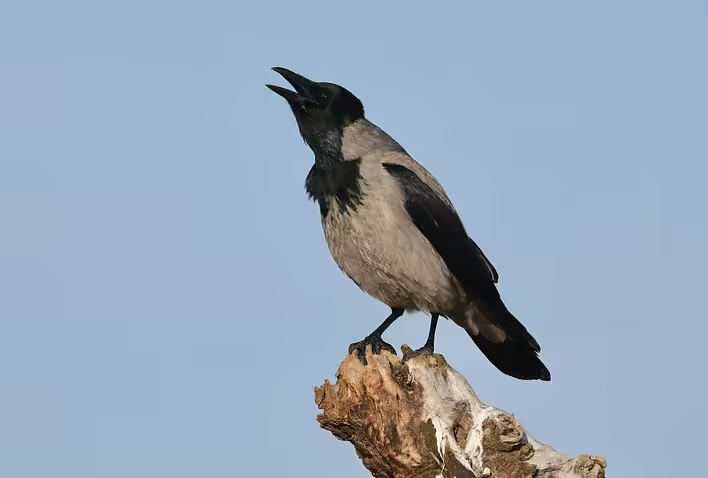
Gray crow (Corvus cornix), also known as the "gava," is a common species in Ukraine. It is easiest to recognize by its two-colored plumage: the body and part of the back are gray, while the head, throat, wings, and tail are black.
In size, the gray crow is close to the rook, but it appears stockier. Its beak is shorter, thicker, and completely black, without a light bare area at the base.
Unlike rooks, gray crows do not form large nesting colonies. Each pair builds a separate nest and protects the territory around it. However, outside the breeding season, crows may gather in flocks, especially near roosting sites and food sources.
Gray crows thrive in cities, villages, parks, forest belts, and along water bodies. They quickly find new food sources, can open packaging, remember human behavior, and adapt to urban traffic.
Like other corvids, gray crows are omnivorous. They feed on insects, grains, fruits, eggs, small animals, remains of dead animals, and food waste.
The black crow exists, but not in Ukraine
чорна ворона
Black crow (Corvus corone) — is a real species, not a folk name for the rook. It resembles a completely black version of the gray crow: it has a stocky body, a rounded head, a strong black beak, and uniformly black plumage. Unlike the adult rook, there is no light bare area around the base of its beak.
The main European range of the black crow lies west of Ukraine. It is widespread, particularly in Great Britain, France, Spain, and parts of Central Europe. Further east, it is replaced by the gray crow.
In areas where the ranges of the black and gray crows overlap, these birds can interbreed. Their offspring often have intermediate coloration: darker gray areas or unevenly distributed black feathers. Due to their close relatedness, in various scientific classifications, the black and gray crows have long been considered either separate species or subspecies of one species.
Thus, the statement that there are no black crows in Ukraine is generally correct: this bird does not belong to the common species of the country's modern ornithofauna. Individual vagrant individuals are theoretically possible, but the black bird that we regularly see on a Ukrainian lawn, field, or roadside is almost certainly a rook, not a black crow.
How to quickly distinguish between rook, raven, and crow
It is most reliable to assess not one, but several features at once: coloration, size, shape of the beak and tail, voice, and behavior of the bird.
Bird
Most noticeable feature
Beak
Typical behavior
Rook
Black plumage and light bare skin near the beak
Long, thin, and pointed
Walks in large flocks, nests in colonies
Raven
Very large, has a wedge-shaped tail in flight
Massive and powerful
Often stays alone or in pairs, frequently soars
Gray crow
Gray body, black head, wings, and tail
Sturdy, completely black
Common in cities, nests in separate pairs
Black crow
Uniformly black, without light skin near the beak
Sturdy and black
Not a common natural species in Ukraine
You can also remember a simpler tip. A gray body means a gray crow. A black bird with a light base of the beak is an adult rook. A very large black bird with a wedge-shaped tail, massive beak, and low voice is a raven.
However, it is not advisable to determine the species by color alone. A young rook does not yet have the characteristic light "face," and the size of the bird can be easily misjudged without comparison objects. In such cases, it is worth observing its behavior: a noisy flock in a field suggests rooks, a solitary gray-black bird in a yard indicates a gray crow, and a large pair soaring over a forest are ravens.