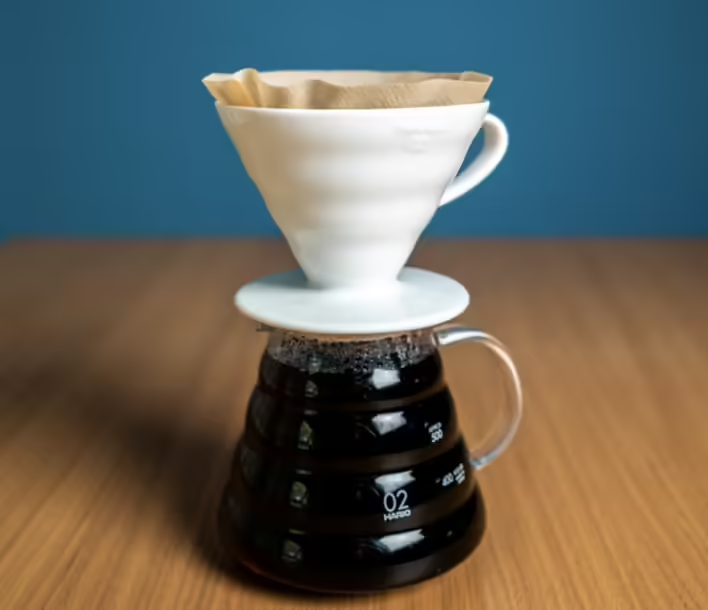
I actively use Hario V60 Glass Brewing Kit, which has a pour-over size of 02. I buy filters every couple of months. When the store ran out of filters with the article number I took from the filter pack (which came with my V60) - I had to look for filters in other places. And the article numbers are different everywhere. I understood that the required size is 02. But what do all the other elements of the article mean? So I searched for some information.
Filter articles for Hario V60 are formed taking into account several key factors that determine the size of the filter, the number of pieces in the package, the type of material, and sometimes regional variations.
The main element in the article is the designation that indicates the size of the pour-over for which the filter is intended. Filters for Hario V60 pour-overs have an article with numbers corresponding to the size of the pour-over.
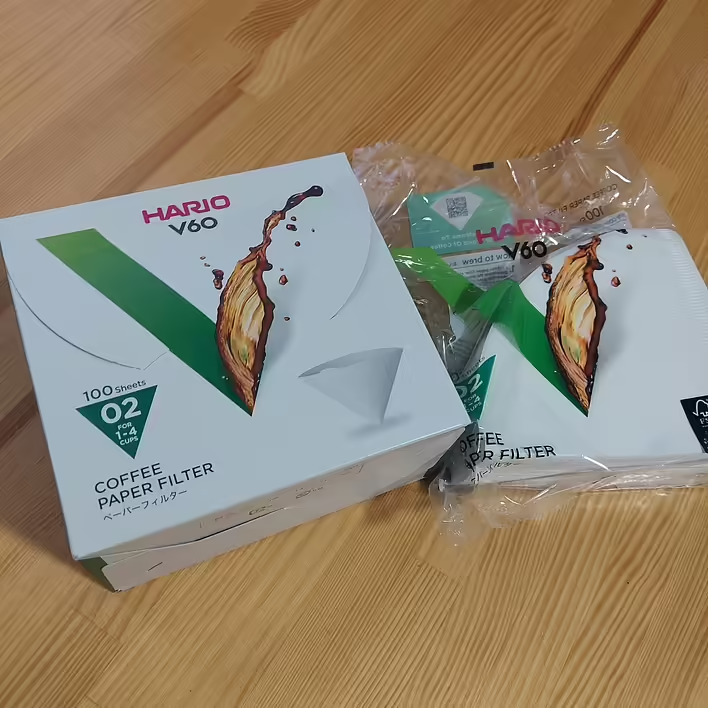
Білі фільтри 02 в коробці
Filter Sizes (Pour-Over Size) V60
VCF-01 – filters size 01, suitable for brewing 1-2 servings of coffee.
VCF-02 – filters size 02, suitable for brewing 1-4 servings.
VCF-03 – filters for the largest pour-over, size 03, suitable for brewing up to 6 servings of coffee.
VCF stands for "V-shaped Coffee Filter".
I have some personal questions about the compatibility of pour-overs, servers, and filters. I plan to write a separate post about this. Let's get back to the topic of conversation:
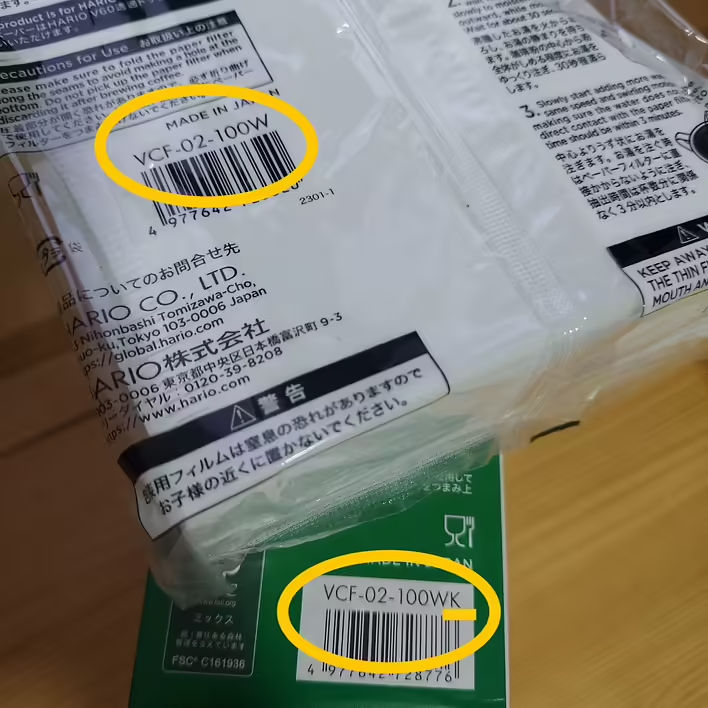
The second important aspect of the article is the number of filters in the package. This may be indicated separately in the article or on the packaging. Usually, you can find filters containing 40 or 100 pieces. For example, the article VCF-02-100 means that these are filters for pour-over size 02, in a package of 100 pieces. I usually order 100 pieces.
Sometimes there may also be additional designations indicating the characteristics of the filter, such as "W" (white / bleached) or "M" (Misarashi). Thus, the article VCF-02-100M would mean filters for pour-over size 02, brown (unbleached), in a package of 100 pieces. Just to complement this post, I wrote what is Misarashi?
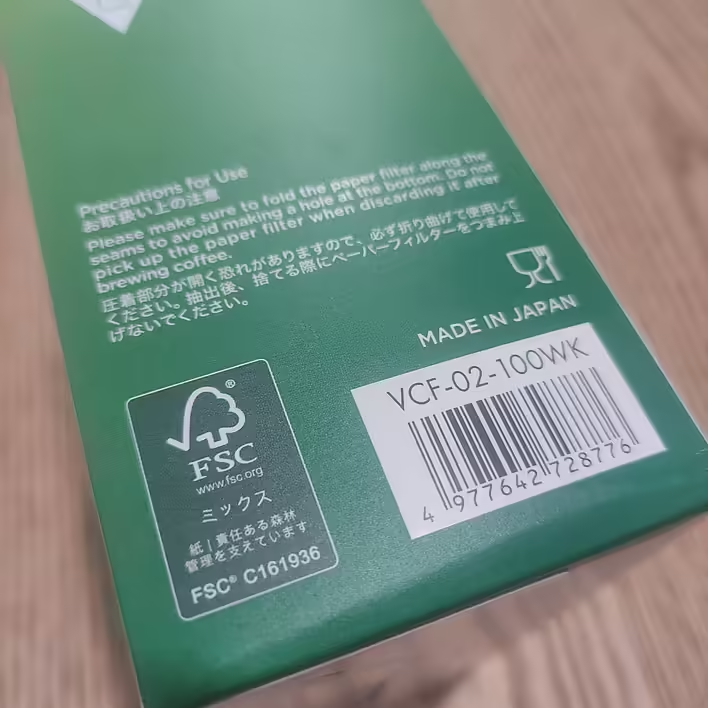
There may also be an added K, which indicates a cardboard box. Usually, filters are packed in a bag (there is no designation).
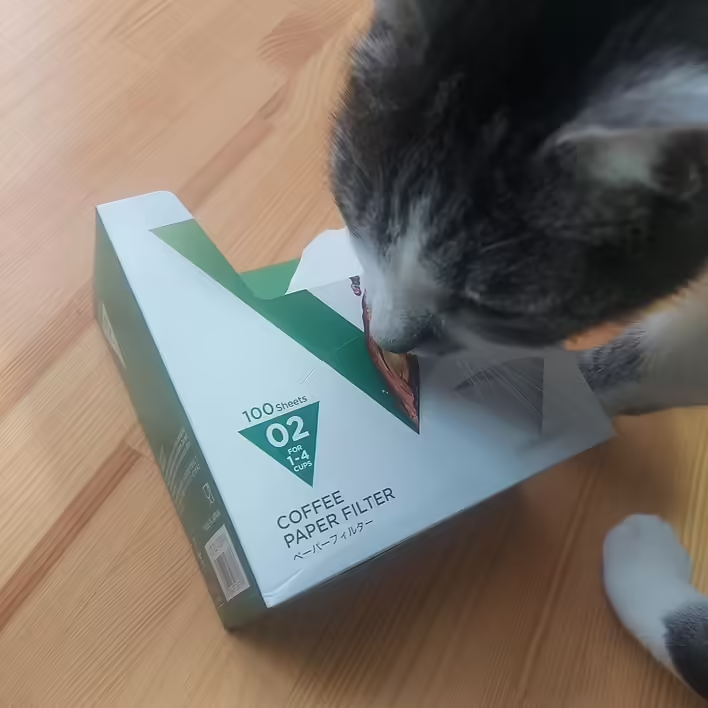
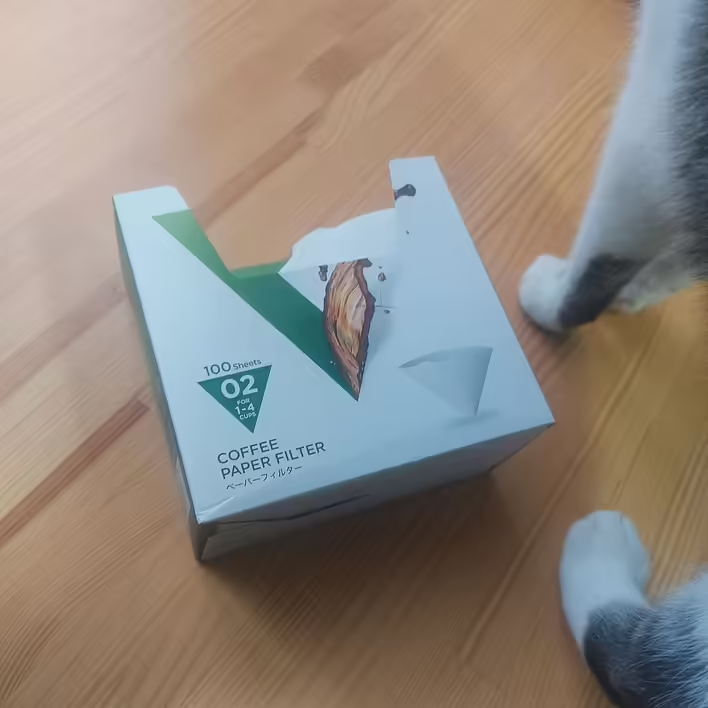
Here is the box I currently have at home:
VCF-02-100WK
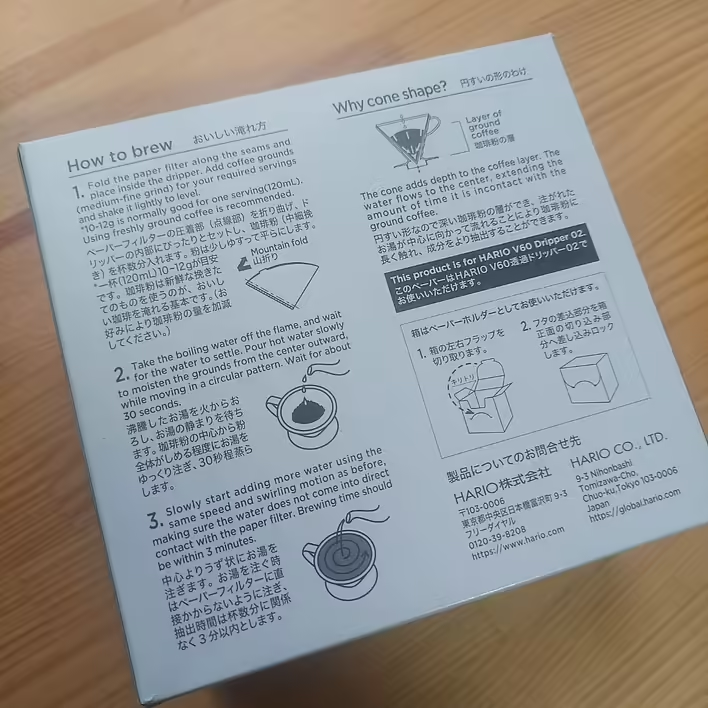
Here’s how it looks from the back and contains useful information in English and Japanese (how to brew, why the cone shape):
VCF-02-100WK (задня сторона)
Is there a taste difference between White and Misarashi?
Personally, I haven't bought Misarashi yet, but I plan to do so next time. I'm not a gourmet, and I don't pay much attention to the subtle nuances of coffee or filters. But if you delve into the technology - it's clear that there is a difference.
White filters (W / White) undergo a chemical bleaching process, usually using oxygen or less often chlorine. Bleaching helps remove the natural brown color of the paper, making it white. This process minimizes the impact on the taste of the coffee, and such filters are considered "neutral," meaning they add less of any flavor.
Brown filters (M / Misarashi) are made from natural, unbleached paper that does not undergo the bleaching process. Some coffee enthusiasts believe they can add a slight "paper" or "woody" taste to the coffee, especially if the filters are not rinsed before use.
To minimize this impact on taste, regardless of the type of filter, it is recommended to rinse the filter with hot water before brewing coffee. This will not only help eliminate any possible paper taste but also warm the pour-over and server, contributing to a more stable temperature during brewing.
In conclusion, the taste difference between white and brown filters is minimal, especially if the filter is properly prepared.
Приїхала упаковка фільтрів для Hario V60 в пакеті, тож є змога показати фото зі структурою артикулу різних упаковок фільтрів.
Фільтри V60 в картонній упаковці VCF-02-100WK (Karton) та фільтри в пакеті з принтом.
VCF-02-100W vs VCF-02-100WK
Ну і фото артикулів:
Артикули VCF-02-100W та VCF-02-100WK
![[Розпаковка] Пуровер Hario V60 Glass Brewing Kit](https://cdn.tseivo.com/6xxwhwp0q0zhw2g13ha8da6l6gza)