This content has been automatically translated from Ukrainian.
When you are learning German or looking for an apartment in Germany, abbreviations can seem like a real puzzle. In advertisements, correspondence, or even everyday conversations, abbreviations are used everywhere. This saves time and space, but often causes confusion for those unfamiliar with these "encrypted" words. I will talk about the most common abbreviations with examples that will help you understand German texts faster.
1. Abbreviations in apartment searches

Advertisements on real estate websites and in newspapers often abound with specific abbreviations. Here are a few important examples:
- Zi. – Zimmer (room).For example: "3-Zi.-Whg. in München zu vermieten" means "Three-room apartment for rent in Munich."
- Whg. – Wohnung (apartment). "Schöne Whg. mit Balkon" translates to "Nice apartment with a balcony."
- EG, OG, DG – Erdgeschoss, Obergeschoss, Dachgeschoss (ground floor, upper floor, attic). "2-Zi.-Whg. im DG" – "Two-room apartment in the attic."
- NK – Nebenkosten (additional costs, e.g., for water or heating). "Kaltmiete 500 €, NK 150 €" – "Rent 500 euros, additional costs 150 euros."
- KM – Kaltmiete (rent excluding utilities).For example, "KM 400 €, WM 550 €" means that the base rent is 400 euros, while the "warm rent" including utilities is 550 euros.
- WG – Wohngemeinschaft (shared living). "WG-Zimmer in zentraler Lage" means "Room in a shared apartment in the center."
- MM – Monatsmiete (monthly rent). "2 MM Kaution" means "Two-month deposit."
2. Daily abbreviations

In everyday German, there are also many abbreviations that are often used in correspondence, texts, and even on signs.
- ca. – circa (approximately).For example: "Das Konzert dauert ca. 2 Stunden" means "The concert lasts approximately 2 hours."
- z. B. – zum Beispiel (for example). "Es gibt viele Tiere, z. B. Katzen und Hunde" – "There are many animals, for example, cats and dogs."
- u. a. – unter anderem (among others). "Wir bieten u. a. Workshops und Seminare an" means "We offer, among others, workshops and seminars."
- etc. – et cetera (etc.).Used the same way as in Ukrainian: "Bringen Sie Papier, Stifte etc." – "Bring paper, pens, etc."
- bzw. – beziehungsweise (or, more precisely). "Bitte senden Sie die Unterlagen bis Dienstag bzw. Mittwoch" – "Please send the documents by Tuesday or, more precisely, by Wednesday."
3. Correspondence and conversations
In informal correspondence, abbreviations help speed up communication but can pose difficulties for newcomers:
- LG – Liebe Grüße (best regards).Often used at the end of an email or message.
- MfG – Mit freundlichen Grüßen (sincerely).The official equivalent of "LG".
- LOL – Laughing Out Loud (laughing out loud).An international abbreviation that is also widely used in German.
- HDGDL – Hab Dich ganz doll lieb (I love you very much).A romantic abbreviation for close people.
4. Abbreviations in transport
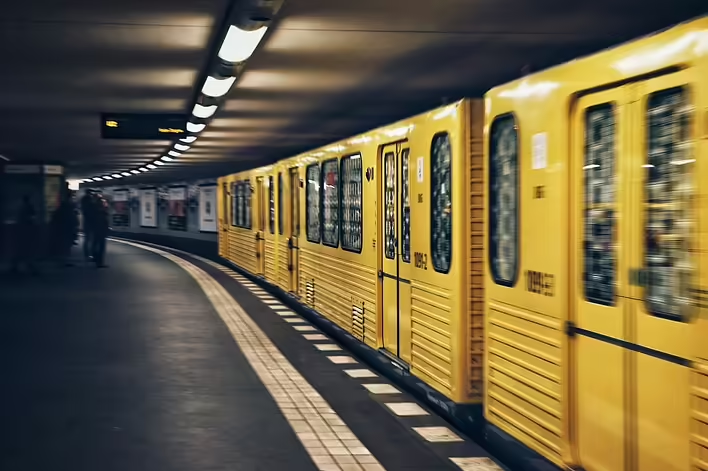
When traveling in Germany, you may also encounter many abbreviations in the context of transport.
- Hbf. – Hauptbahnhof (main station).For example: "Berlin Hbf." means "Main station of Berlin."
- S-Bahn – Stadtbahn (city train). "Mit der S-Bahn ins Zentrum" – "By city train to the center."
- U-Bahn – Untergrundbahn (subway). "Die U-Bahn-Linie 5 fährt nach Alexanderplatz" – "Subway line 5 goes to Alexanderplatz."
- DB – Deutsche Bahn (German railway).The logo you will see at all stations and trains.
5. Business abbreviations

In business correspondence and documents, there are abbreviations worth knowing:
- AG – Aktiengesellschaft (joint-stock company). "Siemens AG" is the official name of the company Siemens.
- GmbH – Gesellschaft mit beschränkter Haftung (limited liability company). "BMW GmbH" – the company BMW as a legal entity.
- € – euro, the currency of the European Union.Used in financial documents: "Preis: 20 €."
How to remember abbreviations?
- Pay attention to the context. Most abbreviations are understandable if you read the sentence in full.
- Use dictionaries. Online dictionaries, such as Duden or specialized resources for apartment searches, often explain abbreviations.
- Practice. Read advertisements, articles, or correspondence where abbreviations appear.
Now that you know these abbreviations, no German text will seem too difficult. Viel Erfolg!
Like it?React
🧵
This post doesn't have any additions from the author yet.