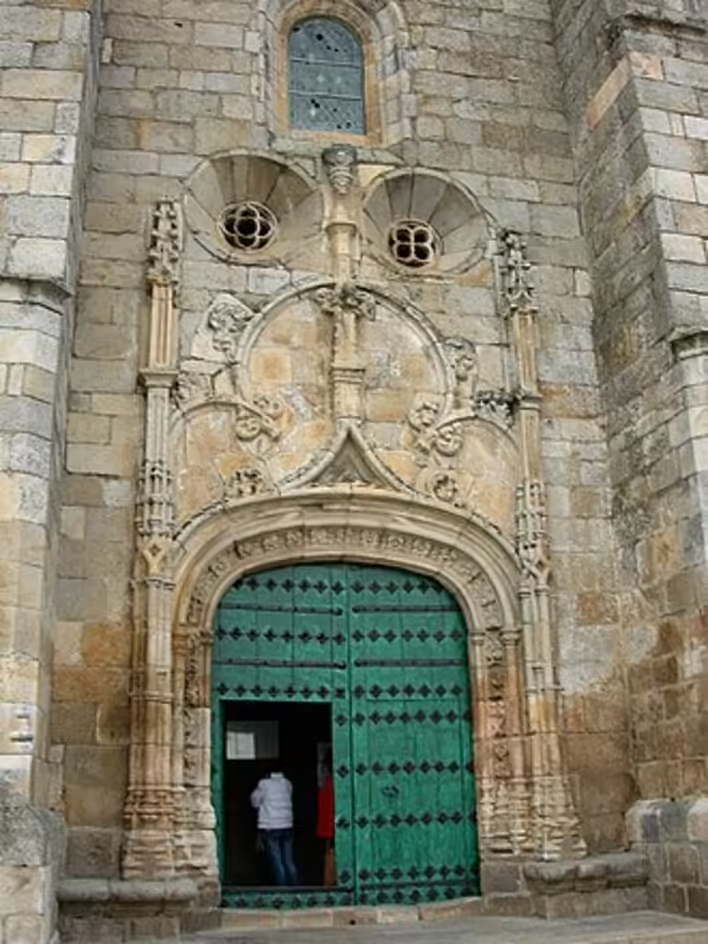
In architecture, an “Accolade” is a decorated arch, most commonly found in late Gothic architecture.
The “accolade” arch consists of two ogee curves that mirror each other. It can be formed by a pair of reverse ogee curves above a three-centered arch, ending in a vertical termination. The shape can also be described as a combination of a convex arch and a concave arch.
Accolade над аркою в Португалії. "Джерело - Вікіпедія"
Where does the term “Accolade” in architecture come from, and what historical aspects are associated with its use?
The term comes from French (l'accolade), referring to an arch with braces. It is also known as an ogee arch (English), un arco conopial (Spanish), resaunt (Middle English), arco carenato or inflesso (Italian), and kielbogen (German).
The Accolade was introduced and most commonly used during the period of Gothic architectural decoration. It was an element of church architecture in England from the eleventh to the sixteenth century. The peak of the accolade's popularity occurred in the thirteenth century. Throughout the fourteenth century, its appearance evolved.
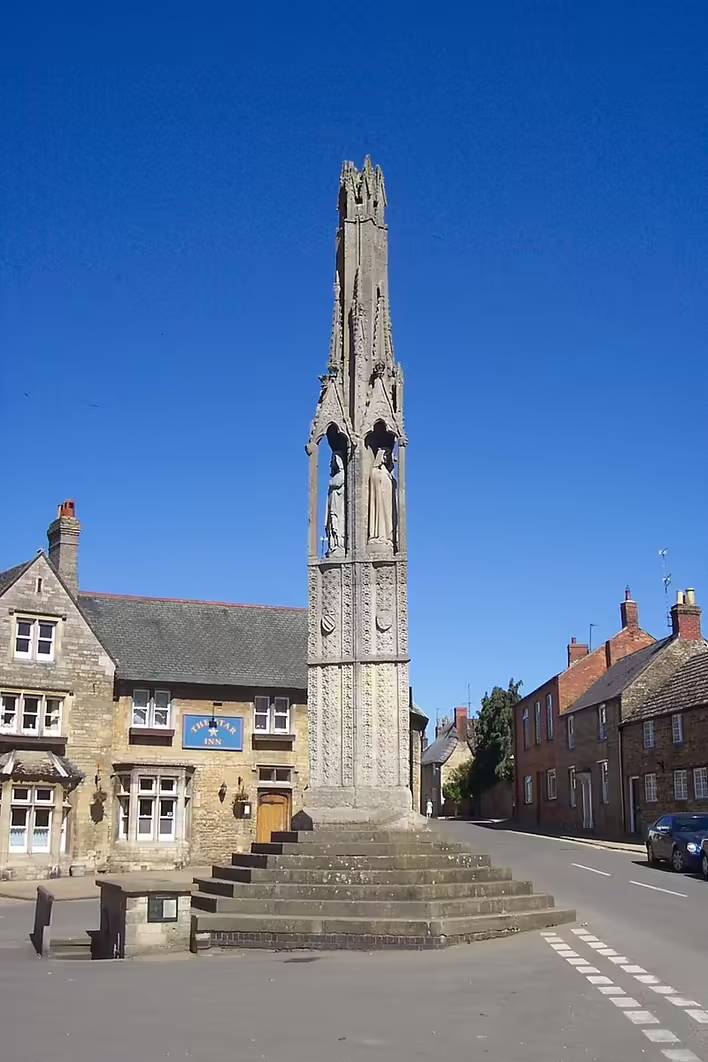
The first accolades in English Gothic architecture appear on crosses built by Edward I in memory of Eleanor of Castile.
Геддінгтон, Нортгемптоншир, найкраще збережений з оригінальних хрестів і єдиний трикутний
They were also used in Gothic goldsmithing, for example, in the shrine of St. Gertrude of Nivelles, which was originally built in the 13th century.
Церква Св. Гертруди в Нівелі (Бельгія)
Is the “Accolade” arch merely a decorative element, or does it also have practical significance in the structure of buildings?
The Accolade typically represents decorative plasterwork placed above an opening. The structures do not bear significant loads, so they are primarily decorative in nature. It was mainly used for small openings, such as niches, tombs, windows, and screens, as it is difficult to construct.
How has the “Accolade” arch influenced the aesthetic development of architecture, and how does it reflect the character and taste of a particular historical period?
Decorativeness and Luxury:
The “Accolade” arch was noted for its decorativeness and luxury. This stylized element added sophistication and elegance to architectural forms. The high level of decoration emphasized the aesthetic preferences of the time, where architects and patrons sought refinement and luxury in building details.
Ornamentation and Symbolism:
The “Accolade” arch can be associated with the use of rich ornamentation and symbols that had their specific meanings in the cultural and religious context of the time. Ornamental elements were used to emphasize the significance of the building and convey certain ideas or beliefs.
Refined Play of Lines:
The ogee shape of the “Accolade,” consisting of two ogee curves, created a refined gravity and harmony in architectural compositions. This play of lines reflected the architects' fascination with the aesthetics that defined that period.
Connection to Late Gothic:
The “Accolade” arch reflects specific features of the Late Gothic style, characterized not only by grandeur and tall towers but also by sophistication in details. The use of such arches was a unique contribution to the development of Gothic architecture.
Expressiveness and Uniqueness:
The “Accolade” arch allowed architects to express their creativity and create unique architectural solutions. This emphasized an individual approach to design and the creation of unique architectural masterpieces.
Thus, the “Accolade” arch not only influenced the appearance of buildings but also reflected the overall spirit and aesthetic aspirations of the Late Gothic period.